
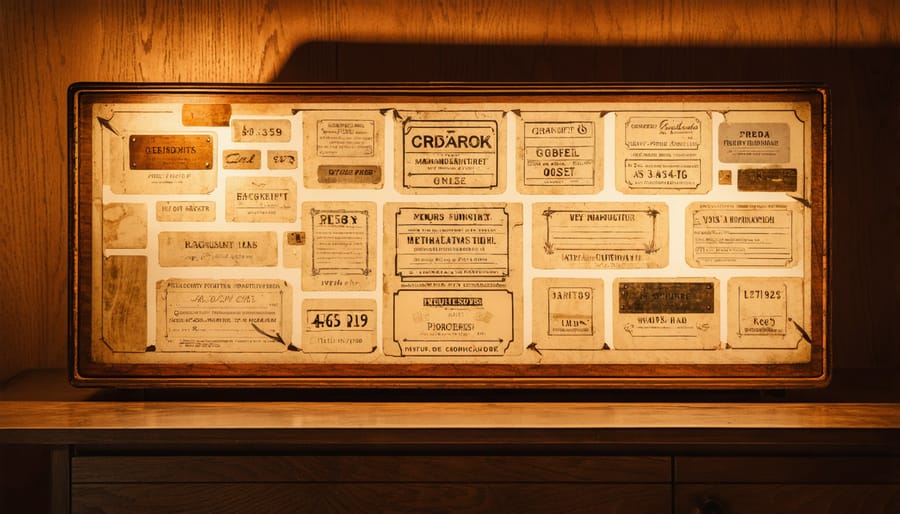
Locate manufacturer stamps, labels, or tags on furniture undersides, drawer bottoms, and back panels to uncover vital production details. Master serial number interpretation by consulting manufacturer-specific databases and vintage furniture guides, which reveal creation dates, production lines, and authenticity markers. Cross-reference discovered numbers with historical catalogs and documentation to identify vintage furniture pieces with confidence, establishing provenance and market value. Document all findings with detailed photographs and measurements, creating a comprehensive record that enhances authentication and aids professional appraisals. This systematic approach transforms mysterious markings into valuable insights about your furniture’s heritage, craftsmanship, and worth.
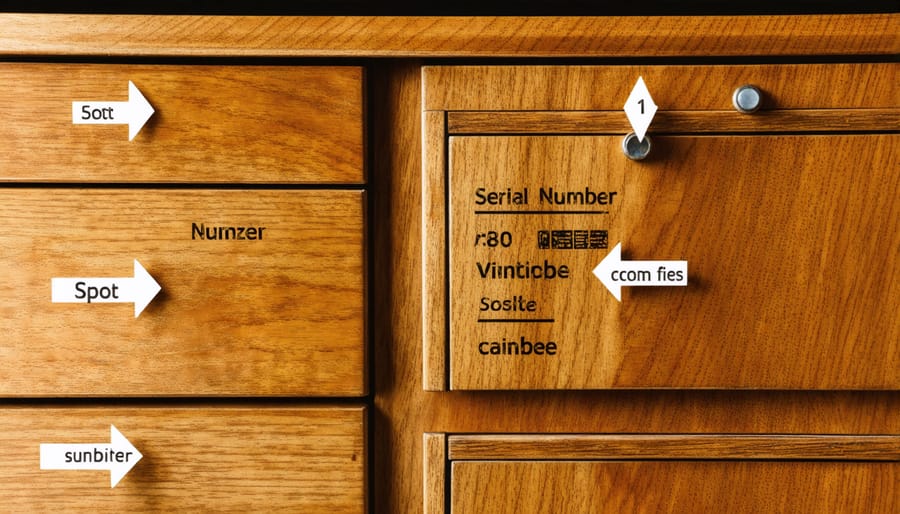
Major furniture manufacturers typically place serial numbers in specific locations that have become standard over the years. Herman Miller pieces often feature tags or stamps on the underside of chairs and tables, usually near the front edge. For their iconic Eames designs, look for a paper label or metal plate beneath the seat or on the chair base.
Knoll furniture commonly displays serial numbers on metal plates attached to the furniture frame, typically underneath seating or on the bottom edges of table bases. Their vintage office furniture may have numbers stamped directly into the metal framework.
For Danish modern pieces by manufacturers like Fritz Hansen, check the underside of chairs where the legs meet the seat. These often feature small metal badges or impressed stamps with production dates and numbers.
Lane Furniture, known for their cedar chests, typically places serial numbers on the bottom or back of pieces. These numbers can often be read backwards to determine the production date. Drexel Heritage pieces usually have stamps or labels on drawer interiors or cabinet backs.
Remember that serial number placement may vary even within the same manufacturer’s line, depending on the era and specific model.
When searching for serial numbers on vintage furniture, don’t limit yourself to the obvious spots. Drawers might have numbers stamped on their sides rather than the back, and some craftsmen placed their marks on the inner edges of drawer frames. Check beneath removable cushions and inside upholstered pieces by carefully feeling along the frame or examining the dust cover underneath.
On cabinets and armoires, look behind the backplate of handles and hinges – these areas often reveal hidden stamps when hardware is carefully removed. Some manufacturers cleverly concealed their marks under false bottoms in drawers or behind decorative trim pieces. For tables, inspect the underside of leaves and extension mechanisms, as numbers were sometimes stamped on these less visible components.
Don’t overlook the bottom edges of legs and feet, especially on chairs and sofas. Some pieces have numbers impressed into the wood rather than stamped, making them harder to spot without proper lighting. Even the interior backs of mirror frames and the undersides of marble tops can hide valuable identification marks.
Remember to document any numbers you find with clear photographs, as these hidden marks can be crucial for authentication and valuation.
Date codes in vintage furniture serial numbers can reveal crucial information about when a piece was manufactured. Most major furniture manufacturers from the mid-20th century onward incorporated date indicators within their serial numbers, though the format varies by maker and era.
For pieces made in the 1950s and later, manufacturers typically used a straightforward numerical system. The first two digits often represent the year, while subsequent numbers might indicate the month or production batch. For example, “620149” could mean the piece was made in 1962, January, batch 49.
Some manufacturers used letter codes instead. A common system employed letters A through M (excluding I) to represent months, followed by the year. For instance, “C62” would indicate March 1962. High-end manufacturers like Henredon and Baker often placed their date codes on paper labels or metal plates, usually found on drawers or the back of pieces.
Pre-1950s furniture can be more challenging to date through serial numbers alone. These pieces often used sequential numbering systems without explicit date codes. In such cases, you’ll need to cross-reference the serial number with manufacturer catalogs and historical records.
Remember that date codes can vary significantly between brands, and some manufacturers changed their coding systems multiple times. When in doubt, consult manufacturer-specific guides or seek expert verification to ensure accurate dating of your vintage piece.
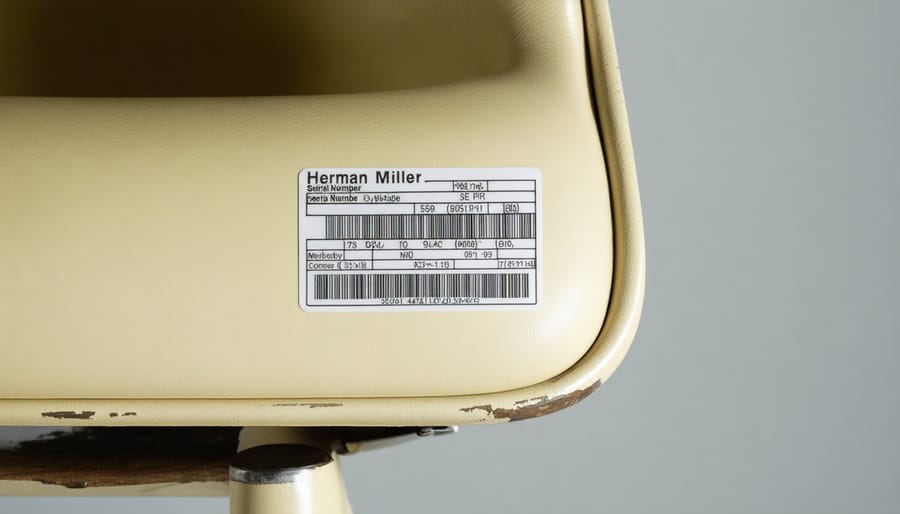
Serial numbers on vintage furniture serve as unique identifiers that can help pinpoint specific furniture styles and models within a manufacturer’s collection. These numbers typically appear in predictable locations: underneath drawers, on the back panels, or stamped into the wood frame near the bottom of pieces. Different manufacturers used various numbering systems, with some incorporating date codes, factory locations, or model series information.
For example, mid-century modern pieces from Herman Miller often feature a numbered tag system that indicates both the year of manufacture and the product line. Similarly, Drexel Heritage pieces from the 1960s and 1970s commonly display a combination of letters and numbers that reference both the collection name and individual piece within that series.
When examining serial numbers, look for consistent patterns or sequences that might indicate production dates or collection series. Some manufacturers used prefixes to denote different furniture lines – “M” for mahogany pieces or “W” for walnut, for instance. Keep in mind that serial number formats often changed over time, even within the same company.
A helpful tip is to photograph the serial number and document its location on the piece. This information can be invaluable when researching through manufacturer catalogs or consulting with furniture experts for authentication and valuation purposes.
Many leading furniture manufacturers maintain comprehensive databases of their historical products, making serial number verification more straightforward. Herman Miller offers an extensive online archive where owners can look up production dates and authenticate their pieces using serial numbers found on original labels. Similarly, Knoll’s digital database covers their iconic designs from the mid-century period to present day.
For Danish modern furniture enthusiasts, Fritz Hansen provides a detailed authentication service through their website, helping owners verify the legitimacy of their Arne Jacobsen and Hans Wegner pieces. Baker Furniture maintains records dating back to the 1920s, accessible through their customer service department.
Don’t be discouraged if your manufacturer isn’t listed here. Many vintage furniture makers have merged or been acquired over the years, but their records often survive. Companies like Drexel Heritage (now part of Hooker Furniture) and Lane (now part of Heritage Home Group) maintain historical documentation that can be accessed through their current parent companies. For best results, contact the manufacturer’s customer service department directly and have your serial number ready.
Several reputable third-party verification services can help authenticate vintage furniture through serial number validation. The Antique Furniture Database (AFD) offers comprehensive records dating back to the early 1800s, with specialized focus on major manufacturers like Herman Miller, Knoll, and Danish Modern pieces. Their verification process typically takes 24-48 hours and provides detailed authentication certificates.
For mid-century modern pieces, the Modern Design Authentication Registry (MDAR) maintains an extensive database of serial numbers and manufacturer marks. Their expert team can cross-reference your furniture’s details with historical production records and provide detailed reports on authenticity and estimated value.
The International Furniture Authentication Network (IFAN) specializes in European antiques and provides photographic verification alongside serial number validation. Their service includes access to manufacturer archives and historical documentation.
Remember that while these services charge fees ranging from $50-200 per piece, the investment can prove invaluable when determining insurance values or resale prices. Many services also offer bulk verification discounts for dealers and collectors with multiple pieces.
While serial numbers are valuable tools for authentication, they aren’t always available or legible on vintage furniture pieces. In such cases, experienced collectors and appraisers rely on multiple furniture authentication methods to verify a piece’s authenticity and origin.
Start by examining the construction techniques used. Hand-cut dovetails, specific wood types, and period-appropriate hardware can provide valuable clues about when and where a piece was manufactured. Manufacturing marks, such as chisel marks or saw patterns, can also help identify the era of production.
Look for maker’s marks or labels, which manufacturers often placed in less obvious locations like drawer bottoms, back panels, or under seat cushions. These marks might include company logos, city names, or patent numbers that can help trace the furniture’s origins.
Material analysis is another crucial factor. The type of wood, finish, upholstery fabric, and hardware should all be consistent with the presumed manufacturing period. For instance, certain wood stains weren’t available before specific dates, and some materials like plywood weren’t commonly used in furniture until the 20th century.
When in doubt, consider consulting a professional appraiser or restoration expert who specializes in period furniture. Their trained eye can spot subtle details that might escape notice and can often provide documentation to support authentication. They may also have access to specialized databases and reference materials that can help identify pieces without clear serial numbers.
Remember that establishing provenance through multiple verification methods often provides more reliable authentication than relying on a serial number alone.
Documenting your vintage furniture’s serial numbers is an invaluable practice that preserves both history and value. By maintaining detailed records of serial numbers, manufacturer marks, and original documentation, you create a lasting legacy for your cherished pieces. Whether you’re a collector, dealer, or homeowner, this information proves essential for insurance purposes, authentication, and future sales. Remember to photograph serial numbers, create digital backups of documentation, and store this information in multiple secure locations. While the process of tracking down serial numbers may seem daunting at first, the rewards of knowing your furniture’s true heritage and worth make the effort worthwhile. Take the time today to document your vintage pieces – your future self (and perhaps future generations) will thank you for preserving these important details of furniture history.