
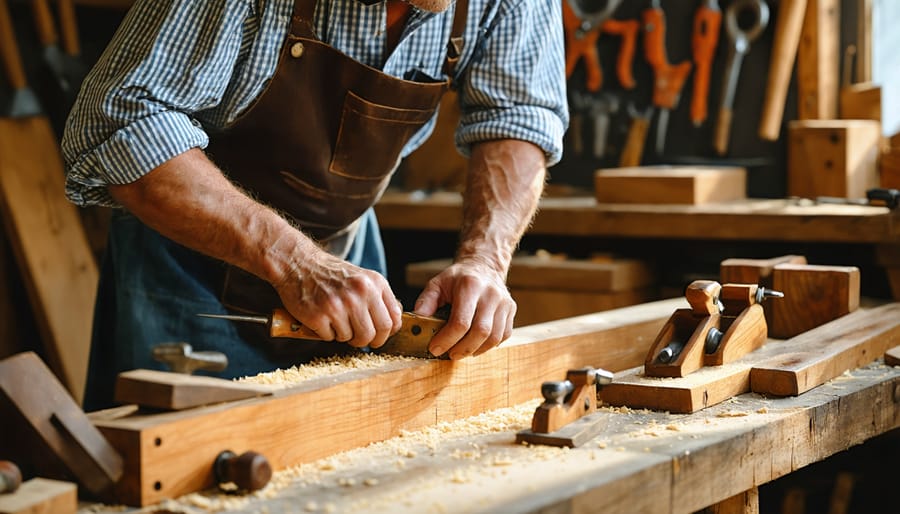
In an age of mass production and automated manufacturing, traditional craftsmanship stands as a testament to human ingenuity and artistry. Master craftsmen, wielding tools passed down through generations, transform raw materials into enduring pieces that tell stories of cultural heritage and unparalleled skill. Today’s resurgence of interest in sustainable furniture making practices has breathed new life into time-honored techniques, proving that traditional methods remain relevant in our modern world.
From the precise dovetail joints of fine cabinetry to the hand-carved details of period furniture, traditional craftsmanship represents more than just manufacturing—it embodies a philosophy of patience, precision, and pride in workmanship. These methods, refined over centuries, create pieces that not only serve their intended purpose but also stand as works of art, growing more valuable with time.
As we face increasing environmental concerns and a desire for authenticity in our surroundings, traditional craftsmanship offers solutions that align perfectly with contemporary values: sustainability, durability, and the creation of meaningful connections between maker and object.
When examining antique furniture that has survived centuries of use, you’ll often find the secret to their longevity lies in their joinery techniques. The mortise and tenon joint, often called the cornerstone of traditional woodworking, creates an incredibly strong connection by fitting a protruding tenon into a precisely carved mortise cavity. This technique remains one of the most reliable methods for joining wooden components, especially in chair and table construction.
Dovetail joints, recognizable by their distinctive interlocking wedge-shaped patterns, provide exceptional resistance to pulling forces. Found predominantly in drawer construction, these joints become stronger over time as wood naturally expands and contracts. Their presence often indicates superior craftsmanship and attention to detail.
Other time-tested techniques include the finger joint, which maximizes gluing surface area, and the splined miter joint, providing both strength and visual appeal to corner connections. These traditional methods don’t just contribute to furniture durability; they represent a craftsman’s commitment to quality that modern mass-production often struggles to match.
Today’s furniture restorers continue to rely on these proven techniques, understanding that authentic joinery repairs will ensure pieces maintain their structural integrity for generations to come.
The foundation of exceptional traditional craftsmanship lies in proper wood selection and preparation. Master craftsmen understand that each piece of timber tells its own story through grain patterns, color variations, and natural characteristics. When selecting wood, experienced artisans look for straight grain patterns, minimal knots, and consistent coloration that will complement the final piece.
Proper wood seasoning is crucial for ensuring stability and longevity. The traditional air-drying method, while time-consuming, remains highly effective. Woods should be stacked with spacers (stickers) between layers to allow air circulation, and stored in a covered area for approximately one year per inch of thickness. This patient approach helps prevent warping and splitting in finished pieces.
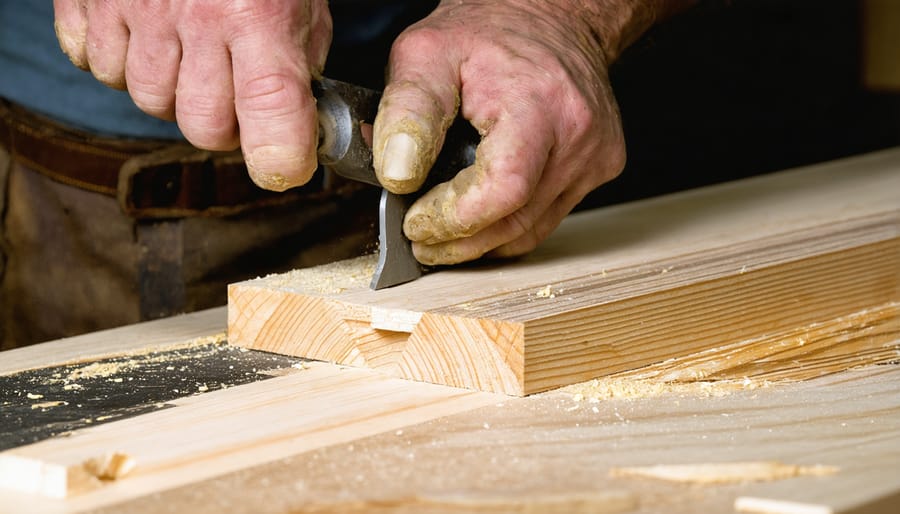
Before beginning any project, wood must be carefully prepared. This includes squaring the stock, planning to achieve the desired thickness, and allowing the wood to acclimate to the workshop environment for at least several days. Many craftsmen prefer hand-planing for final surface preparation, as it creates a smoother finish than machine planning and maintains the wood’s natural character.
For antique restoration work, matching the original wood species and aging characteristics is essential to maintain authenticity and value.
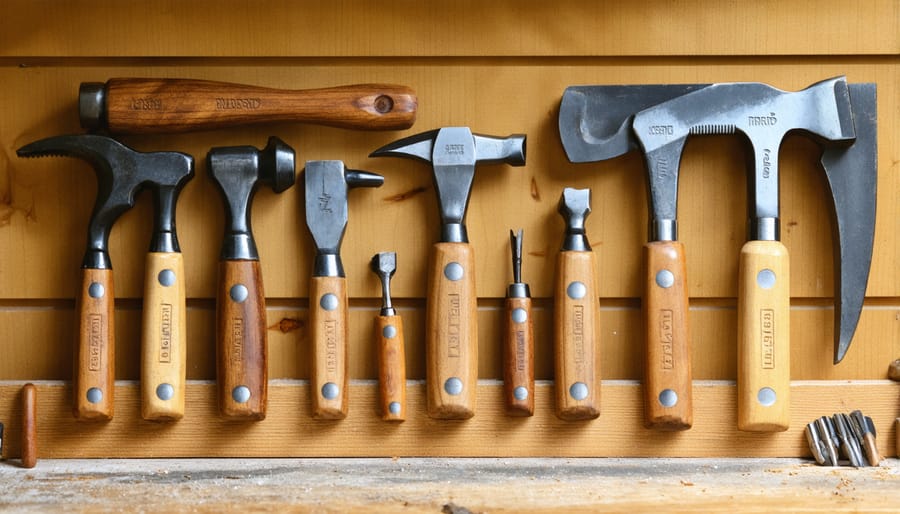
The cornerstone of traditional craftsmanship lies in its essential hand tools, each playing a vital role in creating and restoring fine furniture. The basic toolkit starts with measuring and marking implements: a quality combination square, marking knife, and dividers ensure precise layouts and joinery. These tools are fundamental for maintaining the accuracy that distinguishes professional work.
Chisels remain indispensable, with craftsmen typically relying on a set ranging from 1/4 inch to 1-1/2 inches. Well-maintained chisels, paired with wooden mallets, execute everything from dovetails to mortises with precision. Hand planes, including the jack plane, smoothing plane, and block plane, create surfaces that machine tools simply cannot match.
For joining and shaping, the traditional saw collection includes dovetail saws, tenon saws, and panel saws. Quality handsaws, when properly sharpened, produce cleaner cuts than power tools and offer greater control. Supplementary tools like spokeshaves, rasps, and files allow craftsmen to shape curves and refine surfaces with remarkable accuracy.
Storage and maintenance of these tools are equally important. A well-organized tool chest protects investments while making tools readily accessible. Regular cleaning, sharpening, and proper storage ensure these traditional implements remain effective for generations.
While traditional craftsmanship holds timeless value, the integration of modern materials and techniques has revolutionized how artisans approach their work. Today’s precision tools and innovative technologies don’t replace traditional methods; rather, they enhance them, allowing craftsmen to achieve even higher levels of accuracy and consistency while maintaining authenticity.
For instance, laser-guided measuring tools help ensure perfectly straight cuts while preserving the hands-on approach to joinery. Digital moisture meters allow woodworkers to assess material condition more accurately than traditional touch-and-feel methods, reducing the risk of warping and splitting. Computer-aided design (CAD) software enables artisans to visualize complex designs before making the first cut, though the actual execution still relies on time-honored hand skills.
The key lies in striking the right balance. Many successful furniture restorers combine power tools for initial preparation with traditional hand planes and chisels for final finishing touches. This hybrid approach not only improves efficiency but also maintains the distinctive character that only hand-crafted pieces possess. The result is furniture that honors traditional craftsmanship while benefiting from modern precision and durability.
Traditional surface preparation methods remain essential in achieving the finest furniture finishes, with techniques passed down through generations of craftsmen. Hand planing stands as the cornerstone of these methods, allowing artisans to achieve a glass-like smoothness while preserving the wood’s natural character. When properly executed, a well-tuned hand plane removes thin, consistent shavings that leave behind a surface requiring minimal additional treatment.
Scraping techniques complement planing, particularly for dealing with difficult grain patterns or figured woods. Using a cabinet scraper, craftsmen can smooth stubborn areas without tear-out, producing fine shavings that leave an exceptionally smooth surface. This method proves especially valuable when working with antique pieces where maintaining the original wood thickness is crucial.
Traditional sanding follows a methodical progression through increasingly finer grits, typically starting at 80-grit and working up to 220-grit or finer. However, unlike modern power sanding, hand sanding allows craftsmen to feel the surface and respond to the wood’s unique characteristics. The technique involves working with the grain using consistent pressure and careful attention to detail.
These time-honored methods not only produce superior results but also help preserve the authenticity of period pieces. While they require more time and skill than modern power tools, they offer unmatched control and sensitivity to the material, resulting in surfaces that showcase both technical excellence and artistic refinement.

The art of finishing transforms raw wood into timeless pieces through carefully executed traditional techniques. Master craftsmen have long relied on time-tested methods that not only protect wooden surfaces but also enhance their natural beauty. These techniques begin with proper surface preparation, including meticulous sanding and wood conditioning to ensure even absorption of stains and finishes.
Traditional oil-based stains remain popular for their deep penetration and rich color development. These are typically hand-rubbed in circular motions, following the wood grain to achieve uniform coverage and highlight the material’s natural patterns. Multiple thin coats are preferred over single thick applications, allowing each layer to properly cure and bond.
French polishing, a technique dating back to the Victorian era, creates an exceptionally glossy finish through the repeated application of shellac using a special rubbing pad called a “frottoir.” This labor-intensive process results in a depth and clarity that modern spray finishes simply cannot match.
For protective coatings, natural oils like linseed and tung oil offer traditional protection while maintaining wood’s organic feel. These are often complemented by paste waxes, applied in thin layers and buffed to a subtle sheen. This combination not only shields the wood from moisture and wear but also develops a rich patina over time that becomes more beautiful with age.
Modern practitioners of these traditional techniques understand that proper curing time between applications is crucial for achieving lasting results. While contemporary products may offer shortcuts, these time-honored methods continue to prove their worth through generations of beautiful, durable finishes.
Identifying authentic traditional craftsmanship requires attention to specific telltale signs that distinguish handmade pieces from mass-produced items. One key indicator is the presence of slight irregularities in joints and surfaces – these minor imperfections actually validate the piece’s handcrafted nature. Look for dovetail joints with varying widths or slightly uneven spacing, which indicates hand-cutting rather than machine precision.
Traditional pieces often feature solid wood construction throughout, even in hidden areas like drawer bottoms and backing boards. Examine the wood grain patterns – they should flow naturally and match across joined pieces. In genuine antiques, you’ll notice wear patterns that reflect genuine use over time, particularly on handles, edges, and feet.
Tool marks provide another valuable clue. Hand-planed surfaces display subtle ripples and may show distinctive diagonal patterns. Check for saw marks on the underside of tables or inside drawers – these marks should be slightly irregular rather than perfectly uniform. Original wooden pegs or square-head nails, rather than modern fasteners, also indicate traditional construction methods.
The finish itself often tells a story – look for a patina that’s built up over decades, with deeper coloring in worn areas and natural age-related crackling in the original varnish.
Authentic restoration demands a delicate balance between preserving historical integrity and ensuring functionality. Master craftsmen follow time-honored principles when approaching antique repairs, starting with thorough documentation of the piece’s original condition, including photographs and detailed notes about existing materials and construction methods.
The first rule of authentic restoration is to preserve as much original material as possible. This means carefully cleaning and stabilizing existing components before considering replacements. When replacement becomes necessary, craftsmen source period-appropriate materials that match the original in type, grain pattern, and aging characteristics.
Traditional joining techniques, such as mortise and tenon or dovetail joints, are recreated using hand tools similar to those employed in the original construction. Modern adhesives are used sparingly and only when period-appropriate alternatives would compromise structural integrity.
Finishing processes remain faithful to historical methods, often incorporating natural shellacs, oils, and waxes rather than modern polyurethanes. Color matching involves creating custom stains from natural pigments to achieve historically accurate tones.
Success in authentic restoration requires extensive knowledge of period-specific construction techniques, finishes, and materials, combined with the patience to work at a pace that ensures quality results while maintaining the piece’s historical value.
In today’s restoration landscape, traditional craftsmanship techniques are being thoughtfully adapted to meet modern challenges while preserving historical integrity. Master craftsmen now combine time-honored methods with innovative approaches, ensuring both authenticity and durability in their restorations.
For instance, traditional hand-planing techniques are now often complemented by precision power tools for initial material preparation, allowing artisans to focus their hand-skills on crucial finishing touches. Similarly, while traditional hide glue remains invaluable for period-accurate repairs, it’s frequently used alongside contemporary materials that offer enhanced stability and longevity.
Digital technology has also found its place in traditional restoration. 3D scanning helps craftsmen create exact replicas of damaged components, while specialized imaging techniques assist in matching historical finishes with unprecedented accuracy. These modern tools support, rather than replace, traditional skills.
Environmental considerations have also influenced adaptations. Water-based finishes now offer alternatives to traditional solvent-based products, while sustainable wood sourcing practices ensure the continuation of traditional techniques for future generations. Many restoration specialists have developed hybrid approaches that maintain historical authenticity while meeting modern safety and environmental standards.
The key to successful modern adaptation lies in understanding when to embrace new methods and when to preserve traditional techniques in their purest form. This balanced approach ensures that traditional craftsmanship remains both relevant and respected in contemporary restoration work.
In an era of mass production and automated manufacturing, the preservation of traditional craftsmanship techniques remains crucial for maintaining the authenticity and quality of furniture making and restoration. As traditional craft meets innovation, we find ourselves at a unique crossroads where time-honored methods can complement modern technologies rather than compete with them.
The value of traditional craftsmanship extends beyond mere nostalgia. These techniques ensure the longevity of furniture pieces, preserve historical accuracy in restoration projects, and maintain the distinctive character that mass-produced items often lack. By incorporating traditional methods into contemporary furniture repair and restoration, we not only honor the craftsmanship of past generations but also create pieces that will stand the test of time.
For property managers and homeowners alike, understanding and appreciating traditional craftsmanship leads to better-informed decisions about furniture maintenance and restoration. It enables them to recognize quality workmanship and make choices that preserve the integrity of their valuable pieces. As we look to the future, the continued practice and teaching of these traditional techniques will ensure that the art of furniture making and restoration remains vibrant and relevant for generations to come.