

Negotiate with insurance companies from a position of power by thoroughly documenting all damaged furniture with detailed photos, written descriptions, and current market replacement values. Calculate your settlement target before any discussions, factoring in depreciation, replacement costs, and potential restoration expenses. Present a well-organized claim file containing repair estimates from multiple licensed contractors, original purchase receipts, and comparable items’ current prices to strengthen your negotiating position.
Master the art of strategic communication by remaining professional yet firm, documenting all conversations in writing, and understanding your policy’s specific coverage terms before entering negotiations. Insurance adjusters often make initial low-ball offers, but armed with comprehensive documentation and market research, you can confidently counter their proposals with data-driven evidence supporting your claim’s true value. This methodical approach typically results in settlements 20-30% higher than initial offers, ensuring fair compensation for your damaged property.
When negotiating a furniture claim, understanding key policy terms is crucial for successful negotiations. Your “Actual Cash Value” (ACV) represents the depreciated value of your damaged furniture, while “Replacement Cost Value” (RCV) covers the full cost of replacing items with similar quality pieces. Be familiar with your policy’s “Deductible,” the amount you’re responsible for before insurance coverage kicks in.
“Coverage Limits” specify the maximum amount your policy will pay for furniture damage, while “Sub-limits” may apply to specific categories like antiques or custom pieces. “Depreciation” refers to the reduction in value over time, which insurers calculate based on age and condition.
“Proof of Loss” documents detail your damaged items and their values, while an “Endorsement” is an addition or modification to your policy that may affect coverage. “Fair Market Value” represents what your furniture would sell for in its pre-damage condition.
Understanding terms like “Total Loss” (when repair costs exceed replacement value) and “Salvage Rights” (insurer’s claim to damaged items after settlement) can significantly impact your negotiation strategy.
Understanding furniture insurance coverage types is crucial before entering negotiations. Most homeowners’ policies include coverage for furniture damage caused by specific perils like fire, water damage, or natural disasters. However, normal wear and tear, pet damage, or gradual deterioration typically aren’t covered.
Pay special attention to your policy’s actual cash value (ACV) versus replacement cost coverage. ACV accounts for depreciation, potentially resulting in lower settlements, while replacement cost coverage provides funds to replace items at current market prices. Some policies may have sub-limits for high-value furniture or specific types of damage.
Common limitations include deductibles, which you’ll need to pay before insurance coverage kicks in, and exclusions for pre-existing damage. Many policies also require proper documentation of damage and proof of ownership. Understanding these details helps set realistic expectations and strengthens your negotiating position. Be sure to review your policy’s endorsements or riders, as they may provide additional coverage beyond standard limits.
Proper documentation is crucial for maximizing your insurance settlement. To document furniture damage effectively, start by taking clear, well-lit photographs from multiple angles. Capture both wide shots showing the entire piece and close-ups of specific damage areas. Use a ruler or measuring tape in photos to provide scale reference for damages.
Create a detailed inventory list of all damaged furniture pieces, including:
– Brand names and model numbers
– Original purchase dates and prices (attach receipts if available)
– Detailed descriptions of materials and construction
– Specific damage locations and types
– Current market value estimates
Take video footage walking around each piece while narrating the damage details. This provides additional context that photos alone might miss. Remember to timestamp all digital documentation and back up files in multiple locations.
When photographing specific types of damage:
– Water damage: Document water lines, swelling, and discoloration
– Burns: Show both surface damage and structural integrity issues
– Structural damage: Capture broken joints, splits, and stability problems
– Upholstery damage: Detail tears, stains, and fabric deterioration
Keep all documentation organized in a digital folder, and maintain a physical copy as backup. This thorough approach demonstrates the extent of your loss and strengthens your negotiating position with the insurance company.

Building a strong case for your insurance settlement requires thorough documentation of all damages and associated costs. Start by taking clear, detailed photographs of the damaged furniture from multiple angles, including close-ups of specific damage points. These visual records serve as crucial evidence of the extent of damage before any repairs begin.
Gather all original purchase receipts, warranty information, and maintenance records for the damaged items. If original receipts aren’t available, research comparable items’ current market values from reputable retailers to establish reasonable replacement costs.
Obtain at least three independent professional assessments from certified furniture repair specialists. These written evaluations should detail the extent of damage, required repairs, and estimated costs. Make sure these assessments are on official letterhead and include the evaluator’s credentials and contact information.
For valuable or antique pieces, consider getting an additional appraisal from a certified furniture appraiser to establish the item’s pre-damage value. Keep records of any temporary repairs or preventive measures you’ve taken to protect the furniture from further damage.
Document all communication with your insurance company, including dates, names of representatives, and summaries of conversations. Create a detailed timeline of events from the incident that caused the damage through your claim filing process. This organized approach to evidence collection strengthens your negotiating position and helps ensure a fair settlement.
To maximize your settlement value, start by thoroughly documenting your damaged furniture’s original value and current condition. Calculate your target settlement amount using these key factors:
First, gather original purchase receipts, photographs, and professional appraisals of the damaged items. For antiques or high-end pieces, consider getting a current market value assessment from a certified furniture appraiser.
Next, factor in depreciation based on the furniture’s age and condition before the damage occurred. Most insurance companies use a standard depreciation schedule, typically 5-10% per year, but this can vary based on the item’s quality and maintenance history.
Include any additional costs such as:
– Professional restoration estimates
– Temporary replacement furniture rental
– Storage fees (if applicable)
– Transportation costs
– Professional cleaning services
Add a reasonable buffer of 15-20% to your initial calculation to allow room for negotiation. This gives you flexibility while maintaining a credible position with the insurance adjuster.
Remember to document comparable replacement costs from reputable retailers, as insurance companies often reference current market prices. Having this information readily available strengthens your negotiating position and helps justify your target settlement amount.
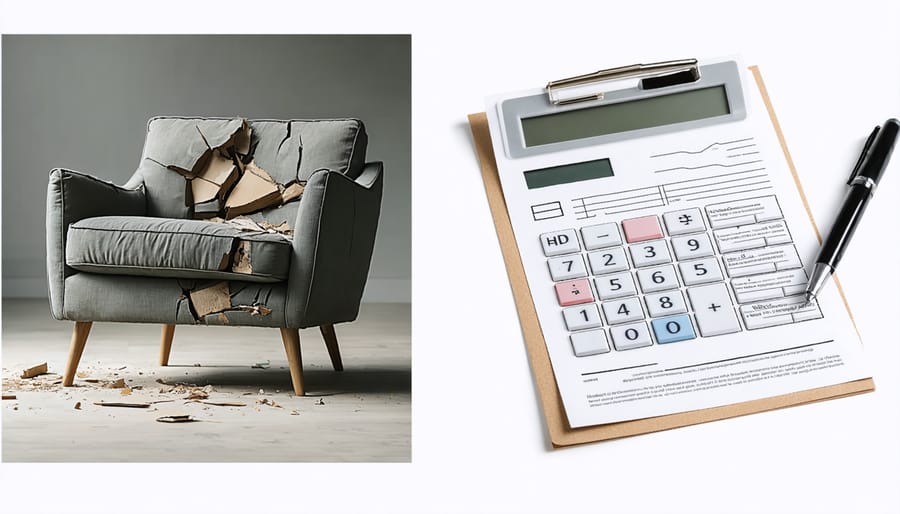
When communicating with insurance representatives, maintain a professional and confident demeanor throughout all interactions. Always communicate in writing when possible, sending emails or letters to create a documented trail of your negotiations. Keep your tone respectful but firm, and avoid emotional language that could undermine your position.
Before any conversation, prepare your key talking points and supporting documentation. This includes having repair estimates, photos of damaged furniture, and relevant policy details readily available. When speaking with adjusters, be clear and specific about your expectations and the reasoning behind your settlement request.
Take detailed notes during every phone conversation, including the date, time, and name of the representative you spoke with. Follow up each call with an email summarizing the discussion points and any agreements made. This creates a paper trail and helps prevent misunderstandings later in the process.
Remember to ask questions if anything is unclear, and request clarification in writing for any complex terms or decisions. Be patient but persistent in your follow-up communications, and establish reasonable deadlines for responses. If you feel the conversation becoming confrontational, politely request to escalate the matter to a supervisor or take a break to review the information presented.
Avoid accepting the first offer immediately, as this often leaves room for negotiation. Instead, request a detailed explanation of how the settlement amount was calculated and be prepared to counter with your own well-documented figures.
Insurance companies often employ predictable insurance company tactics during settlement negotiations. A common strategy is making a low initial offer, hoping you’ll accept it out of frustration or urgency. They might also delay responses to wear down your patience or question the extent of furniture damage to minimize their payout.
Another frequent approach is emphasizing policy limitations without fully explaining your coverage benefits. They may suggest that certain types of furniture damage aren’t covered or push for repairs when replacement is more appropriate. Some adjusters might overwhelm you with technical terms or complex policy language to create confusion.
To counter these strategies, document everything meticulously and maintain professional communication. When they claim certain damages aren’t covered, request specific policy references. If they delay, follow up regularly and keep a communication log. Remember that adjusters often have settlement authority higher than their first offer.
Don’t be swayed by pressure to accept quick settlements. Insurance companies count on claimants being unfamiliar with the process and their rights. By understanding these common tactics, you’re better positioned to negotiate effectively. Stay focused on fair compensation for your furniture damage and be prepared to support your claim with detailed documentation and professional assessments.

Before signing any settlement agreement, carefully review every detail to protect your interests. Start by verifying that all claimed items and damages are accurately listed with their correct values. The settlement amount should match your documented losses and any agreed-upon negotiations.
Pay special attention to the release clause, which typically states you won’t pursue further claims related to this incident. Ensure the scope of the release is specific to the current claim and doesn’t inadvertently waive rights for unrelated or future claims.
Check that the settlement agreement includes:
– Correct policy information and claim number
– Accurate description of damaged furniture items
– Agreed-upon settlement amount in clear figures
– Specific timeline for payment disbursement
– Clear statement of any deductibles applied
– Details about depreciation and actual cash value calculations
Look for any conditions or requirements you must meet before receiving payment, such as providing additional documentation or completing repairs within a specific timeframe. Be wary of clauses requiring confidentiality or limiting your ability to discuss the settlement.
If anything seems unclear or concerning, don’t hesitate to seek legal counsel before signing. Remember, once you sign the agreement, it becomes a legally binding contract that’s difficult to modify or challenge later. Take your time to understand every aspect of the settlement before finalizing it.
Once you’ve successfully negotiated a settlement, understanding the payment collection process is crucial. Insurance companies typically issue payment within 30 to 60 days after reaching an agreement, though this timeline can vary by state and company policy. Make sure to get the settlement terms in writing, including the agreed amount and expected payment date.
Most insurance companies will send the settlement check directly to you or your designated representative. If you have a mortgage on your property, the check might be made payable to both you and your mortgage company, requiring both parties to endorse it. Keep detailed records of all correspondence and maintain copies of signed documents for your files.
Follow up regularly if payment hasn’t arrived within the agreed timeframe. Send a polite email reminder after the first week of delay, followed by a phone call if necessary. Document all communication attempts, including dates, times, and the names of representatives you speak with.
Be prepared to provide any additional documentation the insurance company might request before releasing payment. This could include signed releases, final repair estimates, or proof of completed work. Once you receive the check, verify that the amount matches the agreed settlement and deposit it promptly.
If you experience significant delays or the insurance company fails to honor the agreement, consider consulting with a public adjuster or attorney who specializes in insurance claims.
Negotiating a cash settlement with your insurance company requires patience, preparation, and persistence. By following the steps outlined in this guide, you’ll be better equipped to secure a fair settlement for your furniture damage claim. Remember to thoroughly document all damage, maintain detailed records of your communication with the insurance company, and always get professional estimates to support your claim.
Don’t be afraid to respectfully challenge low settlement offers and present evidence supporting your position. If needed, consider enlisting the help of a public adjuster or legal professional to strengthen your negotiating position. Stay focused on your goal of receiving fair compensation while maintaining a professional demeanor throughout the process.
Key takeaways: document everything, understand your policy limits, prepare strong supporting evidence, and negotiate confidently but professionally. If you feel overwhelmed, remember that you have the right to seek professional assistance at any point in the process. With proper preparation and a strategic approach, you can successfully navigate insurance negotiations and achieve a satisfactory cash settlement for your furniture damage claim.
Take action today by reviewing your policy and beginning the documentation process. The sooner you start, the stronger your position will be during negotiations.