
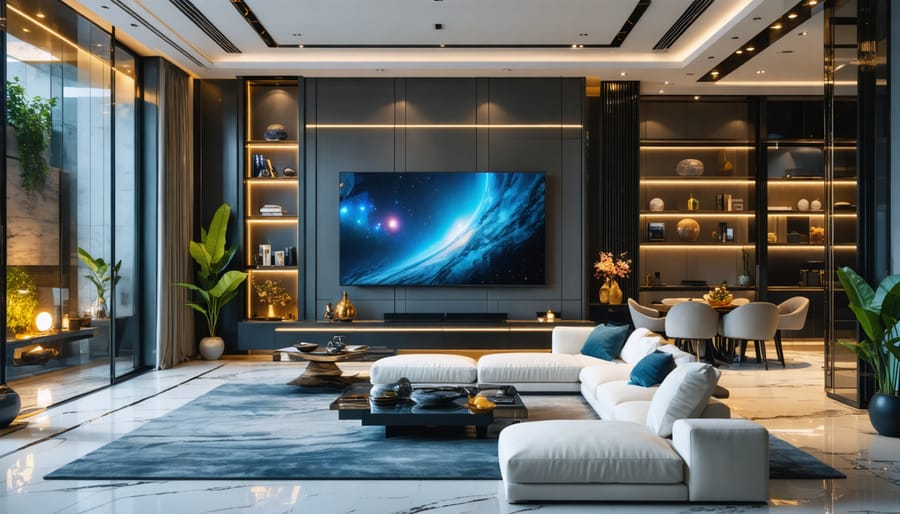
Technology has revolutionized interior design, transforming static spaces into dynamic, responsive environments that enhance both functionality and aesthetic appeal. Today’s smart homes seamlessly blend cutting-edge automation with sophisticated design elements, creating spaces that are not only beautiful but also incredibly efficient and intuitive to use.
From voice-controlled lighting systems that adjust to match your mood to intelligent furniture that adapts to your daily routines, modern interior design has evolved beyond mere decoration. Smart technology now serves as both a practical tool and a design element, enabling homeowners to create spaces that are more comfortable, energy-efficient, and visually striking than ever before.
The integration of technology in interior design isn’t just about adding gadgets—it’s about crafting thoughtful, cohesive environments where technology enhances the user experience without compromising style. Whether it’s hidden charging stations elegantly incorporated into custom cabinetry or automated window treatments that respond to natural light levels, today’s design solutions prove that technology and aesthetics can work in perfect harmony.
As we continue to embrace these innovations, the line between technology and design grows increasingly blurred, opening up exciting possibilities for creating spaces that are not only visually stunning but also intelligently responsive to our needs and preferences.
Modern interior design requires seamless integration of technology, and the key lies in clever concealment of essential infrastructure. Recessed wall panels and decorative moldings can hide network cables and power lines while maintaining a clean aesthetic. Strategic placement of USB outlets and charging stations behind furniture or within custom cabinetry ensures functionality without compromising style.
For whole-home automation systems, centralized hubs can be tucked away in utility closets or dedicated tech cabinets, while wireless access points can be concealed within ceiling fixtures or wall-mounted art pieces. Cable management solutions, such as hollow baseboards and crown molding with built-in channels, offer elegant ways to route necessary wiring throughout the space.
Smart planning during renovation or construction allows for the installation of conduit systems, making future tech upgrades easier without disturbing wall finishes. Consider incorporating dedicated tech zones within furniture pieces, such as side tables with integrated charging surfaces or media consoles with ventilated equipment compartments. These thoughtful infrastructure solutions ensure your space remains both technologically advanced and visually appealing.
Smart lighting has revolutionized how we think about interior illumination, seamlessly blending technology with aesthetic appeal. Modern smart lighting systems offer unprecedented control over ambiance, energy efficiency, and functionality through intuitive smartphone apps or voice commands.
These systems can be programmed to adjust automatically based on natural light levels, time of day, or occupancy, creating the perfect atmosphere for any occasion. Color-changing LED bulbs allow homeowners to transform spaces instantly, from bright, energizing light for productive work sessions to warm, subtle tones for relaxing evenings.
Integration options include recessed ceiling lights, LED strips for accent lighting, and smart switches that work with existing fixtures. Popular features like motion sensors, dimming capabilities, and scheduled lighting routines not only enhance convenience but also contribute to energy savings.
For design professionals, smart lighting opens new possibilities in layered lighting schemes. Preset scenes can highlight architectural features, artwork, or create distinct zones within open-plan spaces. The key is selecting fixtures that complement your interior style while providing the smart functionality modern living demands.
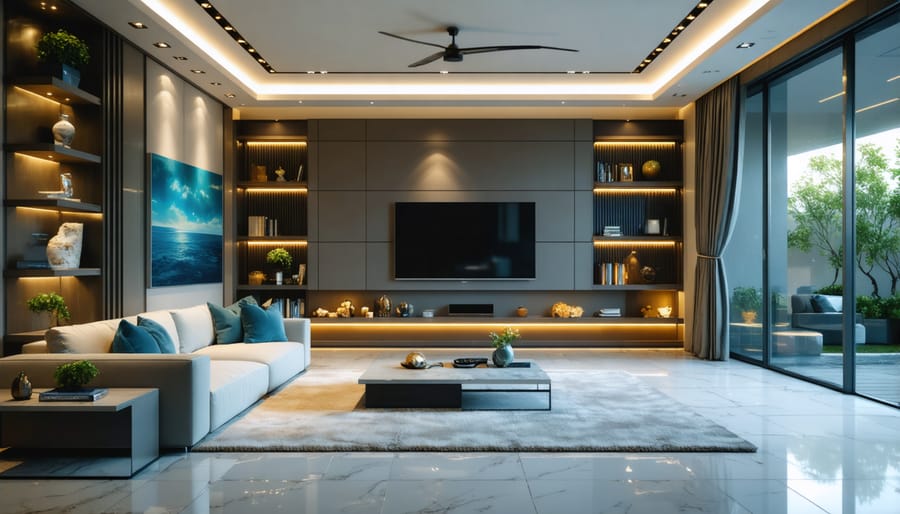
Today’s smart seating and beds are revolutionizing how we experience comfort in our living spaces. Innovative manufacturers have seamlessly integrated technology into everyday furniture pieces, creating solutions that adapt to our needs while maintaining sophisticated aesthetics.
Smart beds now offer sleep tracking capabilities, temperature regulation, and adjustable firmness settings that can be controlled through smartphone apps. Some models even respond automatically to your sleeping position, adjusting throughout the night to ensure optimal support. Advanced massage chairs feature AI-powered body scanning technology to deliver personalized massage experiences, while incorporating built-in speakers and USB charging ports.
In the living room, smart sofas and recliners have evolved beyond basic power controls. Modern pieces include ambient lighting, wireless charging surfaces, and voice-activated position adjustments. Some models feature built-in climate control systems that can warm or cool the seating surface, while others incorporate health monitoring sensors that track posture and suggest position changes for better comfort.
For those working from home, smart office chairs offer posture correction feedback, sitting time alerts, and automatic height adjustments based on user preferences. These features can be customized through dedicated apps, allowing users to track their sitting habits and maintain healthier work positions throughout the day.
When selecting smart furniture, consider pieces that complement your existing décor while offering genuinely useful features that enhance your daily routine. The key is finding the right balance between technological innovation and classic comfort.
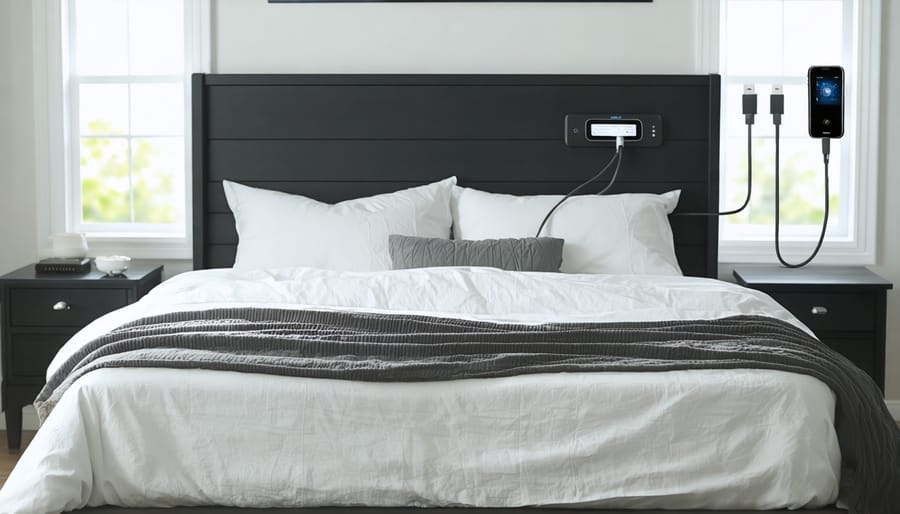
In today’s tech-driven world, furniture has evolved beyond its traditional role to accommodate our digital lifestyle while maintaining timeless design elements. Multi-functional tech furniture seamlessly integrates technology with everyday comfort and utility, creating spaces that are both practical and aesthetically pleasing.
Consider the smart coffee table, which doubles as a charging station with built-in USB ports and wireless charging pads. These pieces often feature temperature-controlled compartments for beverages and touch-sensitive controls for ambient lighting, all while maintaining their primary function as elegant centerpieces.
Storage solutions have also received a tech upgrade. Entertainment units now incorporate cable management systems, ventilated spaces for gaming consoles, and integrated soundbars. Some feature motorized panels that conceal screens when not in use, preserving the room’s visual harmony.
In home offices, adjustable desks with programmable height settings and built-in power management solutions have become increasingly popular. These pieces often include wireless charging capabilities, hidden compartments for electronics, and cable organization systems that keep workspaces clean and efficient.
Bedroom furniture has evolved to include nightstands with integrated speakers, mood lighting, and charging capabilities. Smart wardrobes featuring built-in LED lighting, humidity control, and digital inventory systems help organize clothing while maintaining a sophisticated appearance.
The key to successful tech furniture integration lies in selecting pieces that balance functionality with design, ensuring technology enhances rather than dominates your living space.
Modern technology doesn’t have to compromise your interior design aesthetic. With thoughtful planning, you can seamlessly integrate smart devices while maintaining a clean, sophisticated look. Consider installing motorized artwork that slides to reveal a television or incorporating a mirror that transforms into a digital display when activated. Built-in charging stations can be elegantly concealed within drawer units or under-counter surfaces, eliminating unsightly cords and adapters.
For home theater enthusiasts, in-wall speakers covered with acoustically transparent fabric panels offer superior sound without visual disruption. Smart lighting controls can be integrated into decorative wall plates that complement your existing hardware, while motorized window treatments can be concealed within custom valances or ceiling pockets.
Storage solutions play a crucial role in hiding tech components. Custom media cabinets with ventilated back panels keep devices cool while keeping them out of sight. Wireless routers and modems can be tucked away in decorative boxes with strategic ventilation holes, while power strips and cables can be managed through furniture with built-in wire management systems.
Consider furniture pieces specifically designed for tech integration, such as side tables with wireless charging capabilities or ottomans with built-in USB ports. Even smart home hubs can be disguised within decorative objects or tucked into stylish bookshelf arrangements, ensuring your space remains both functional and visually appealing.
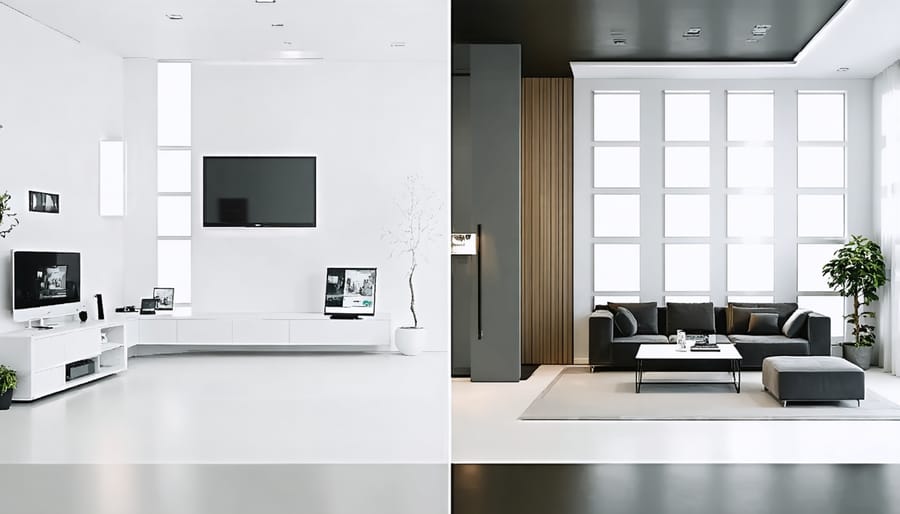
Voice-controlled environments represent a significant leap forward in how we interact with our living spaces, seamlessly blending technology with comfort and convenience. Modern smart home systems now allow homeowners to adjust lighting, temperature, window treatments, and even furniture settings through simple voice commands. This integration, when thoughtfully implemented alongside natural elements in interior design, creates spaces that are both sophisticated and intuitive to use.
Popular voice assistant platforms like Amazon Alexa, Google Assistant, and Apple HomeKit can be integrated with various smart furniture pieces and fixtures. Imagine walking into your living room and saying, “Good morning” to activate your preferred morning routine – automatically raising the blinds, adjusting the thermostat, and setting your adjustable bed or recliner to an upright position.
For optimal functionality, consider installing smart hubs strategically throughout your space, ensuring consistent coverage and response. Many modern furniture pieces now come with built-in voice control capabilities, from smart beds that adjust positions to entertainment centers that manage your audio-visual experience. When planning voice-controlled environments, it’s essential to consider both the technological infrastructure and the aesthetic impact of devices and speakers. Many manufacturers now offer discrete or decorative options that complement rather than detract from your interior design scheme.
Creating adaptable spaces that can evolve with technological advancements requires thoughtful planning and sustainable design choices. Start by implementing a robust electrical infrastructure with ample power outlets, USB ports, and charging stations strategically placed throughout the space. Consider installing conduits and cable raceways that can accommodate future wiring needs without requiring major renovations.
Modular furniture solutions offer excellent flexibility for tech integration. Choose pieces with built-in power management systems and easily accessible cable ports that can be upgraded as technology evolves. Multi-functional furniture, such as ottomans with built-in charging capabilities or adjustable workstations, provides versatility while maintaining aesthetic appeal.
Consider incorporating dedicated tech zones within your space that can adapt to different purposes. These areas should feature adjustable lighting, multiple power sources, and flexible mounting options for screens or other devices. Include adequate ventilation systems to manage heat from electronic devices and ensure proper airflow.
Storage solutions should be designed with technology in mind. Built-in cabinets with removable backs for cable management and adjustable shelving can accommodate different device sizes and configurations. Consider including dedicated spaces for future smart home hubs and automation controls.
Lighting infrastructure should be designed to support both current and future needs. Install smart-ready fixtures and ensure your electrical system can handle advanced lighting control systems. Include provisions for automated window treatments and environmental controls that can be integrated with future smart home systems.
Remember to maintain a balance between technological functionality and timeless design elements. This approach ensures your space remains both practical and aesthetically pleasing as technology continues to advance.
The key to successful tech integration in modern interiors lies in knowing how to blend traditional and modern elements seamlessly. Start by selecting smart devices that complement your existing décor through matching finishes and understated designs. For instance, choose smart lighting fixtures that mirror your home’s architectural style, or opt for motorized blinds that coordinate with your window treatments.
Layer your space with natural materials and textures to offset the sleek appearance of technology. Incorporate wooden furniture, plush textiles, and organic accessories to create a welcoming atmosphere. Consider hiding technology behind custom panels or within furniture pieces specifically designed to conceal electronic components while maintaining easy access for maintenance.
Create designated tech-free zones within your home where traditional elements take center stage. This might include a cozy reading nook with vintage furniture or a dining area focused on face-to-face interaction. When selecting smart furniture, opt for pieces that serve dual purposes – such as charging tables with classic designs or smart mirrors concealed within traditional frames.
Color plays a crucial role in balancing tech and tradition. Use warm, inviting colors to soften the impact of technological elements, and consider implementing smart lighting that can adjust to create different moods throughout the day. Remember that successful integration isn’t about hiding all technology, but rather about creating a harmonious environment where modern conveniences enhance rather than dominate the space.
Finally, maintain a sense of history and personality by incorporating meaningful décor pieces, family heirlooms, and artwork alongside your smart home features. This creates a space that feels both personal and progressive, honoring the past while embracing the future.
The integration of smart technology in interior design has fundamentally transformed how we interact with our living and working spaces. From automated lighting systems to AI-powered climate control, these innovations have created environments that are not only aesthetically pleasing but also highly functional and energy-efficient. The marriage of technology and design has proven that comfort and convenience can coexist with style and sophistication.
Looking ahead, we can expect even more exciting developments in this field. The rise of IoT-enabled furniture, voice-activated systems, and sustainable smart materials suggests a future where our spaces will become increasingly responsive to our needs while maintaining their visual appeal. Design professionals are already exploring ways to seamlessly embed technology within architectural elements, making it virtually invisible yet readily accessible.
The key to successful implementation lies in striking the right balance between technological advancement and timeless design principles. As we’ve seen, the most successful smart interior designs are those that prioritize both user experience and aesthetic harmony. Property owners and designers who embrace this integrated approach will be well-positioned to create spaces that are not only current but future-ready.
For those considering a smart technology upgrade, the investment in proper infrastructure and carefully selected smart solutions will continue to pay dividends in terms of comfort, efficiency, and property value. As technology evolves, the possibilities for creating intelligent, beautiful spaces will only expand, making this an exciting time for interior design innovation.