

Transform forgotten bedroom furniture into coveted vintage masterpieces through meticulous restoration techniques that preserve historical value while meeting modern luxury retail standards. The art of bedroom furniture restoration bridges the delicate balance between maintaining authentic character and ensuring functional excellence for today’s discerning customers.
From ornate Victorian headboards to mid-century modern dressers, each piece tells a unique story that skilled restoration can enhance. Professional restoration not only recovers the original beauty of these pieces but also significantly increases their market value, making it a worthwhile investment for both collectors and retailers.
Master craftsmen combine traditional woodworking methods with contemporary finishing techniques to breathe new life into antique bedroom sets. This approach ensures that each restored piece meets the exacting standards of high-end retail environments while maintaining its historical integrity. Whether addressing intricate carved details on an 18th-century armoire or refinishing the clean lines of a modernist nightstand, proper restoration requires both technical expertise and an artist’s eye for detail.
The growing demand for authentic, restored bedroom furniture in luxury markets has created a unique opportunity for restoration professionals who can deliver museum-quality results while understanding contemporary retail requirements.
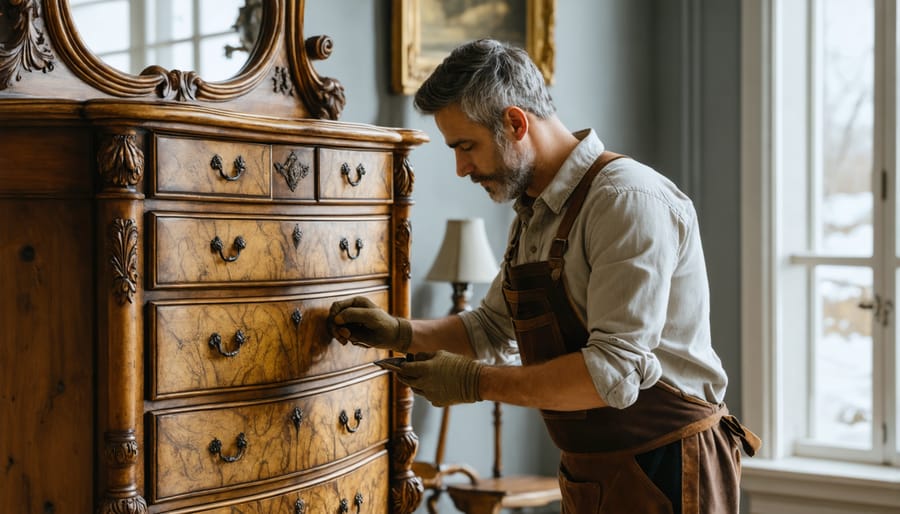
Authenticating historical bedroom furniture requires a keen eye for detail and thorough knowledge of period-authentic restoration techniques. Start by examining the construction methods, such as dovetail joints, wood types, and hardware styles typical of specific eras. Victorian pieces often feature ornate carvings and dark woods like mahogany, while Art Deco furniture showcases geometric patterns and exotic wood veneers.
Look for original finish remnants, particularly in hidden areas like drawer bottoms or back panels. These can provide crucial information about authentic colors and patinas. Hardware should be carefully evaluated – original brass or bronze pieces often develop a distinctive patina that’s difficult to replicate artificially.
When preserving historical elements, document everything before beginning restoration work. Photograph unique details and take measurements of original components. Where possible, retain original materials, especially decorative elements like carved headboards or original mirror glass. If replacement parts are necessary, source period-appropriate materials that match both the aesthetic and construction quality of the original piece.
For luxury buyers, authenticity is paramount. Maintain detailed restoration records and, when available, include provenance documentation to enhance the piece’s value and historical significance.
In upscale retail environments, bedroom furniture restoration demands adherence to high-end restoration standards that meet or exceed showroom quality. Premium materials play a crucial role in achieving these exacting standards. For wood finishes, we exclusively use high-grade lacquers and varnishes that provide both durability and an elegant sheen. These finishes must be UV-resistant and colorfast to maintain their appearance under bright retail lighting.
Hardware replacements should feature solid brass, bronze, or nickel components, avoiding plated or composite materials that may tarnish or wear quickly. Upholstery materials must meet commercial-grade specifications while offering luxurious appeal – think 100,000+ double rub count fabrics, top-grain leathers, and designer textiles that complement current market trends.
For structural reinforcement, we utilize furniture-grade hardwoods and marine-grade plywood, ensuring longevity that matches the piece’s aesthetic appeal. All adhesives and joint compounds must be commercial-grade and temperature-stable to prevent degradation in varying retail environments. The final presentation should showcase flawless craftsmanship with particular attention to details like precise pattern matching, perfectly aligned grain patterns, and immaculate finishing that stands up to close inspection.
Achieving a flawless finish on bedroom furniture requires meticulous surface preparation and refined refinishing techniques focused on preserving historical value while meeting luxury retail standards. Begin by carefully removing all existing finish using appropriate stripping agents, followed by thorough sanding with progressively finer grits (starting at 80-grit and working up to 220-grit) to ensure a smooth, even surface.
Pay special attention to intricate details and carved elements, using specialized tools like detail sanders and sanding sponges to maintain crisp edges and original design features. After cleaning the surface with tack cloth to remove all dust particles, apply a high-quality wood conditioner to ensure even stain absorption, particularly important for pieces made from maple or pine.
For the finishing process, select premium-grade stains and topcoats that complement the wood’s natural characteristics while providing lasting protection. Apply thin, even coats using high-quality brushes or spray equipment, allowing proper drying time between applications. Multiple layers of clear finish, carefully sanded between coats, create the deep, lustrous appearance expected in luxury retail settings.
For painted pieces, use professional-grade primers and paints, applying them in controlled environmental conditions to achieve optimal results. The final presentation should showcase both the furniture’s inherent beauty and the masterful restoration work, making each piece worthy of premium retail display.
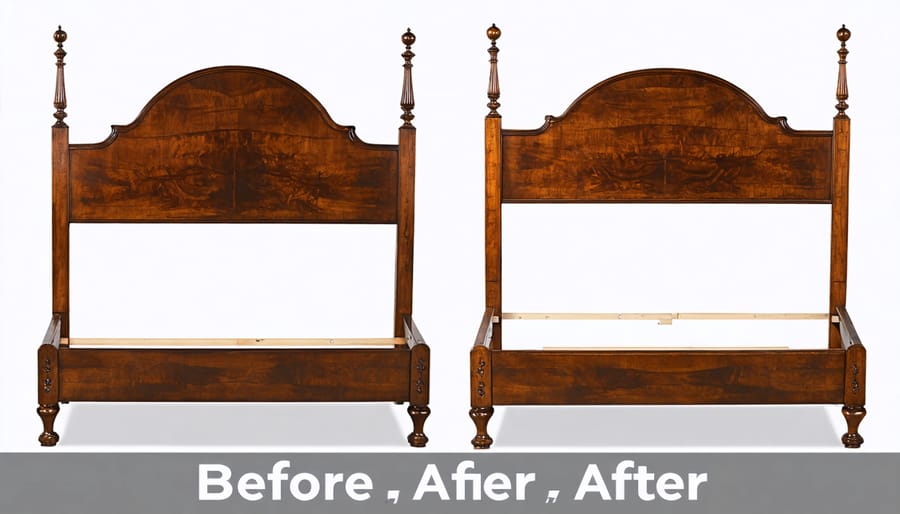
Original hardware on vintage bedroom furniture tells a story and adds significant value to the piece. When restoring period hardware, begin by carefully removing each piece, documenting its location and orientation. Gently clean hardware using appropriate solutions – a mild soap solution for brass and copper, or specialized cleaners for specific metals. Avoid harsh chemicals that might damage the patina or finish.
For severely damaged or missing hardware, finding authentic period replacements should be your first choice. Reputable antique hardware dealers and specialized restoration suppliers often maintain extensive collections of period-correct pieces. When selecting replacements, match not only the style but also the material and finish of the original hardware.
If authentic replacements aren’t available, premium reproductions can be an excellent alternative. Look for high-quality brass, bronze, or steel hardware that matches the period style. Key elements to consider include:
– Material authenticity and quality
– Precise measurements and mounting specifications
– Finish matching (aged brass, oxidized bronze, etc.)
– Hardware functionality and durability
For drawer pulls and handles, ensure the mounting configuration matches the original piece exactly. Consider having custom hardware manufactured if dealing with rare or unique pieces. When installing new hardware, use appropriate techniques to prevent damage to both the hardware and the furniture, such as pre-drilling holes and using proper backing plates when necessary.
Ensuring the structural integrity of bedroom furniture requires a delicate balance between modern reinforcement techniques and preservation of original craftsmanship. For wooden bed frames, the corner blocking method remains a gold standard, involving the installation of hardwood triangular blocks with both wood glue and screws to strengthen joints. This technique is particularly effective for antique four-poster beds that have developed wobbling issues.
For dressers and armoires, we recommend the installation of metal L-brackets on interior corners, carefully positioned to remain hidden while providing crucial support. Traditional mortise and tenon joints can be reinforced using epoxy consolidants, which penetrate deep into the wood fibers without compromising the piece’s authenticity.
One of our most successful approaches involves the strategic use of floating tenons in damaged joint areas. This method allows us to maintain the original appearance while significantly improving structural stability. For drawer systems, we implement brass reinforcement plates and modern slide mechanisms when necessary, always ensuring they’re concealed from view.
Chair spindles and headboard posts often benefit from our specialized doweling technique, where we insert hardwood dowels alongside existing joints, providing additional support without visible alterations. This approach has proven particularly effective in preserving the integrity of Victorian-era bedroom sets while ensuring they remain functional for daily use.
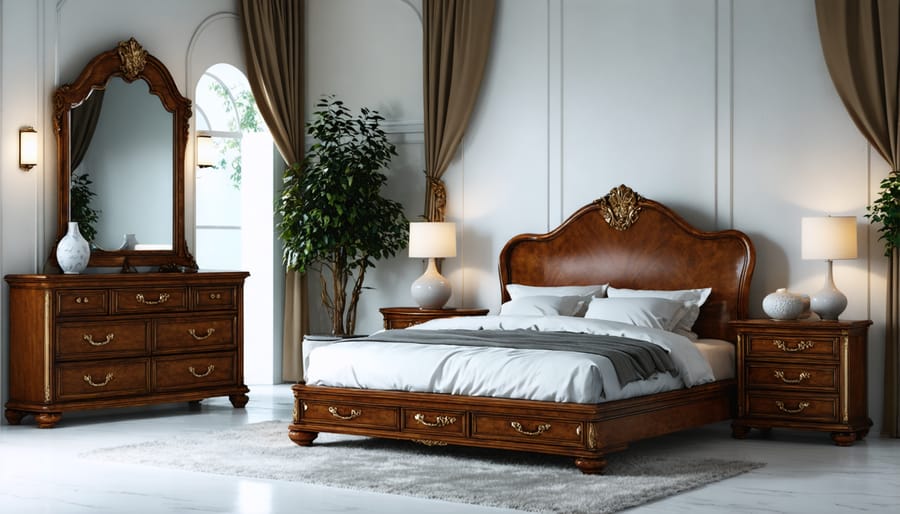
Creating an eye-catching display for restored bedroom furniture requires careful attention to both aesthetics and functionality. By implementing proven luxury retail presentation strategies, you can showcase your pieces in their best light while maximizing their appeal to potential buyers.
Start by arranging furniture pieces in lifestyle vignettes that tell a story. Position the bed as the focal point, with complementary pieces like restored nightstands and dressers placed at natural angles. This creates an inviting flow that allows customers to envision the furniture in their own homes.
Lighting plays a crucial role in highlighting the craftsmanship of restored pieces. Use a combination of ambient and accent lighting to showcase detailed restoration work. Position adjustable LED spotlights to emphasize unique features like hand-carved details or restored hardware. Warm-toned lighting around 2700K-3000K best showcases wood tones and creates an intimate atmosphere.
Consider the power of contrast in your displays. Pair darker restored pieces with lighter backdrops or vice versa. Add depth with carefully chosen accessories like vintage books, elegant mirrors, or period-appropriate décor items that complement without overwhelming the furniture.
Keep pathways clear and ensure each piece is accessible for closer inspection. Place informational cards discretely sharing the restoration story of significant pieces, as this adds value and creates emotional connections with potential buyers. Rotate displays regularly to maintain fresh interest and showcase different aspects of your restored collection.
Proper documentation is crucial when restoring valuable bedroom furniture, serving as both a mark of authenticity and a testament to the piece’s history. Start by photographing the furniture from multiple angles before beginning any restoration work, capturing details of original finishes, hardware, and any maker’s marks. Create a detailed condition report noting existing damage, repairs, and unique characteristics.
Maintain a comprehensive restoration diary documenting each step of the process, including materials used, techniques employed, and any discoveries made during the restoration. This should include dates, specific products, and methods, along with photographs at various stages. For antique pieces, research and record any available historical information about the manufacturer, period, and style.
When presenting to luxury buyers, prepare a professional portfolio that includes before-and-after photos, material certificates, and a detailed narrative of the restoration process. Include any historical documentation, original receipts, or provenance information that adds value to the piece. Consider creating a digital archive that can be easily shared with potential buyers, featuring high-resolution images and detailed descriptions.
Provide buyers with a certificate of authenticity that includes the furniture’s history, restoration details, and care instructions. This documentation should be presented in a professional folder or digital format, demonstrating the investment value and craftsmanship of the restored piece. Remember to include your contact information for future maintenance or inquiries, establishing a lasting relationship with your clients.
Professional bedroom furniture restoration plays a pivotal role in the luxury retail market, offering significant value to both retailers and discerning customers. Through expert restoration services, cherished pieces are transformed into showroom-worthy items that command premium prices while preserving their historical significance and character. This investment in quality restoration not only enhances the visual appeal of bedroom furniture but also contributes to sustainable retail practices by extending the lifespan of valuable pieces.
The success of professional restoration in luxury retail settings is evidenced by the growing demand for authentically restored pieces among high-end consumers. These customers increasingly recognize the superior craftsmanship, attention to detail, and unique character that properly restored furniture brings to their bedrooms. The combination of traditional restoration techniques with modern finishing methods ensures that each piece meets contemporary quality standards while maintaining its original charm.
For retailers, offering professionally restored bedroom furniture creates a distinctive market position and builds customer trust. The ability to present beautifully restored pieces alongside new inventory demonstrates a commitment to quality and sustainability that resonates with today’s conscious consumers. Moreover, the expertise involved in professional restoration adds significant value to the retail experience, allowing stores to offer unique pieces with compelling stories that justify premium pricing.
As the luxury furniture market continues to evolve, professional bedroom furniture restoration remains an invaluable service that bridges the gap between historical craftsmanship and modern retail expectations.