
Transform your mattress into a healthier sleeping surface with professional-grade cleaning techniques you can execute at home. Strip the bed completely and vacuum every inch of the mattress surface using upholstery attachments, paying special attention to seams and crevices where dust and debris accumulate. Neutralize odors and kill bacteria by sprinkling baking soda mixed with a few drops of essential tea tree oil across the entire surface, letting it sit for at least 4 hours before vacuuming thoroughly. Attack stubborn stains by blotting (never rubbing) with a mixture of equal parts white vinegar and water, followed by a light dusting of cornstarch to absorb excess moisture. Prevent future buildup by rotating your mattress every three months and using a quality mattress protector that blocks dust mites, spills, and everyday wear. These proven cleaning methods not only extend your mattress’s lifespan but also ensure you’re sleeping on a fresh, hygienic surface night after night.
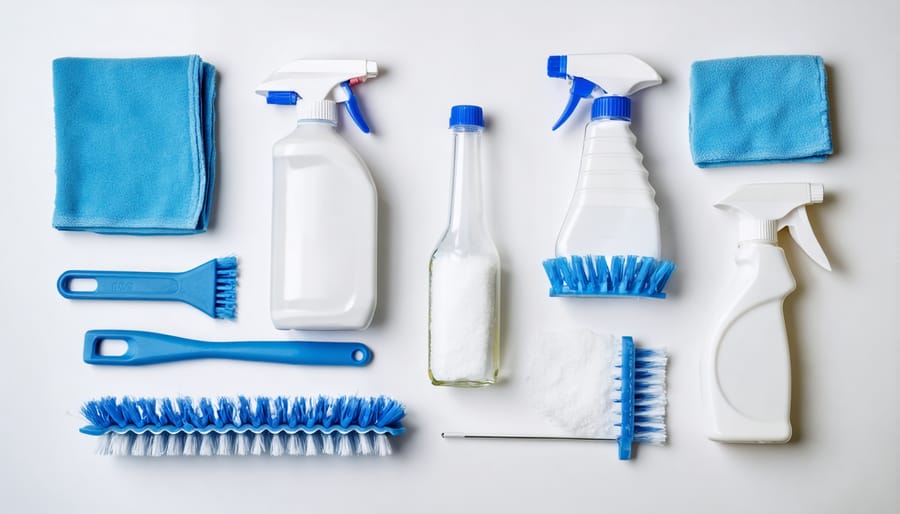
To effectively clean your mattress at home, gather these essential household supplies that you likely already have. You’ll need a vacuum cleaner with upholstery attachments, baking soda, white vinegar, and clean microfiber cloths. A spray bottle is helpful for applying cleaning solutions, while a sifter can help distribute baking soda evenly. Keep hydrogen peroxide and dish soap on hand for tackling tough stains.
For deeper cleaning, you may want enzyme cleaners, which are particularly effective on organic stains and odors. Essential oils like lavender or tea tree can be added to your cleaning mixture for a pleasant, fresh scent. Don’t forget to have clean sheets ready to put back on the mattress once it’s dry.
Make sure to have a few clean, dry towels available for blotting moisture and a fan to help speed up the drying process. Store these supplies together in a designated cleaning caddy for easy access during your regular mattress maintenance routine.
For tackling stubborn mattress stains, you’ll want to equip yourself with specialized tools that make the job more effective. A UV blacklight is invaluable for detecting biological stains that might not be visible to the naked eye. Keep enzyme-based cleaners on hand specifically designed for breaking down protein-based stains like blood, sweat, and other bodily fluids.
A carpet cleaning attachment for your vacuum provides deeper suction power, while upholstery brushes with different bristle strengths help work cleaning solutions into the fabric without damaging it. Consider investing in a handheld steam cleaner, which can penetrate deep into the mattress fibers to eliminate bacteria and dust mites.
For spot cleaning, hydrogen peroxide spray bottles, clean white cloths, and a gentle-bristled brush are essential. Don’t forget to have a fan or dehumidifier ready to help speed up the drying process after cleaning. These tools, combined with proper cleaning solutions, will ensure your mattress cleaning efforts are both thorough and effective.
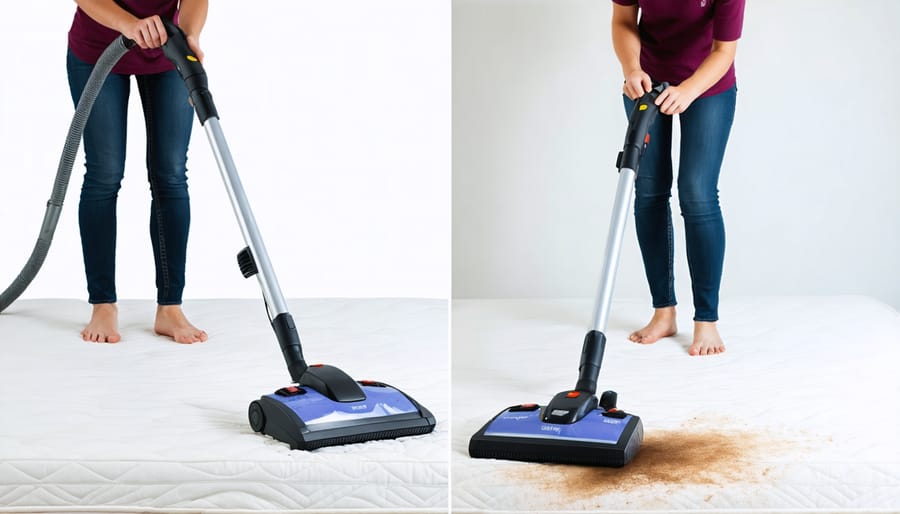
Before diving into the cleaning process, proper preparation is essential for achieving the best results. Start by completely stripping the mattress of all bedding, including sheets, mattress protectors, and pillow tops. Vacuum the entire surface thoroughly using the upholstery attachment to remove loose debris, dust, and dead skin cells. Pay special attention to seams, crevices, and tufted areas where particles tend to accumulate.
Next, inspect the mattress for any specific stains, odors, or problem areas that may require targeted treatment. If possible, move the mattress to a well-ventilated area with good natural light, which will help you identify spots more easily and aid in the drying process later.
For deep cleaning, place the mattress on a clean, flat surface. If you’re working on a bed frame, ensure it’s stable and at a comfortable height to prevent strain while cleaning. Consider placing a clean drop cloth or plastic sheet underneath to protect your floor or carpet from any cleaning solutions that might drip during the process.
Remember to gather all necessary cleaning supplies before starting to ensure an efficient cleaning session. This preparation phase is crucial for achieving professional-quality results in your DIY mattress cleaning project.
Regular mattress cleaning is essential for maintaining a healthy sleeping environment, and our basic cleaning method is perfect for monthly maintenance. Start by thoroughly vacuuming your mattress using the upholstery attachment, paying special attention to seams, crevices, and tufted areas where dust and debris accumulate.
Next, sprinkle a thin, even layer of baking soda across the entire mattress surface. This natural deodorizer helps absorb moisture and neutralize unwanted odors. Let the baking soda sit for at least 30 minutes – though leaving it for several hours or overnight will yield better results.
While the baking soda works its magic, open your windows to allow fresh air circulation, which helps eliminate musty odors. After the waiting period, thoroughly vacuum the mattress again to remove all the baking soda. Use slow, overlapping strokes to ensure complete removal.
For light surface cleaning, mix equal parts water and white vinegar in a spray bottle. Lightly mist the mattress surface, being careful not to oversaturate. Use a clean, white cloth to blot the surface gently. Allow the mattress to dry completely before making the bed – typically 4-6 hours in a well-ventilated room.
Remember to rotate your mattress 180 degrees while cleaning to promote even wear. This simple maintenance routine, performed monthly, helps extend your mattress’s life and ensures a cleaner, fresher sleeping surface. For best results, combine this basic cleaning method with proper mattress protection, such as using a quality mattress protector and washing bedding regularly in hot water.
Different stains require specific treatment approaches for effective removal. For biological stains like sweat, urine, or blood, start by blotting the area with a clean white cloth to absorb excess moisture. Mix equal parts water and white vinegar, spray lightly on the stain, and blot again. For stubborn biological stains, sprinkle baking soda over the dampened area and let it sit for 8-10 hours before vacuuming.
Food and beverage stains respond well to a mixture of mild dish soap and cold water. Create a gentle foam by whisking the solution, then apply it to the stain using a soft brush. When removing tough stains like wine or coffee, avoid rubbing vigorously as this can push the stain deeper into the mattress fibers.
For oil-based stains, sprinkle cornstarch or baking soda directly on the affected area and let it sit for several hours to absorb the oil. Vacuum thoroughly and repeat if necessary. If dealing with makeup or cosmetic stains, use a mixture of hydrogen peroxide and dish soap in equal parts, applying it gently with a clean white cloth.
Always test any cleaning solution on a small, inconspicuous area first, and never saturate your mattress with liquid. Allow the mattress to dry completely before making the bed, using fans or open windows to promote air circulation.
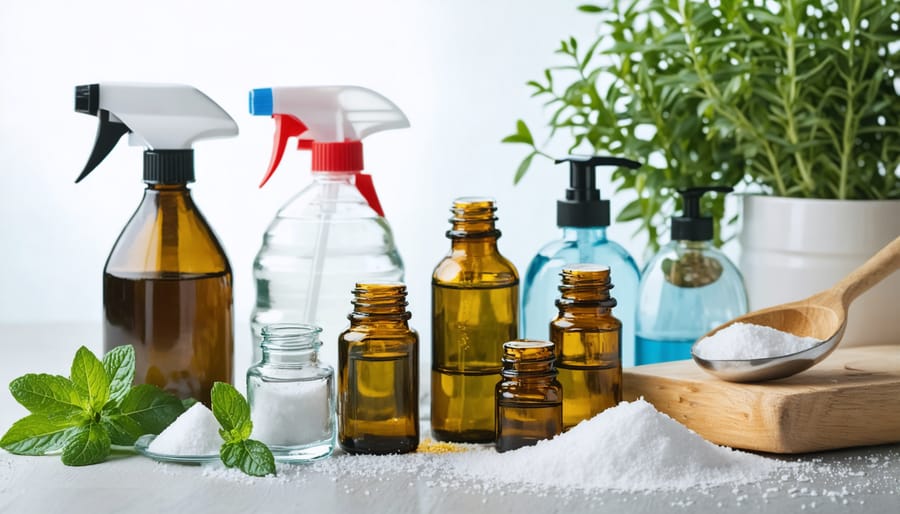
Creating effective eco-friendly cleaning solutions for your mattress is simple using common household ingredients. Here are three reliable mixtures that deliver professional-quality results:
Basic Deodorizing Solution:
Mix 1 cup of baking soda with 5-6 drops of your preferred essential oil (lavender or tea tree work best). This combination neutralizes odors while providing natural antimicrobial benefits.
Stain Removal Paste:
Combine 1/4 cup hydrogen peroxide, 1 tablespoon dish soap, and 3 tablespoons baking soda. This mixture tackles tough stains without harsh chemicals.
Deep Cleaning Solution:
Try our tested vinegar-based cleaning solutions by mixing equal parts white vinegar and water with a few drops of lemon essential oil. This combination disinfects and freshens your mattress naturally.
Store these solutions in clearly labeled spray bottles and always test on a small, hidden area first. Remember to use these mixtures sparingly to avoid oversaturating your mattress.
Essential oils offer a natural and aromatic approach to mattress cleaning and maintenance. Lavender oil is particularly effective due to its antimicrobial properties and pleasant scent that promotes restful sleep. To use essential oils in your mattress cleaning routine, add 10-15 drops of your chosen oil to one cup of baking soda. Popular choices include tea tree oil for its antibacterial qualities, eucalyptus for dust mite prevention, and lemongrass for its fresh, clean aroma.
Sprinkle the essential oil-infused baking soda mixture evenly across your mattress surface and let it sit for at least 30 minutes – longer if possible. This allows the oils to penetrate and deodorize while the baking soda absorbs any lingering moisture or odors. Vacuum thoroughly afterward using your upholstery attachment.
For ongoing freshness, create a light misting spray by combining 20 drops of essential oil with two cups of distilled water in a spray bottle. Lightly mist your mattress after cleaning or between deep cleanings, being careful not to oversaturate. Allow the mattress to dry completely before making the bed to prevent moisture buildup.
Maintaining a clean mattress doesn’t have to be a daunting task when you establish a consistent care routine. Just like year-round furniture maintenance, your mattress requires regular attention to stay fresh and hygienic.
Start each morning by pulling back your bedding to air out the mattress for at least 15 minutes. This simple habit helps eliminate moisture and prevent bacterial growth. Weekly maintenance should include thoroughly vacuuming the mattress surface using your vacuum’s upholstery attachment, paying special attention to seams and crevices where dust and debris accumulate.
Rotate your mattress every three months to ensure even wear and extend its lifespan. For pillow-top mattresses, rotation is particularly crucial since they can’t be flipped. Keep your mattress protected with a high-quality mattress cover, washing it monthly in hot water to eliminate dust mites and allergens.
Make it a habit to check for stains weekly and address them promptly using appropriate cleaning methods. Sprinkle baking soda on the surface monthly and let it sit for several hours before vacuuming to neutralize odors naturally. These simple yet effective practices will help maintain your mattress’s cleanliness and durability between deep cleaning sessions.
To extend the life of your mattress and minimize the need for deep cleaning, implementing protective measures is essential. Start by investing in a high-quality mattress protector that’s waterproof yet breathable. This barrier shields your mattress from spills, sweat, and dust while maintaining comfort.
Rotate your mattress every three months to prevent uneven wear and body impressions. For double-sided mattresses, flip them as well during rotation. Keep pets off the bed or use designated pet blankets to minimize hair and dander accumulation.
Consider using fitted sheets with deep pockets to prevent them from slipping off and exposing the mattress. Change bedding weekly to reduce the transfer of body oils and skin cells to the mattress surface. Place a washable mattress pad between your sheets and mattress protector for an extra layer of defense.
When eating or drinking in bed, use a bed tray to catch spills and crumbs. Address any spills immediately by blotting—never rubbing—the area with a clean, dry cloth. Maintain proper room ventilation to prevent moisture buildup, which can lead to mold and mildew growth.
Finally, vacuum your mattress monthly, even with protectors in place, to remove any dust that manages to settle through the barriers.
Regular mattress maintenance is not just about extending the life of your investment – it’s about creating a healthier sleeping environment for you and your family. By following the cleaning methods outlined in this guide, you can effectively remove dust mites, allergens, and unwanted stains while keeping your mattress fresh and hygienic. Remember to vacuum your mattress monthly, treat stains promptly using appropriate cleaning solutions, and deodorize with baking soda every three to four months. Proper ventilation and rotation of your mattress will also contribute to its longevity and performance.
Making mattress cleaning a part of your regular household maintenance routine doesn’t have to be complicated or expensive. With simple household items and a systematic approach, you can maintain a clean, fresh-smelling mattress that promotes better sleep quality. Don’t forget to protect your freshly cleaned mattress with a quality mattress protector and wash your bedding weekly to minimize the accumulation of dirt and allergens. By investing a little time in these DIY cleaning practices, you’ll enjoy a cleaner, more comfortable sleep surface for years to come.