

Transform vintage luxury furniture into a thriving high-end resale business by mastering the delicate balance between authenticity and modern appeal. Premium furniture resale has evolved from a niche market into a $16.6 billion industry, driven by sustainability-conscious collectors and design enthusiasts seeking investment-worthy pieces with character.
The art of curating high-end resale furniture demands an expert eye for distinguishing genuine Eames loungers from skilled reproductions, and original Knoll pieces from inspired interpretations. Today’s most successful resellers combine deep knowledge of design history with strategic restoration techniques, creating a sophisticated inventory that commands top dollar in both digital and physical marketplaces.
Whether you’re an established dealer looking to elevate your offerings or an entrepreneur entering the luxury resale market, understanding the nuances of authentication, restoration, and strategic pricing positions you at the forefront of this growing industry. The most coveted pieces – from mid-century modern classics to contemporary designer furniture – require not just careful sourcing but also masterful presentation to attract discerning buyers willing to invest in exceptional pieces with provenance.
When sourcing vintage pieces for restoration and resale, knowing how to spot quality is essential. The best candidates for becoming gallery-worthy vintage furniture often share several key characteristics. Start by examining the construction materials – solid hardwoods like mahogany, oak, or walnut typically indicate superior craftsmanship. Look for dovetail joints in drawers, mortise-and-tenon connections, and hand-carved details that showcase artisanal expertise.
Check the piece’s structural integrity by gently rocking it to detect wobbling or instability. Drawer slides should operate smoothly, and all joints should be tight and secure. While surface scratches and worn finishes can be addressed through restoration, significant structural damage may make restoration economically unfeasible.
Original hardware, particularly brass or bronze pieces with patina, adds authenticity and value. Examine maker’s marks, labels, or stamps, which can help authenticate the piece’s origin and age. These identifiers are often found on drawer bottoms, back panels, or under seat cushions.
Consider the piece’s design merit and market appeal. Classic styles from renowned periods like Mid-Century Modern, Art Deco, or Victorian tend to maintain their value and attract discerning buyers. Look for pieces with unique character features that will stand out in your inventory while ensuring they align with current design trends and customer preferences.
Discovering premium resale furniture requires knowing where to look beyond traditional retail outlets. Estate sales often yield exceptional finds, particularly in affluent neighborhoods where high-end pieces are more common. Subscribe to local estate sale notifications and arrive early for the best selection.
Consignment shops in upscale areas are treasure troves for designer furniture. Build relationships with shop owners who can alert you when specific pieces arrive. Many high-end consignment stores also maintain online inventories, allowing you to browse remotely.
Online marketplaces have revolutionized the resale furniture industry. Platforms like 1stDibs and Chairish specialize in luxury and vintage pieces, while local Facebook Marketplace and NextDoor listings can reveal unexpected gems. Set up alerts for specific brands or styles to stay ahead of other buyers.
Auction houses remain excellent sources for acquiring premium furniture. Both traditional and online auctions offer authenticated pieces with documented provenance. Research upcoming auctions and preview items whenever possible to assess condition in person.
Interior designers and stagers frequently sell their inventory when updating their collections. Following local design professionals on social media can provide early access to these sales. Additionally, high-end hotels and restaurants occasionally liquidate their furniture during renovations, offering opportunities to acquire commercial-grade luxury pieces at reduced prices.
For the most exclusive finds, develop connections with antique dealers who specialize in specific periods or manufacturers. They often have access to private collections and can source particular pieces on request.
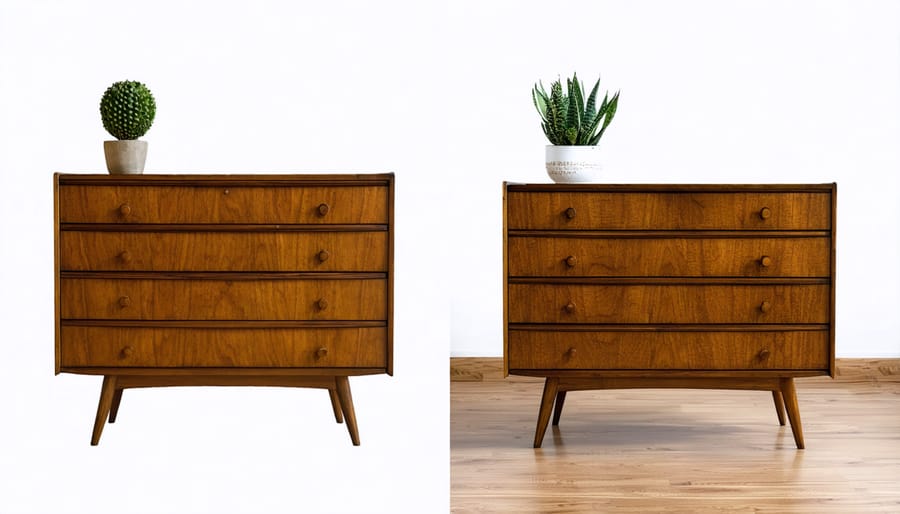
Before investing in restoration or pricing any high-end resale piece, a thorough assessment is essential to determine its true potential. Start by examining the furniture’s overall structural integrity, paying special attention to joints, weight-bearing areas, and any signs of previous repairs. Document all existing damage, including scratches, water marks, sun fading, and upholstery wear.
Authentication is crucial for valuable pieces – look for maker’s marks, labels, or distinctive construction methods that verify the manufacturer and period. Take detailed measurements and photographs from multiple angles to create a comprehensive record of the piece’s current condition.
Based on this evaluation, develop a strategic restoration plan that preserves the furniture’s inherent value while addressing necessary repairs. Consider whether minor touch-ups will suffice or if more extensive restoration is required. Factor in the cost of materials, time investment, and specialized expertise needed against the potential resale value.
Some pieces may require specific techniques or materials to maintain authenticity. Create a timeline for the restoration process, including any necessary parts procurement or specialist consultations. Remember that over-restoration can actually decrease value in certain antique pieces, so maintain a balanced approach that respects the furniture’s age and character while making it attractive to modern buyers.
Document your restoration strategy thoroughly, as this information adds value and credibility when presenting pieces to discerning buyers in the high-end market.
Different materials require specific restoration approaches to maintain their value and integrity. For wood furniture, our artisans employ traditional techniques like French polishing for mahogany and walnut pieces, while specialized oil treatments restore teak and oak surfaces. These heritage furniture repairs preserve the original patina while addressing structural issues.
Leather upholstery demands careful conditioning and color-matching processes. We use professional-grade leather cleaners and conditioners, followed by precise pigment application to restore faded or worn areas. For delicate fabrics like silk or vintage textiles, our restoration specialists employ gentle cleaning methods and invisible repairs to maintain authenticity.
Metal elements, whether brass hardware or steel frames, undergo detailed cleaning and preservation treatments. Tarnished brass is carefully polished using non-abrasive compounds, while oxidized steel components receive appropriate rust treatment and protective coating.
For marble and stone surfaces, we implement specialized cleaning protocols and sealing techniques that protect against staining while enhancing the natural beauty of the material. Antique mirror restoration involves careful silver backing repair and protective coating application to prevent further degradation.
Each piece receives a customized restoration plan that considers its age, material composition, and intended use, ensuring optimal results while preserving its investment value.
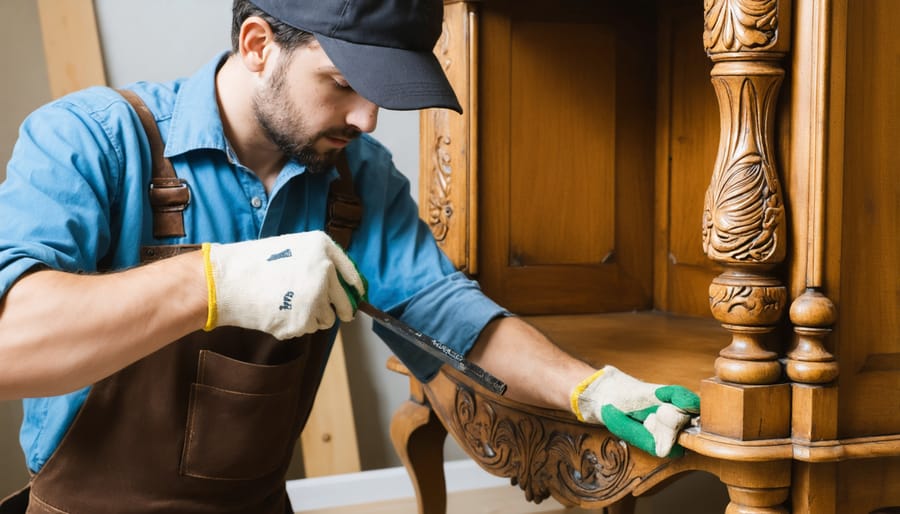
Strategic upgrades can significantly enhance the value of high-end resale furniture while maintaining its original character. LED lighting installations in display cabinets and custom-fitted glass shelving are particularly sought-after by modern collectors. Smart home integration capabilities, such as built-in charging stations or hidden power outlets in executive desks, appeal to tech-savvy buyers willing to pay premium prices.
Incorporating contemporary hardware, like soft-close mechanisms for drawers and doors, adds both functionality and sophistication. Premium upholstery treatments using performance fabrics offer stain resistance and durability while preserving elegance. Following sustainable restoration practices not only appeals to environmentally conscious buyers but also preserves the piece’s authenticity.
For dining sets and storage pieces, modern stabilization techniques and reinforced joints ensure longevity without compromising aesthetic value. Adding custom security features, such as concealed safes in vintage bureaus or specialized locks for valuable display cases, can command higher resale prices in the luxury market. Climate-control features in wine cabinets and humidors are particularly valuable for collectors of specialized furniture.
The key is implementing these upgrades thoughtfully, ensuring they complement rather than overshadow the piece’s original character while meeting contemporary lifestyle demands.
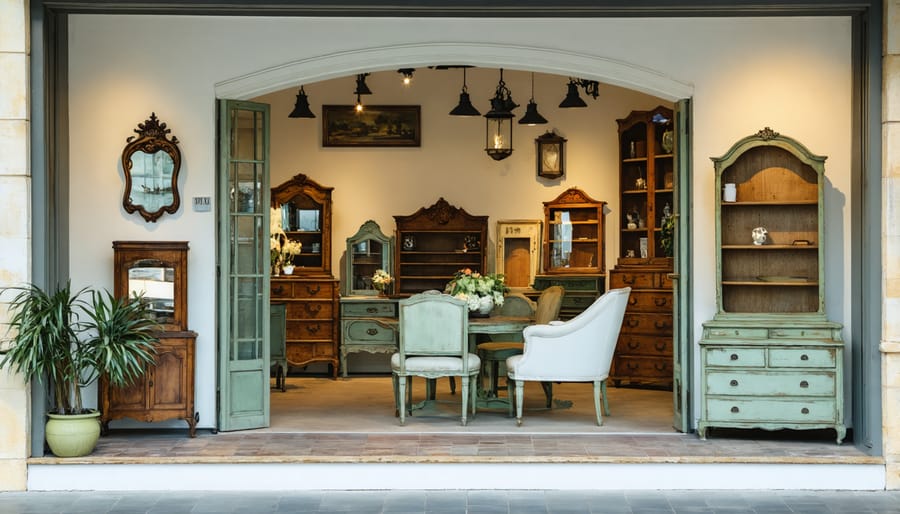
Creating visually stunning luxury furniture displays is essential for maximizing the appeal and value of high-end resale pieces. Start by establishing clear focal points using your most impressive pieces, such as expertly restored Victorian armoires or mid-century modern statement chairs. Layer your displays with complementary items at varying heights to create dynamic visual interest while maintaining adequate space between pieces.
Lighting plays a crucial role in showcasing restored furniture. Utilize a combination of ambient, accent, and task lighting to highlight the craftsmanship and unique details of each piece. Position spotlights to emphasize restored finishes and architectural elements, while ensuring natural light complements your artificial lighting scheme.
Group furniture pieces by style, period, or color story to create cohesive vignettes that tell a compelling visual narrative. Include thoughtfully selected accessories that enhance but don’t overwhelm the furniture. Consider using mirrors strategically to expand the space and reflect light onto key pieces.
Display detailed restoration stories alongside signature pieces, including before-and-after photography that demonstrates the transformation process. This helps justify premium pricing while educating customers about the value of expert restoration work. Rotate displays regularly to maintain fresh interest and showcase different pieces from your inventory, ensuring repeat customers always discover something new.
Remember to maintain clear pathways and create intimate seating areas that allow customers to envision the furniture in their own spaces. This approach combines aesthetic appeal with practical functionality, essential for converting browsing into sales.
Pricing high-end resale furniture requires a strategic balance between market value, restoration investment, and target customer expectations. Start by researching comparable pieces in your market, focusing on both retail and auction prices for similar restored vintage and antique furniture. A general rule of thumb is to price items at 2.5 to 3 times your total investment, including acquisition and restoration costs.
Consider the piece’s provenance, designer, or manufacturer reputation when setting prices. Documented pieces from renowned makers like Herman Miller or Knoll typically command premium prices, often 30-40% higher than similar unlabeled pieces. The quality and extent of restoration work also significantly impacts pricing – museum-quality restorations can justify prices up to 4 times the investment.
Seasonal pricing strategies can maximize returns. Premium pieces often sell better during peak home furnishing seasons (spring and fall) when you can command 10-15% higher prices. Create tiered pricing structures for different quality levels, and always include detailed restoration documentation to justify higher price points.
Don’t overlook the power of strategic markdowns. Instead of dramatic price reductions, consider small incremental adjustments of 5-10% every 30 days for items that aren’t moving. This maintains the piece’s perceived value while gradually increasing its appeal to price-conscious luxury buyers.
Remember to factor in your market’s specific demographics and buying patterns. High-end urban markets typically support higher price points than suburban or rural areas, sometimes by as much as 25-30%.
Every piece of high-end resale furniture carries a unique story that can significantly enhance its market value. Successful retailers understand that provenance – the history of ownership and origin – creates emotional connections with potential buyers and justifies premium pricing. When marketing restored pieces, highlighting their journey from discovery to restoration adds depth and authenticity to the sales narrative.
For example, a mid-century Danish credenza’s value increases substantially when accompanied by details about its original designer, manufacturing period, and previous owners. Documentation of the restoration process, including before-and-after photographs, demonstrates the craftsmanship invested in bringing the piece back to life while preserving its historical integrity.
Marketing materials should weave compelling narratives around each piece’s transformation. Share details about the artisans involved in the restoration, the traditional techniques employed, and any interesting discoveries made during the process. Social media platforms provide excellent opportunities to showcase this storytelling through video content, progress updates, and detailed photography.
Consider creating digital portfolios for signature pieces that include certificates of authenticity, restoration documentation, and historical context. This approach not only validates the asking price but also helps buyers understand the investment value of their purchase. Many collectors specifically seek pieces with well-documented histories, making provenance an essential component of the high-end resale furniture market.
The high-end furniture restoration and resale market presents a compelling opportunity for entrepreneurs and businesses looking to capitalize on the growing demand for premium, sustainable furnishings. By focusing on quality restoration work and strategic marketing, retailers can create a thriving business model that appeals to discerning customers while promoting environmental consciousness.
The benefits of entering this market are manifold. First, restored high-end furniture often commands premium prices, offering attractive profit margins for retailers. Second, the growing interest in sustainable living and circular economy practices has created a receptive market for beautifully restored pieces. Third, the unique nature of each restored item allows retailers to differentiate themselves in an increasingly competitive marketplace.
Success in this industry requires a combination of technical expertise, market knowledge, and business acumen. Retailers who invest in skilled craftspeople, maintain high quality standards, and develop strong sourcing networks position themselves for long-term success. Additionally, those who embrace digital marketing strategies and create engaging showroom experiences tend to see stronger customer engagement and sales.
For those considering entering the high-end furniture restoration market, the timing couldn’t be better. With increasing awareness of environmental issues and a growing appreciation for craftsmanship, the demand for expertly restored furniture continues to rise. By focusing on quality, authenticity, and customer service, retailers can build a sustainable and profitable business while contributing to a more environmentally conscious future.