
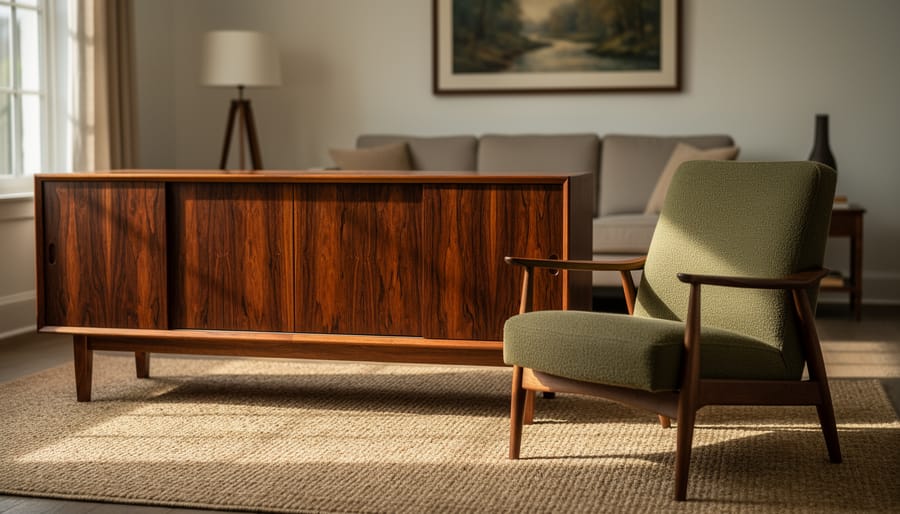
Vintage style living room furniture falls into three distinct categories: authentic pieces from the 1920s through 1970s, reproductions that mimic historical designs, and contemporary furniture with vintage-inspired details. Knowing the difference matters because authentic vintage pieces often hold significant value and deserve professional restoration rather than replacement, while reproductions require different care considerations.
The confusion is understandable. You might have inherited a mid-century credenza or purchased what looked like a Victorian settee at an estate sale, but determining whether it’s genuinely vintage, and what that means for your home, isn’t always obvious. Authentic vintage furniture typically shows specific construction methods, materials, and design signatures that correspond to its era. A genuine 1950s Eames lounge chair, for instance, features rosewood veneer and specific hardware that reproductions rarely replicate accurately.
Here’s what homeowners discover when they dig deeper: many vintage pieces in poor condition are worth considerably more when restored than their mass-produced modern equivalents cost new. We’ve seen countless clients ready to discard a worn 1940s armchair, only to learn its solid hardwood frame and hand-tied springs represent craftsmanship that would cost thousands to replicate in 2026.
Whether you’re trying to identify a style, assess a piece’s authenticity, or decide between restoration and replacement, understanding vintage furniture characteristics gives you confidence in your investment. The right choice depends on the piece’s construction quality, historical significance, and how well professional restoration can return it to its original beauty.
The term “vintage” gets tossed around freely in furniture sales, but authentic vintage pieces meet specific criteria that significantly affect their value and restoration potential. True vintage furniture was manufactured between approximately 20 and 100 years ago, meaning pieces created roughly between 1926 and 2006, and represents the original design aesthetic of its era rather than a modern reproduction.
Understanding these distinctions helps you make smarter decisions about which pieces deserve investment in restoration:
Authentic vintage living room furniture shares several telltale characteristics beyond age. Quality construction methods, dovetail joints, mortise-and-tenon joinery, hand-tied springs in upholstered pieces, reveal craftsmanship that’s expensive to replicate today. Real hardwoods like walnut, teak, mahogany, and oak dominate vintage pieces, while modern reproductions often substitute veneers over particle board.
The wear patterns matter too. Genuine vintage furniture shows consistent aging across all surfaces, with natural patina development on wood and even fading on fabrics. Reproductions attempting a distressed look typically show artificial or inconsistent aging that doesn’t match how furniture actually wears over decades of use.
Manufacturing marks provide the most definitive proof. Labels, stamps, or branded marks from recognized furniture makers, whether American companies like Heywood-Wakefield and Lane, or Danish manufacturers like Hans Wegner, confirm both authenticity and potential value. Even unmarked pieces reveal their vintage credentials through hardware styles, fabric patterns, and construction techniques specific to their era.
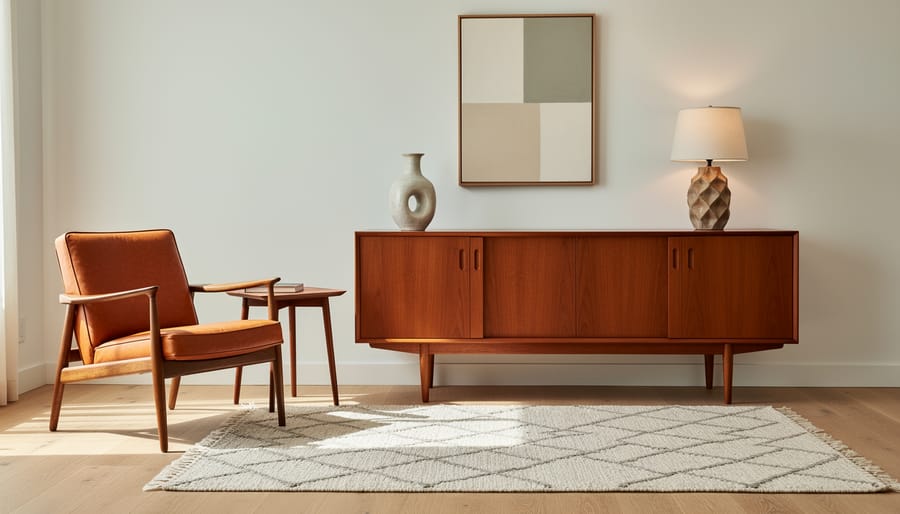
Mid-century modern furniture stands out immediately with its signature tapered legs, often splayed outward at subtle angles. Look for pieces constructed from teak, walnut, or rosewood, typically finished with oil rather than heavy varnish to showcase the wood’s natural grain. The style emphasizes clean, horizontal lines punctuated by gentle organic curves, think kidney-shaped coffee tables and boomerang-style side tables rather than rigid rectangles.
Authentic MCM sofas feature low profiles with thin, exposed wooden frames and minimal cushioning compared to modern overstuffed designs. Case goods like credenzas and side tables incorporate mixed materials: wood paired with brass hardware, glass tops, or even woven cane panels. The craftsmanship is exceptional, with joinery techniques like dovetails and mortise-and-tenon connections that have allowed these pieces to survive 60-plus years.
In 2026, MCM furniture commands premium prices because its minimalist aesthetic fits contemporary interiors perfectly. The quality construction means most structural issues are repairable, and the timeless design ensures your restored piece won’t look dated next year. Even worn MCM furniture typically retains significant value worth preserving through professional restoration.
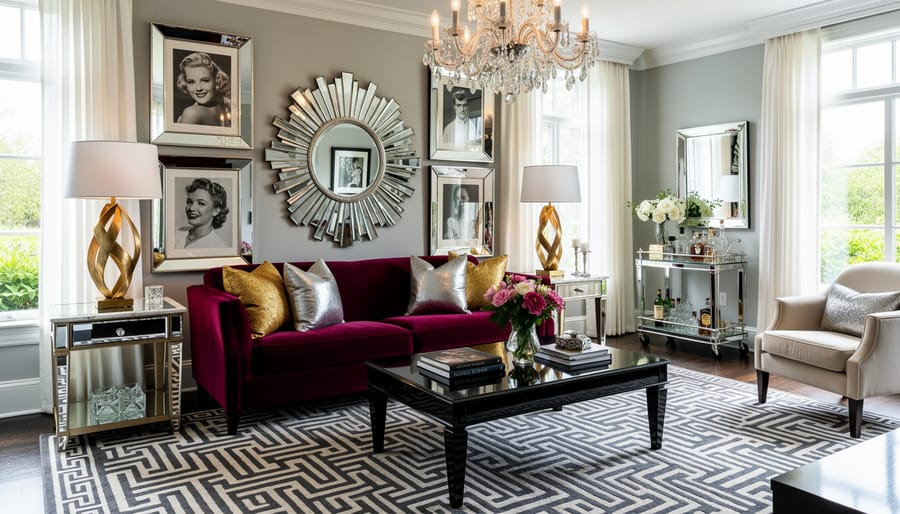
Hollywood Regency furniture transforms living rooms into glamorous retreats with its unapologetically bold aesthetic. Born from the golden age of cinema, this style celebrates luxury through high-contrast color schemes, think black lacquer paired with gold accents or rich jewel tones against crisp white. Authentic pieces showcase plush velvets, exotic animal prints, and glossy lacquered finishes that catch and reflect light.
The hallmark features include Greek key patterns, chinoiserie motifs, and extensive use of mirrors and metallic elements. Chairs often feature dramatic curves and oversized proportions, while tables sport ornate carved legs or sculptural bases. Authentic Hollywood Regency pieces from the 1930s-1950s reveal quality construction beneath their showy exteriors, with solid wood frames and hand-applied finishes.
Reproductions typically lack the weight and craftsmanship of originals. Check underneath upholstered pieces for construction methods, authentic vintage items use hand-tied springs and horsehair padding rather than foam. The wood beneath lacquer finishes should show appropriate aging, and hardware should have genuine patina rather than artificial distressing. These theatrical pieces respond exceptionally well to restoration, as their bold style forgives minor imperfections while professional refinishing revives their inherent drama.
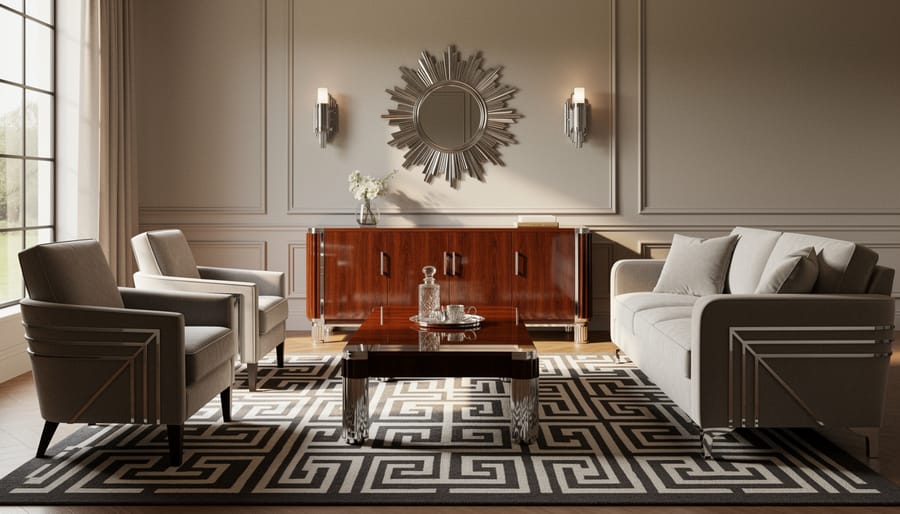
Art Deco furniture commands attention with its bold geometric patterns, zigzag motifs, and sunburst designs that capture the glamour of the Jazz Age. These pieces typically feature exotic woods like zebrawood, ebony, and macassar alongside chrome, brass, and mirrored accents that reflect light beautifully in living rooms.
Common Art Deco living room pieces worth restoring include cocktail cabinets with chrome hardware, upholstered armchairs with geometric patterns, coffee tables featuring inlaid designs, and buffets with stepped profiles. Look for symmetrical designs, streamlined forms, and rich jewel tones in deep emerald, sapphire, or ruby red.
The quality craftsmanship in authentic Art Deco furniture makes restoration worthwhile. Many pieces feature solid hardwood construction beneath their decorative veneers, and the chrome details can be re-plated to restore their original shine. Original upholstery in period-appropriate fabrics like velvet or mohair adds significant value, though professional reupholstery using vintage-style materials can successfully revive these statement pieces while preserving their structural integrity and design authenticity.
Colonial Revival furniture brings traditional American elegance into the living room with its distinctive turned legs, rich mahogany or cherry woods, and substantial construction. These pieces often feature carved details, ball-and-claw feet, and upholstery in classic patterns like damask or brocade. You’ll recognize the style by its formal appearance and references to 18th-century American craftsmanship.
What makes Colonial Revival pieces exceptional restoration candidates is their solid wood construction. Unlike many modern pieces, these sofas, wing chairs, and occasional tables were built with mortise-and-tenon joints and genuine hardwoods throughout. The wood itself ages beautifully, developing a patina that reproduction pieces can’t replicate.
Common issues include worn upholstery, loose joints from decades of use, and finish deterioration. The good news? The underlying structure usually remains sound. A professionally restored Colonial Revival sofa can serve another generation while maintaining the timeless aesthetic that complements both traditional and transitional interiors. The investment typically pays off because quality examples hold their value remarkably well.
Danish Modern furniture represents Scandinavian design philosophy at its finest: honest materials, impeccable joinery, and forms that prioritize both beauty and function. Unlike the bolder Mid-Century American pieces, Danish Modern embraced restraint, teak and oak in warm, natural finishes, gently curved backs, and joinery so precise that many pieces used minimal hardware.
Craftsmen like Hans Wegner and Finn Juhl created living room pieces built to last generations. You’ll recognize Danish Modern by its sculptural yet understated presence: low-profile sofas with exposed wooden frames, lounge chairs with gracefully angled legs, and sideboards featuring sliding tambour doors. The wood itself tells the story, solid teak or rosewood, not veneer over particle board.
This construction quality makes Danish Modern ideal for restoration. Loose joints can be re-glued, original finishes refreshed, and even worn upholstery replaced while preserving the frame’s integrity. A well-restored Danish teak credenza or rosewood coffee table often appreciates in value, especially as younger collectors discover these timeless designs. The simplicity that defined the style also simplifies restoration: fewer ornate details mean repairs focus on structural soundness and wood refinishing.
French Provincial furniture brings countryside elegance into the living room with its gently curved silhouettes, hand-carved floral motifs, and cabriole legs. Authentic pieces typically feature light-colored woods like oak or fruitwood with distressed finishes that replicate aged European farmhouse charm. The carved details and delicate curves make these pieces vulnerable to chipping and joint loosening, but the solid wood construction means structural repairs hold exceptionally well. Upholstered pieces often showcase toile fabrics or muted floral patterns that may need complete replacement after decades of use, though the frames underneath usually remain sound and worth preserving.
Not every vintage piece deserves the investment of professional restoration, but certain signs indicate you’re sitting on furniture worth preserving. Understanding what to look for helps you make smart decisions about which pieces merit professional attention.
Start with the bones. Flip your sofa or chair upside down and examine the frame construction. Quality vintage furniture features solid hardwood frames joined with mortise-and-tenon or dovetail joints rather than staples or screws. If you see hand-cut dovetails or pegged joints, you’ve likely found a piece built to last generations. Wobbly legs or loose joints aren’t deal-breakers, they’re often simple fixes for a skilled restorer, but frames with extensive rot, deep cracks running with the grain, or severe insect damage may cost more to repair than they’re worth.
The materials tell you plenty about restoration potential. Solid wood furniture from quality makers like Heywood-Wakefield or Lane will always outlast particleboard or laminate pieces. Run your hand along surfaces and edges. Real wood veneer, even if bubbled or lifting in spots, can be repaired. Check drawer bottoms and furniture backs for maker’s marks, stamps, or branded labels. A documented designer or manufacturer, think Knoll, Herman Miller, or Baker Furniture, adds significant value that justifies restoration costs.
Style authenticity matters more than you might think. Original Mid-Century Modern pieces in walnut or teak command prices that make restoration worthwhile, while mass-produced copies from the 1990s don’t. Look for period-appropriate construction methods and materials. Real Art Deco furniture uses exotic woods and chrome, not aluminum and oak veneer. If you inherited the piece or purchased it from an estate, that provenance adds value.
Consider the current market. Browse vintage furniture dealers and online marketplaces to see what similar restored pieces sell for. If comparable items list for $800-1500 and restoration costs $400-600, the math works. Factor in replacement costs too. A new sofa of similar quality to your vintage piece likely runs $2000-4000, making even extensive restoration economically sound.
Finally, trust your gut about sentimental value. Some pieces are worth restoring simply because they anchor family memories or perfectly suit your space. A structurally sound vintage sofa that belonged to your grandparents may justify restoration costs that pure market value wouldn’t support. The combination of emotional significance and good bones often makes the strongest case for professional restoration.
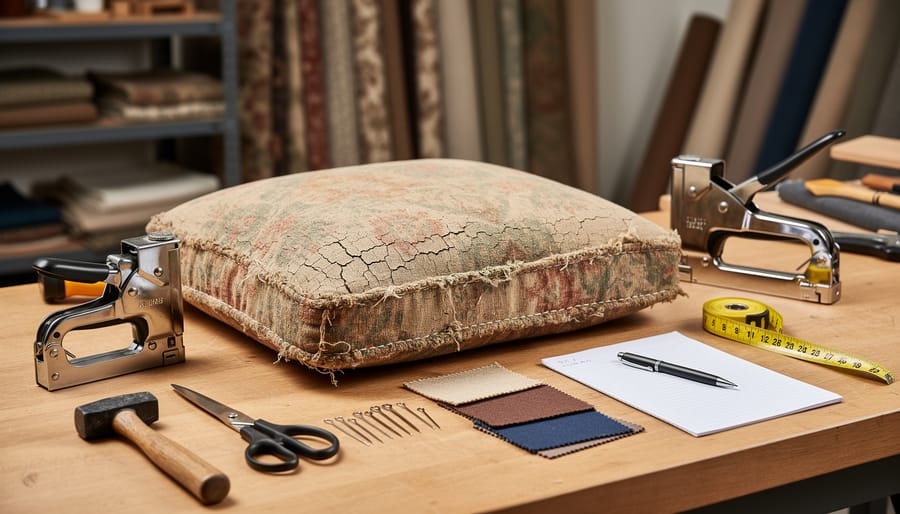
Vintage living room furniture faces predictable wear patterns based on its age and how heavily it’s been used over the decades. Understanding which problems are straightforward fixes versus deal-breakers helps you make smart restoration decisions.
| Damage Type | Severity | Restoration Approach |
|---|---|---|
| Finish wear and fading | Minor to Moderate | Strip and refinish with period-appropriate materials |
| Loose joints and wobbly frames | Moderate | Disassemble, re-glue, and clamp with wood adhesives |
| Torn or worn upholstery | Moderate | Complete reupholstery with quality fabric |
| Veneer lifting or chipping | Moderate to Severe | Re-glue existing veneer or patch with matching wood |
| Water damage and warping | Severe | May require component replacement if structural |
| Missing hardware or decorative elements | Minor | Source period-accurate replacements or custom fabrication |
Sofas and upholstered chairs typically show fabric deterioration first. Springs sag, cushions compress, and original upholstery develops tears or staining. The good news is that underneath tired fabric, you’ll often find solid hardwood frames worth saving. Broken springs can be retied, and foam replaced while preserving the piece’s original lines.
Wood case pieces like coffee tables and side tables commonly suffer finish degradation. Decades of sunlight fade rich walnut and teak to dull gray. Water rings, scratches, and worn edges are almost universal. These cosmetic issues respond beautifully to professional refinishing without compromising the furniture’s integrity or value.
Structural problems require more careful assessment. Loose joints in chair legs or table frames are repairable through proper disassembly and re-gluing, but extensive wood rot or insect damage may mean the furniture repair cost exceeds the piece’s worth. Similarly, veneer damage can be addressed if the substrate is sound, but if veneer is missing over large areas or the underlying wood is compromised, restoration becomes less viable.
The most restorable vintage living room pieces share common traits: solid construction with quality materials, minimal structural damage, and intact original design elements. Surface-level problems are almost always fixable, while deep structural or material failures require honest evaluation of whether restoration makes financial sense.
Deciding between professional restoration and DIY depends largely on the piece’s value, the extent of damage, and your skill level. Simple cosmetic issues like loose drawer pulls, minor scratches, or dust accumulation are safe DIY projects that won’t diminish a piece’s value. However, structural repairs, reupholstery work, or refinishing valuable surfaces require professional expertise to maintain both functionality and market worth.
Consider hiring professionals for any vintage furniture worth over $500, pieces with original finishes you want to preserve, or items requiring structural repairs like broken joints or frame damage. Mid-century modern pieces with original upholstery, Art Deco furniture with intricate veneers, and any signed or maker-marked pieces deserve professional attention. Attempting complex repairs without proper restoration tools and experience often creates more problems than it solves, potentially reducing a $2,000 piece to salvage value.
DIY makes sense for learning opportunities on less valuable pieces, basic cleaning and conditioning, or simple hardware replacement. If you’re uncertain about a repair, start with the least invasive approach. Test any cleaning product on a hidden area first, and never strip original finishes without consulting an expert, as originality significantly impacts value.
The financial calculation matters too. If professional restoration costs $800 but increases the piece’s value from $400 to $1,500 while extending its life by decades, that’s a sound investment. Conversely, spending $600 to restore a $300 piece makes sense only if it holds sentimental value or perfectly fits your space.
When evaluating your options, get multiple professional estimates and be honest about your skills. Watching YouTube tutorials doesn’t replace hands-on experience with vintage furniture construction. A botched DIY attempt often costs more to fix professionally than the original restoration would have cost.
Sarah Mitchell’s grandmother’s 1952 Mid-Century Modern sofa had sat in a garage for nearly eight years. The teak frame was solid, but the original fabric had deteriorated beyond recognition, the foam cushions had crumbled, and water damage had left dark stains on the wooden arms. Sarah had almost listed it on a free-giveaway site when a friend suggested professional assessment.
The restoration revealed a Herman Miller piece worth $4,800 in excellent condition. After investing $1,200 in frame repair, refinishing, new cushions, and period-appropriate upholstery, Sarah now owns a showpiece valued at nearly four times her restoration cost. More importantly, she preserved a family heirloom that anchors her living room with both style and sentiment.
The Johnson family faced a similar decision with their 1938 Art Deco club chairs inherited from an estate sale purchase. The pair had cost them $200, but the burgundy leather was cracked and faded, and one chair’s spring system had collapsed. Local furniture stores quoted $2,500 for new chairs with a similar aesthetic.
Professional restoration included reupholstering in deep emerald velvet that complemented the chrome accents, rebuilding the spring systems, and polishing the original brass nailhead trim. The total investment of $950 transformed the chairs into statement pieces that guests consistently admire. The Johnsons later discovered similar restored pairs selling for $1,800 to $2,200 at vintage dealers.
Tom Bradley’s 1965 Danish Modern coffee table tells a different story. His children had used it as a craft table, leaving the rosewood veneer scarred with paint splatters, marker stains, and several deep gouges. He’d planned to replace it with a $600 contemporary piece until he learned the original maker was Severin Hansen.
A specialized refinishing process removed years of damage while preserving the original finish where possible. The $380 restoration cost was less than his replacement budget, and the table now displays the rich grain and warm tones that made Danish Modern furniture legendary. Tom estimates the restored piece is worth $1,200 to $1,500 based on recent auction results for comparable Hansen tables.
Your beautifully restored vintage living room furniture deserves care that preserves its renewed beauty and protects your investment. With the right maintenance habits, pieces restored through sustainable restoration practices can look stunning for decades.
Start with gentle, regular dusting using a soft microfiber cloth or lamb’s wool duster. For wooden surfaces, dust weekly and apply quality furniture paste wax every six to twelve months to nourish the finish and create a protective barrier. Skip the spray polishes, they often contain silicones that build up over time and can actually attract more dust.
Placement matters as much as cleaning routine. Keep your vintage pieces away from direct sunlight, which fades upholstery and can cause wood to dry out and crack. Position furniture at least twelve inches from heating vents and radiators, and maintain indoor humidity between 40-50% to prevent wood from expanding or contracting. A simple room humidifier in winter and dehumidifier in summer protects against climate-related damage.
For upholstered vintage pieces, vacuum gently with a brush attachment monthly to prevent dust from settling into fabric fibers. Rotate cushions regularly to ensure even wear, and address spills immediately by blotting, never rubbing, with a clean white cloth.
Schedule professional maintenance every three to five years to address minor finish wear, tighten joints that may have loosened, and refresh protective coatings before small issues become expensive repairs. These preventive touch-ups cost far less than major restoration work and keep your vintage furniture looking its absolute best.
Your vintage living room furniture tells a story worth preserving. Whether you’ve inherited a mid-century sofa, discovered a Danish teak credenza at an estate sale, or simply rediscovered pieces you’ve owned for decades, these items often hold more value than replacing them with mass-produced alternatives.
The furniture built 30, 50, or 70 years ago was constructed with solid hardwoods, quality joinery, and craftsmanship that’s increasingly rare in 2026. What might look tired or worn often has excellent bones beneath surface damage. A faded finish, torn upholstery, or loose joints don’t diminish the structural integrity that made these pieces last this long.
Take a fresh look at your vintage living room furniture with what you’ve learned here. Check for quality wood construction, examine the joinery, and consider whether the style fits your home. Those wobbly legs or worn cushions might need attention, but the piece itself could serve your family for another generation.
If you’re uncertain whether restoration makes sense for your specific pieces, a professional assessment costs nothing and provides clarity. Understanding what you own helps you make the right choice between restoration and replacement.