
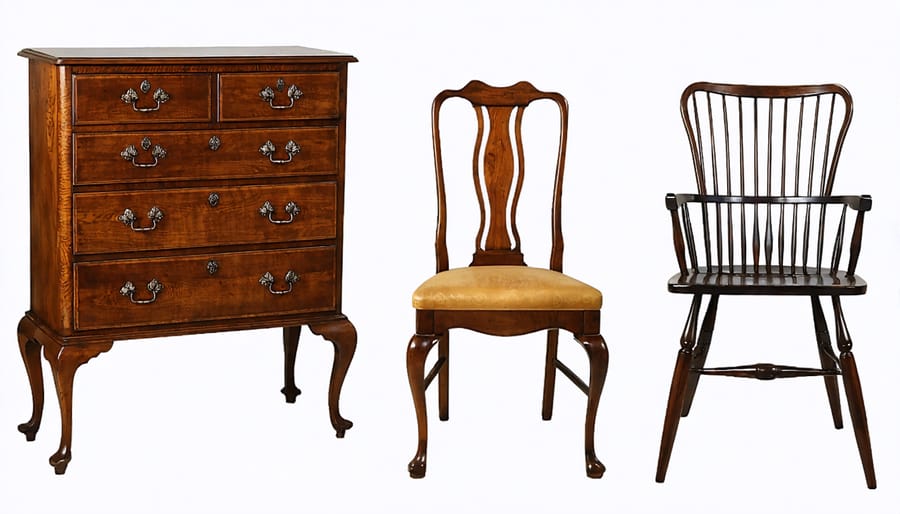
American colonial furniture stands as a testament to early American craftsmanship, blending European traditions with New World practicality. From the sturdy oak chests of Massachusetts Bay Colony to the elegant Queen Anne highboys of Philadelphia, these pieces tell the story of our nation’s earliest artisans. Their practical designs and superior construction techniques, which later had a significant influence on Shaker furniture, continue to inspire modern craftsmen and collectors alike.
Characterized by hand-hewn joints, locally sourced woods, and distinctly regional styles, colonial furniture represents more than just functional pieces—it embodies the resourcefulness and determination of early American settlers. Whether examining a Windsor chair from Connecticut or a Pennsylvania Dutch blanket chest, each piece reveals the unique cultural influences and available materials of its region. Today, these authentic pieces command premium prices at auction houses, while their timeless designs influence contemporary furniture makers who appreciate their enduring appeal and superior craftsmanship.
When early American colonists first arrived, they brought with them the familiar European Baroque influences and crafting traditions of their homeland. However, the unique challenges and resources of the New World quickly shaped the evolution of colonial furniture design. Local woods like pine, maple, and walnut replaced the traditional oak of English furniture, while simpler, more practical designs emerged to suit frontier life.
American craftsmen began adapting European styles to create distinctly American pieces. They maintained the basic forms of British furniture but simplified ornate carvings and eliminated excessive decoration, focusing instead on clean lines and sturdy construction. This transformation wasn’t just about necessity – it reflected the colonists’ growing independent spirit and practical mindset.
By the mid-18th century, American furniture makers had developed their own unique interpretations of popular styles, incorporating regional preferences and local materials. This blend of European heritage and American innovation created enduring designs that continue to influence furniture makers today, particularly in New England where traditional colonial craftsmanship remains highly valued.
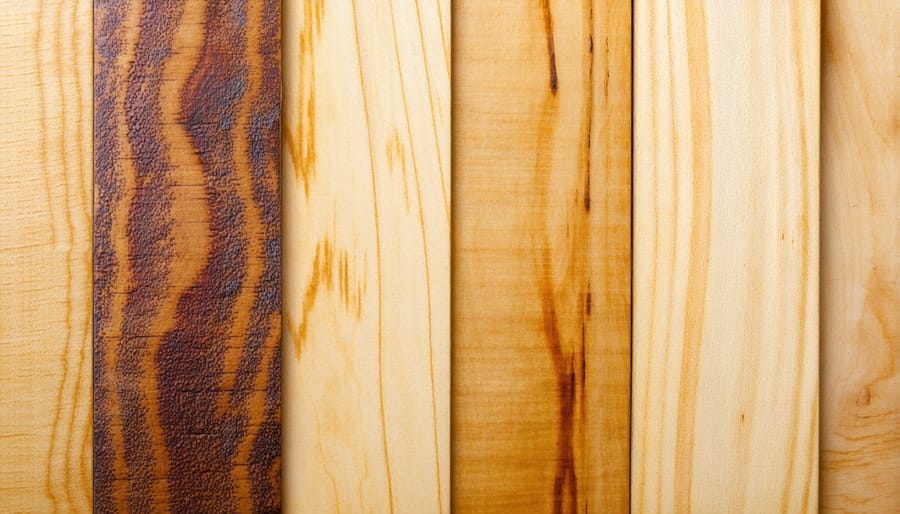
The abundance of native American hardwoods played a crucial role in shaping colonial furniture design and construction techniques. Early craftsmen found themselves working primarily with oak, pine, maple, and walnut – each offering unique characteristics that influenced their creations. Pine, being readily available and easy to work with, became the go-to choice for everyday furniture in New England. Meanwhile, the dense, durable oak was favored for pieces meant to withstand generations of use.
In the Mid-Atlantic regions, black walnut’s rich color and excellent workability made it the preferred choice for high-end furniture. Maple, particularly tiger maple with its distinctive grain pattern, became highly sought after for its decorative potential in refined pieces. Cherry wood, though less common, was prized for its warm reddish tones and smooth finish.
These native materials not only determined construction methods but also influenced regional styles. New England pieces often featured simpler, sturdier designs due to the widespread use of pine, while Philadelphia craftsmen created more elaborate pieces thanks to the superior carving qualities of local walnut. This relationship between available materials and design continues to guide authentic restoration work today.
The earliest American colonial furniture emerged during a period of significant British influence, with Jacobean style serving as the primary inspiration. Early settlers, working with locally available materials like pine, oak, and maple, adapted traditional English designs to meet the practical needs of colonial life. These pieces were characterized by their sturdy construction, straight lines, and distinctive carved ornamentations, particularly the guilloche (a repetitive architectural pattern) and lunette motifs.
Craftsmen focused on creating functional pieces that could withstand daily use while maintaining aesthetic appeal. Joint construction typically featured mortise-and-tenon or dovetail techniques, demonstrating the skilled workmanship of early American artisans. Common furniture items included gate-leg tables, wainscot chairs, and chest-with-drawers, which often showcased decorative turned spindles and carved panels.
The most distinctive feature of this period was the transition from imported pieces to locally crafted furniture. While wealthy colonists initially relied on imported English furniture, local cabinetmakers gradually developed their own interpretations of Jacobean style. This adaptation process led to simpler, more practical designs that maintained the dignity of their English counterparts while incorporating native American woods and regional preferences.
These early pieces laid the foundation for what would become uniquely American furniture styles, reflecting both the colonists’ European heritage and their growing independence in craftsmanship and design.
The William and Mary period marked a significant transition in American colonial furniture design, introducing more refined and sophisticated elements to the previously austere colonial styles. This era’s furniture showcased distinctive features like trumpet-turned legs, Spanish scroll feet, and decorative crown moldings, reflecting strong Dutch and English influences.
Craftsmen during this period began incorporating exotic woods like walnut and maple alongside the traditional oak, creating striking visual contrasts in their pieces. The distinctive trumpet-turned legs, a hallmark of this style, started thick at the top and gracefully tapered down to a delicate foot, often ending in a ball or Spanish scroll design.
Characteristic pieces from this period include highboys, lowboys, and gate-leg tables with drop leaves. These pieces typically featured flat surfaces decorated with geometric patterns, created through careful veneer work and marquetry. The era also saw the introduction of the curved cabriole leg, though it wasn’t yet as pronounced as in later periods.
Construction methods evolved to include dovetail joints and mortise-and-tenon connections, representing significant improvements in furniture durability. Upholstery became more common, with wealthy colonists importing fine fabrics from England. The period’s craftsmanship set new standards for American furniture making, influencing designs for generations to come.
Today, authentic William and Mary pieces are highly valued by collectors and often require specialized restoration techniques to preserve their unique characteristics and historical integrity.
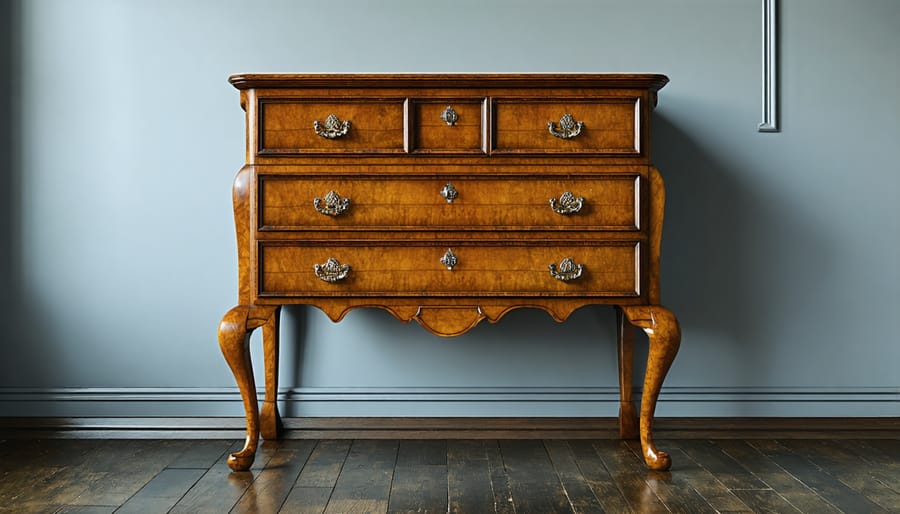
The Queen Anne style represents one of the most elegant and refined periods in American colonial furniture, setting the foundation for later Victorian styles. Characterized by its graceful curves and sophisticated design elements, this style emerged as wealthy colonists sought to emulate British fashion while adapting it to American tastes and materials.
Key features include cabriole legs, which curve outward at the knee and inward at the ankle, often ending in pad or claw-and-ball feet. Shell motifs became a signature decorative element, frequently carved into chair backs and drawer fronts. The style favored walnut and maple woods, though cherry and mahogany were also popular choices among skilled craftsmen.
Queen Anne pieces typically showcase refined proportions with an emphasis on comfort and functionality. Wing chairs, highboys, and lowboys from this period feature distinctive S-curved lines and cyma curves. The furniture generally stands lighter and more delicate than earlier periods, with chairs often incorporating fiddle-shaped backs and vase-shaped splats.
Notable innovations included the introduction of the tea table with its tilting top, reflecting the period’s social customs. These pieces remain highly sought after by collectors and serve as inspiration for modern reproductions, demonstrating the enduring appeal of their elegant design principles.
American colonial furniture makers employed sophisticated joinery techniques that have stood the test of time, many of which are still revered and replicated today. The hallmark of these traditional methods was their reliance on precisely cut wooden joints rather than metal fasteners, creating furniture pieces that could expand and contract with seasonal changes while maintaining structural integrity.
Mortise and tenon joints were perhaps the most fundamental technique, used extensively in chair and table construction. This method involved creating a projection (tenon) on one piece that fit precisely into a cavity (mortise) in another, forming an incredibly strong bond when properly executed. Dovetail joints, recognized by their distinctive interlocking “tails” and “pins,” were prominently featured in drawer construction and case pieces, providing both strength and visual appeal.
Colonial craftsmen also frequently employed the sliding dovetail joint, particularly for attaching table tops to their bases and securing cabinet shelving. This technique allowed for wood movement while preventing warping. Another common method was the tongue-and-groove joint, used extensively in panel construction and backing boards.
These traditional joinery methods required considerable skill and specialized hand tools, including chisels, marking gauges, and various saws. The precision of these joints often determined both the structural integrity and overall value of the piece. Today, these same techniques serve as indicators of authenticity when evaluating period furniture, and their presence often significantly influences a piece’s historical and monetary value.
Understanding these traditional construction methods is crucial for modern restoration work, as proper repairs must respect and maintain the original joinery techniques to preserve the furniture’s historical integrity.
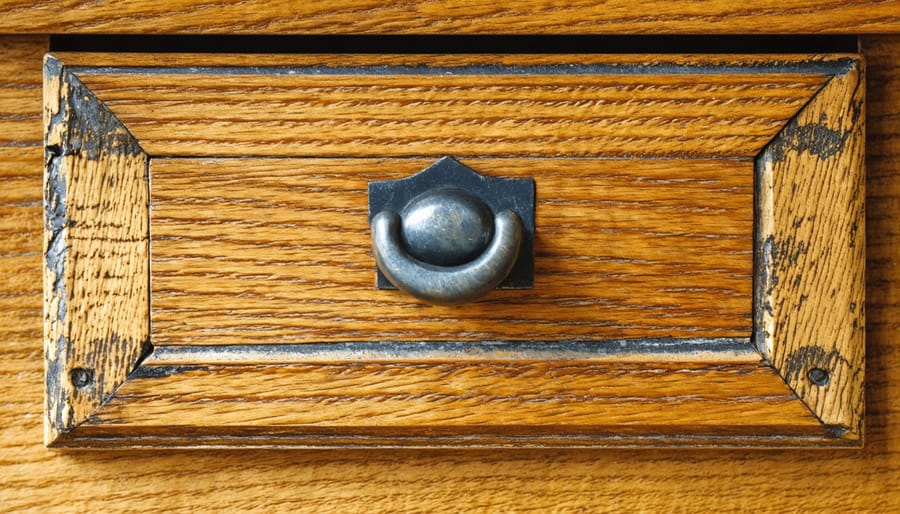
Preserving colonial furniture requires a delicate balance of modern conservation techniques and traditional craftsmanship. Professional restorers today employ specialized methods to maintain the integrity of these historical pieces while ensuring their longevity for future generations.
Temperature and humidity control are crucial factors in preservation. Colonial furniture should be kept in environments with relative humidity between 45-55% and temperatures around 70°F (21°C). Using humidity monitors and climate control systems helps prevent wood warping and joint separation common in antique pieces.
When it comes to cleaning, gentle approaches are essential. A soft, lint-free cloth slightly dampened with distilled water is often sufficient for regular dusting. Avoid commercial cleaning products, which can damage original finishes. For stubborn grime, conservators use specialized solutions that clean without compromising the patina that gives colonial furniture its authentic character.
Proper structural repairs require extensive knowledge of period-appropriate techniques. Modern restorers often use traditional hide glues for joints and repairs, as these materials remain reversible and match the original construction methods. When replacement parts are necessary, wood species and grain patterns are carefully matched to maintain authenticity.
Prevention is key to long-term preservation. Regular inspection for signs of insect infestation or deterioration can catch issues early. Positioning furniture away from direct sunlight and heat sources prevents fading and structural damage. For particularly valuable pieces, documentation through detailed photographs and condition reports helps track changes over time and guides future conservation efforts.
With proper care and professional restoration when needed, colonial furniture can continue to serve as both functional pieces and valuable historical artifacts for centuries to come.
Colonial furniture continues to hold significant value in today’s homes, both as functional pieces and as investment opportunities. The enduring appeal of these classic designs has contributed to a broader revival of historical styles in contemporary interior design. Many homeowners are discovering that authentic colonial pieces can serve as striking focal points while maintaining their practical utility.
The investment potential of colonial furniture remains strong, with well-preserved pieces frequently appreciating in value. Original examples from the 17th and 18th centuries, particularly those with documented provenance, can command impressive prices at auction. Even high-quality reproductions from the early 20th century have begun to increase in value as collectors recognize their craftsmanship and historical significance.
In modern homes, colonial furniture pieces adapt surprisingly well to various design schemes. A Queen Anne highboy can add architectural interest to a minimalist bedroom, while a William and Mary gate-leg table might serve as an elegant workspace in a home office. The clean lines and practical designs of colonial furniture often complement contemporary décor, creating an interesting dialogue between past and present.
For those interested in incorporating colonial pieces into their homes, it’s worth noting that these items often require specialized care to maintain their value and functionality. Regular maintenance by qualified restoration professionals can help preserve both the aesthetic appeal and structural integrity of these historical pieces. This investment in proper care typically pays dividends, as well-maintained colonial furniture often becomes a valuable family heirloom that can be passed down through generations.
Insurance professionals and property managers increasingly recognize the importance of properly valuing colonial furniture, as these pieces often represent significant assets within residential and commercial properties. Whether used as functional furniture or displayed as decorative pieces, colonial furniture continues to demonstrate its enduring value in contemporary settings.
American colonial furniture stands as a testament to our nation’s craftsmanship heritage, continuing to influence modern design and decor choices. Its timeless appeal lies not only in its historical significance but also in its practical, sturdy construction and versatile aesthetic that seamlessly integrates into contemporary homes. Today, authentic colonial pieces are highly valued by collectors and homeowners alike, while quality reproductions offer accessible alternatives that capture the essence of early American style. The enduring popularity of colonial furniture speaks to our appreciation for handcrafted quality and connection to our past. Whether preserved in museums, passed down through generations, or thoughtfully restored by skilled craftsmen, these pieces remind us of the artistry, ingenuity, and resourcefulness of early American furniture makers. Their legacy lives on in both original pieces and modern interpretations, ensuring that colonial furniture remains a relevant and respected element of American home decor.