
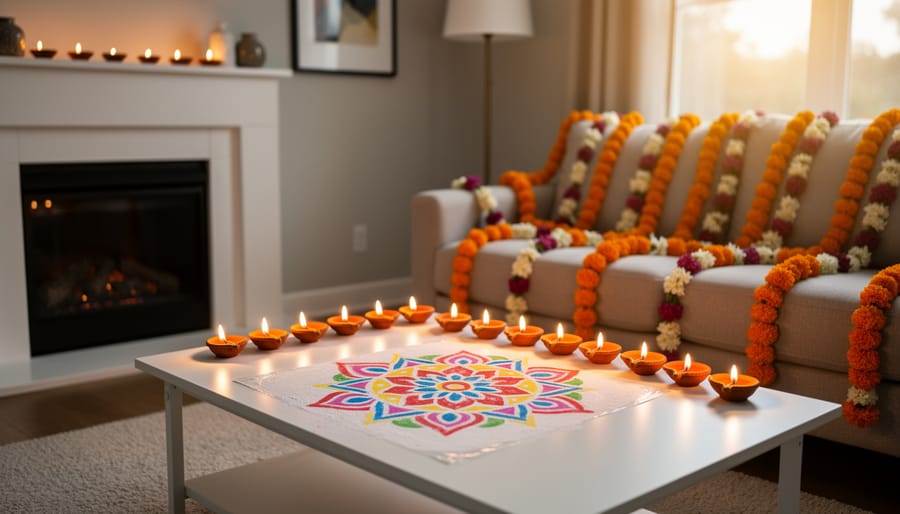
Celebrating Diwali in your American home means bringing the Festival of Lights to life with decorations that honor tradition while working with materials you can find at local craft stores, home improvement centers, and online retailers. Whether you’re hosting family for the first time or continuing a cherished annual tradition, you can transform your living space into a warm, welcoming celebration using readily available supplies that suit the scale and structure of typical US homes.
The challenge many families face isn’t finding decoration ideas, it’s adapting traditional Indian designs to work in American homes without damaging furniture, flooring, or wall finishes. Rental properties and newer constructions often have restrictions on open flames, and protecting your investment in quality furnishings becomes essential when working with colored powders, wax candles, and fabric drapes.
This guide walks you through 15 practical decoration ideas specifically tested for US homes, complete with sourcing recommendations, safety modifications for American building codes, and furniture protection strategies. You’ll discover how to create stunning rangoli patterns without staining hardwood, set up safe diya displays that comply with fire regulations, and source authentic-looking materials without ordering from overseas. Each idea includes realistic time estimates, approximate costs based on 2026 retail prices, and tips for protecting your home’s surfaces during the five-day celebration.
From apartment balconies to suburban living rooms, these decoration strategies scale to fit your space while maintaining the authentic spirit of Diwali’s cultural significance.
Diwali decorations carry profound meaning beyond their visual beauty. This five-day Hindu festival celebrates the victory of light over darkness and knowledge over ignorance, making light the central element in every celebration. Each decorative choice reflects these themes and creates an atmosphere of renewal, prosperity, and spiritual warmth.
The diyas, small clay oil lamps, represent the inner light that protects from spiritual darkness and guides family members toward truth. When you arrange rows of these flickering lamps along windowsills or pathways, you’re participating in a tradition thousands of years old. The vibrant colors seen throughout Diwali decorations aren’t random either. Rich reds symbolize love and purity, bright yellows represent knowledge and learning, while deep oranges and marigold hues embody energy and enthusiasm for new beginnings.
Rangoli floor designs, created from colored powders, rice, or flower petals, welcome Lakshmi, the goddess of wealth and prosperity, into the home. These intricate patterns at your entrance signal that your space is prepared to receive blessings and good fortune for the coming year.
Every decoration idea in this guide was chosen with American homeowners in mind, balancing cultural authenticity with practical realities. We wanted to ensure that families celebrating Diwali in the USA wouldn’t struggle to find materials or feel overwhelmed by complicated setups.
Our selection process focused on five core criteria:
We also prioritized safety for American home construction. Many traditional Diwali decorations involve open flames and oils, which require different handling on wood floors and near synthetic carpeting common in US homes. Each idea includes guidance on protecting your furniture and surfaces while still creating that warm, festive glow.
The result is a collection that works whether you’re celebrating in a compact city apartment or a spacious suburban house, with a $50 budget or $500 to spend. You’ll find traditional elements like diyas and rangoli alongside practical adaptations that respect both your home and the holiday’s meaning.
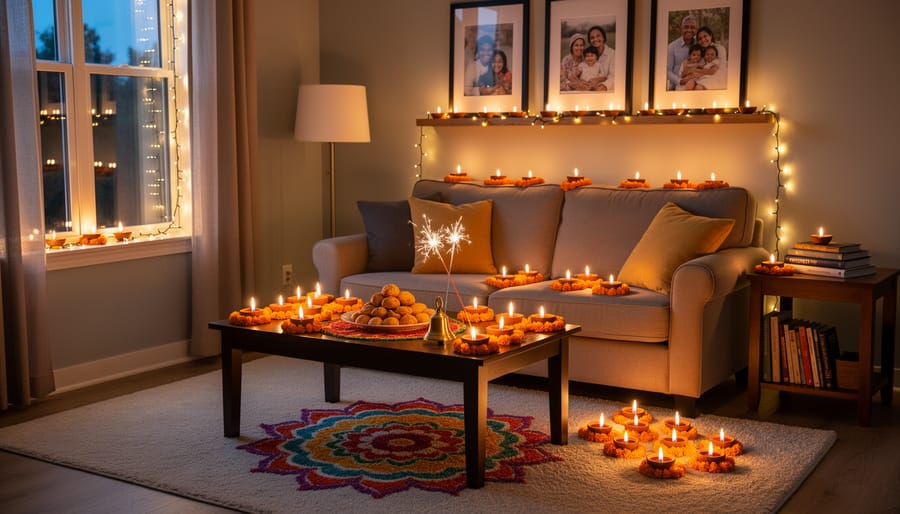
Lighting forms the heart of Diwali celebrations, and these four ideas will help you create that warm, welcoming glow in your American home while honoring tradition.
1. Clay Diyas (Traditional Oil Lamps)
Authentic terracotta diyas bring unmistakable cultural significance to your Diwali decor. You’ll find these small clay oil lamps at Indian grocery stores like Patel Brothers, Apna Bazaar, or online through Amazon’s Indian celebration section and specialty retailers such as Desiestan. Expect to pay $15-25 for a set of 24-30 diyas. Fill each diya with vegetable oil or ghee, add a cotton wick, and place them along windowsills, staircase edges, or your mantelpiece. For safety in homes with wooden trim or carpeting, set diyas on heat-resistant ceramic plates or metal trays. Never leave burning diyas unattended, and keep them away from curtains and paper decorations.
2. String Lights and Fairy Light Arrangements
Electric string lights offer a safer, longer-lasting alternative to open flames. Drape warm white or multicolored LED strings around doorframes, windows, or across your porch railing. Target, Home Depot, and Lowe’s stock affordable options starting at $8-15 per strand. Battery-operated fairy lights work beautifully for indoor displays where outlets aren’t accessible, such as around mirrors, artwork, or woven through stair banisters. Follow basic string light tips like checking for frayed wires and avoiding overloaded circuits.
3. Decorative Lanterns (Kandils and Paper Lanterns)
Hanging star-shaped paper lanterns or traditional metal kandils adds vertical dimension to your lighting scheme. Indian stores sell authentic kandils for $12-30 each, while craft stores like Michaels offer paper lanterns in festive colors for $5-10. Suspend them from ceiling hooks in your entryway, living room, or covered porch using fishing line or decorative chains.
4. Grouped Candle Displays
Arrange pillar candles or votives in varying heights on decorative trays or brass plates for elegant centerpieces. Place them on dining tables, coffee tables, or console tables, always on stable, heat-resistant surfaces. Review candle fire safety tips before lighting, and never position candles near fabric or where children and pets might knock them over.
Rangoli designs bring vibrant, welcoming energy to your entryway and living spaces, creating that instant festive atmosphere guests notice the moment they arrive. These intricate floor patterns traditionally use colored powders, rice, or flower petals to create geometric or floral designs that symbolize prosperity and good fortune.
Idea 5: Classic Colored Powder Rangoli
Pick up rangoli powder sets at Indian grocery stores or order online from retailers like Amazon and Etsy. Michael’s and Hobby Lobby stock colored sand and craft chalk that work beautifully as alternatives. Start with a simple geometric pattern using stencils or freehand circles and lotus motifs. Place your design on tile, hardwood, or laminate in your foyer or outside your front door. Before applying powder, sweep thoroughly and consider laying down a thin protective sheet if you’re working on porous stone. A 4-foot diameter design costs roughly $15-25 in materials and takes about an hour for beginners. Vacuum carefully when the celebration ends, then damp-mop to remove residual color.
Idea 6: Reusable Stenciled Patterns
Craft stores sell large floor stencils perfect for creating repeating patterns with acrylic paint on protective floor paper or fabric. This approach protects your actual flooring while delivering Instagram-worthy results. Cut stencils from cardboard for custom designs, then use washable tempera paint. These patterns complement other indoor holiday decor and can be rolled up and stored for next year.
Idea 7: Fresh Flower Petal Arrangements
Marigolds and rose petals from your local florist or grocery store floral section create stunning, fragrant designs. Lay petals directly on hard floors in simple mandala patterns or spelling out “Happy Diwali.” This natural option leaves no residue, costs $20-40 depending on design size, and biodegrades easily. Sweep up petals after your celebration and compost them.
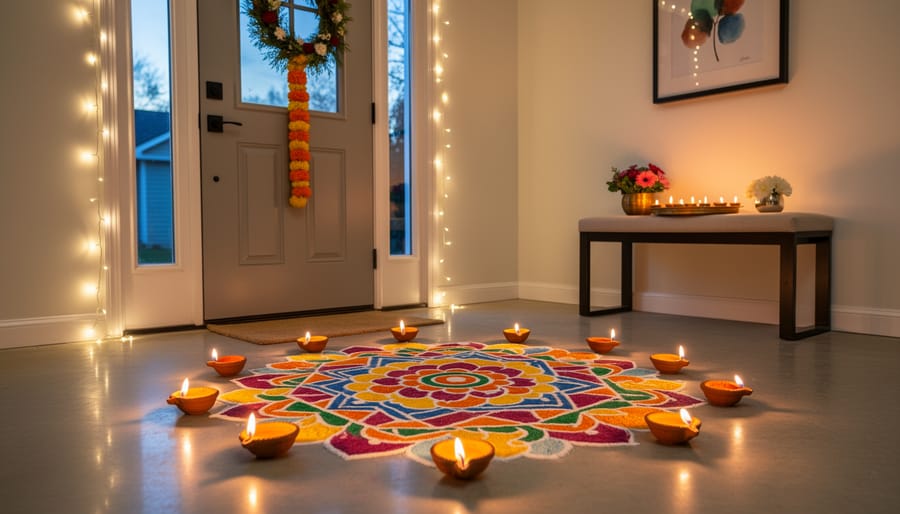
Idea 8: Traditional Torans (Door Hangings)
Torans, decorative fabric or bead hangings draped above doorways, instantly signal festive welcome in Indian homes. For American door frames, you’ll want pieces 36-48 inches wide to fit standard doorway widths. Authentic torans featuring marigold garlands, mango leaves, or embroidered fabric panels run $15-40 on sites like Amazon India’s US storefront or Etsy shops specializing in Indian décor. Mount them with removable adhesive hooks to avoid damaging trim. If you’re crafting your own, thread fresh or artificial marigolds onto fishing line and attach them to a wooden dowel cut to size from any hardware store. This works beautifully on both traditional Colonial-style entryways and modern minimalist door frames.
Idea 9: Fabric Wall Hangings and Tapestries
Large fabric wall hangings depicting Lakshmi, peacocks, or geometric mandala patterns create dramatic focal points without permanent installation. Look for pieces 3×5 feet or smaller at Indian cultural centers, World Market, or online retailers like IndiaBazaar. Hang them with picture-hanging strips or tension rods behind furniture to cover blank walls in living rooms or dining areas. The rich colors, deep reds, golds, and royal blues, complement both neutral modern interiors and warmer traditional spaces. Budget $25-60 depending on size and craftsmanship.
Idea 10: Window Decorations with Paper Cutouts
Transform windows into glowing displays using traditional paper lanterns or DIY cutouts. Purchase pre-made paper stars and lotus designs ($10-20 for sets) at craft stores, or cut your own patterns from colored cardstock. Attach them to windows with removable mounting putty so they catch natural light during the day and backlight from indoor lamps at night. This works particularly well on large picture windows common in American suburban homes, creating a stunning effect visible from the street.
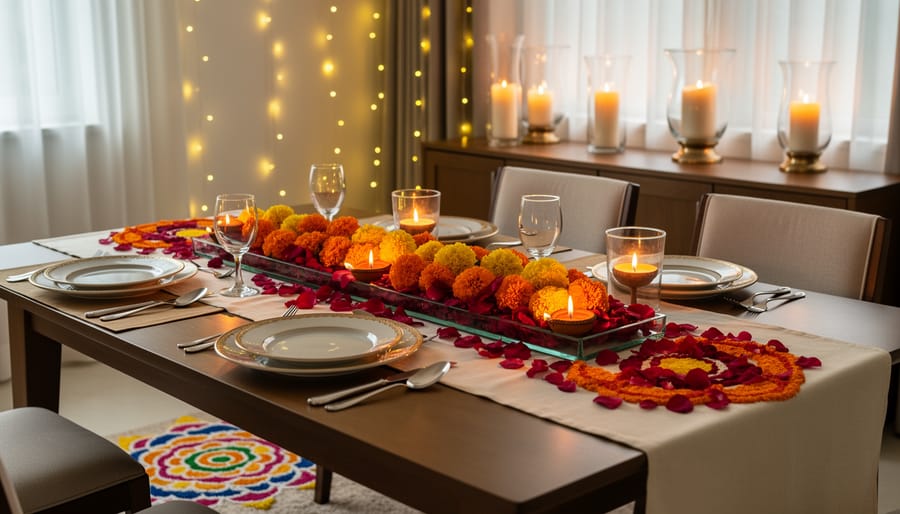
Your dining table becomes the heart of Diwali celebrations, where family and friends gather to share traditional sweets and meals. These three centerpiece ideas transform everyday tables into stunning focal points that honor the festival’s warmth.
Idea 11: Silk or Brocade Table Runners with Traditional Motifs
Indian fabric stores and online retailers like Amazon carry runners in deep reds, golds, and royal blues embroidered with paisley or mandala patterns. Drape a 72-inch runner down the center of your table and layer it over your existing tablecloth for dimension. Cost ranges from $15-40 depending on fabric quality. The rich textures complement both modern glass tables and traditional wood dining sets. If you’re experimenting with festive table styling for the first time, start with a runner, it anchors your entire arrangement without overwhelming the space.
Idea 12: Brass or Copper Serving Pieces as Decorative Elements
Traditional thali plates, small bowls, and brass diyas arranged on your runner create an authentic look. Indian grocery stores stock these items, or check World Market and HomeGoods for copper serving pieces. Group three to five brass items of varying heights in the center, filling small bowls with potpourri, floating candles, or decorative stones. A set of brass pieces costs $25-60. These metallics catch candlelight beautifully and work surprisingly well with contemporary décor.
Idea 13: Fresh Floral Centerpieces with Marigolds and Roses
Marigolds symbolize the sun’s life-giving energy in Diwali tradition. Local florists can order marigolds, or substitute with orange gerbera daisies and deep red roses from grocery stores. Arrange them in low, wide bowls or scatter flower heads around your brass pieces. Budget $20-35 for fresh flowers that last three to four days. Change water daily to keep blooms vibrant throughout your celebration.
Your home’s entrance sets the tone for Diwali celebrations and welcomes guests with festive warmth. For porch lighting, line railings and columns with battery-operated string lights or LED candles that withstand October-November weather fluctuations common across the USA. Hang a decorative toran above your front door using outdoor-safe hooks, and place brass or copper lanterns on either side for symmetry. Diwali light displays work beautifully when you outline walkways with solar-powered stake lights or luminarias made from paper bags weighted with sand and LED tea lights.
For pathway decorations, create a welcoming trail using small potted marigolds spaced along sidewalks, alternating with solar lights. In urban settings with limited outdoor space, focus on your doorstep: arrange a cluster of lanterns, place a small rangoli pattern using outdoor-safe materials like colored sand, and add potted mums in traditional orange and yellow tones. Check weather forecasts and bring delicate fabric decorations indoors during rain. Secure lightweight items against wind, and choose waterproof materials for anything staying out overnight.
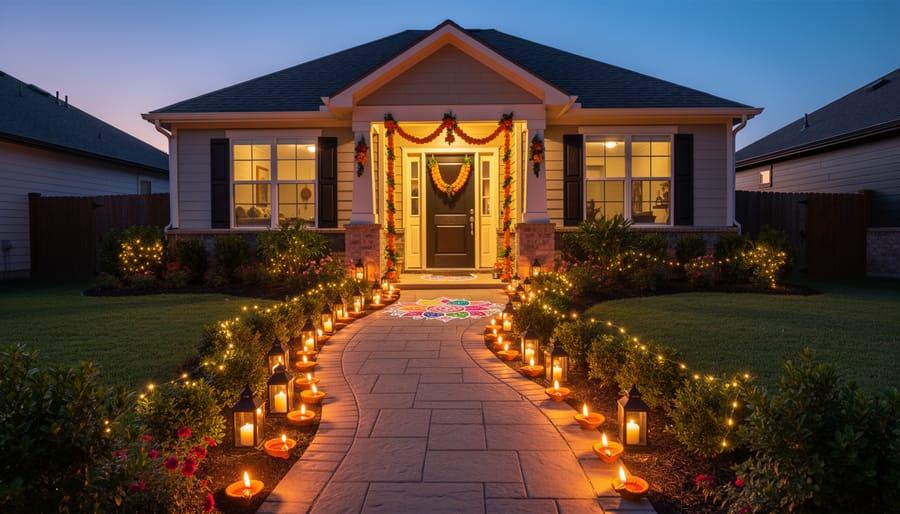
Finding authentic Diwali decoration materials in the USA is easier than you might think, with options ranging from specialty stores to mainstream retailers.
Indian Grocery Stores and Cultural Centers
Your local Indian grocery store is often the best starting point. Most stock traditional diyas, incense, rangoli powders, torans, and brass items during Diwali season (typically September through November). These stores understand quality and authenticity, and staff can offer helpful advice on traditional uses. Many also serve as informal community hubs where you can learn about local Diwali events. Check your area for stores like Patel Brothers, India Bazaar, or independent shops in neighborhoods with significant South Asian populations.
Online Retailers
For wider selection, online retailers ship nationwide. Amazon carries an extensive Diwali section with everything from electric diyas to decorative wall hangings. Specialty sites like, eBay’s Indian handicraft sellers, and Etsy shops run by Indian artisans offer more authentic, handcrafted pieces.
Mainstream Craft and Home Improvement Stores
Michael’s, Hobby Lobby, and Jo-Ann Fabrics stock materials perfect for DIY decorations: acrylic paints, stencils, artificial flowers, and adhesive gems for rangoli alternatives. Home Depot and Lowe’s offer string lights, flameless candles, and outdoor lighting options that work beautifully for Diwali while meeting US safety standards. Their seasonal sections often feature warm-toned metallics and jewel colors that complement traditional Diwali palettes perfectly.
With all the beautiful Diwali decorations you’ll be setting up, a few smart precautions can save your furniture and flooring from accidental damage. Oil lamps, candles, colored rangoli powders, and increased foot traffic all pose potential risks to wood surfaces, upholstery, and cabinetry that are common in American homes.
Start by placing heat-resistant mats, cork trivets, or decorative brass plates under every diya and candle to catch dripping oil or wax. For rangoli designs on wood or tile floors, consider using stencils with washable colored powders or flower petals that won’t stain grout lines. If you’re creating patterns near valuable furniture pieces, lay down drop cloths or painter’s tape to contain materials. The same protective approach applies to outdoor Diwali lighting installations where fixtures might be mounted on wood siding or decking.
For high-traffic areas during celebrations, place runners or area rugs to shield floors from scuffs and spills. Consider these quick protection tips:
If damage does occur despite precautions, professional furniture repair specialists can restore oil stains, wax burns, and finish damage to return your pieces to their original beauty. Taking these simple preventive steps lets you enjoy the festival’s glow without worry.
Transforming your American home for Diwali doesn’t require elaborate renovation or expensive imports. From the warm glow of traditional diyas and the vibrant patterns of rangoli to festive torans welcoming guests at your door, these 15 decoration ideas blend authentic Indian tradition with materials and styles suited to homes across the USA. Whether you live in a suburban house with a spacious porch or a downtown apartment with limited outdoor space, you can adapt these decorations to fit your environment while honoring the Festival of Lights.
The key is thoughtful planning and creativity. Start with the lighting elements that define Diwali, add color through rangoli and textiles, incorporate traditional brass or copper pieces into your table settings, and extend the celebration to your entryway. Most materials are available at Indian grocery stores, online retailers, or mainstream craft shops, making authentic decorations accessible regardless of your location.
Begin decorating two to three days before Diwali to allow time for creating rangoli designs and arranging lighting displays. Fresh flower decorations should be added the day before or morning of the celebration.
Absolutely. Choose colors that complement your palette, use traditional elements as accents rather than overwhelming the space, and select pieces that match your home’s scale and aesthetic.
Yes, with proper precautions. Place them on heat-resistant surfaces away from curtains and flammable materials, never leave them unattended, and ensure adequate ventilation.
Vacuum loose powder first, then clean with a damp mop using mild floor cleaner. For stubborn stains on wood floors, consult a furniture restoration professional to avoid damage.
Remember that protecting your furniture and floors during the celebration preserves your investment while you enjoy the festivities. With a little preparation and these practical ideas, your home can radiate the joy and light that make Diwali such a meaningful celebration for families across America.