
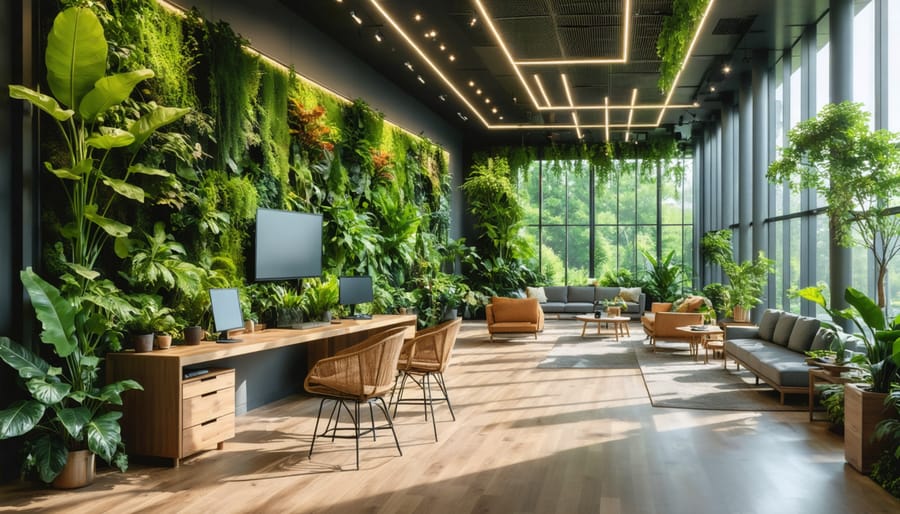
Biophilic design transforms ordinary spaces into vibrant, health-promoting environments by integrating natural elements into our built world. This science-backed approach taps into humanity’s innate connection to nature, reducing stress levels by up to 60% and increasing productivity by 15% in workplace settings. From living walls that purify air to strategic natural lighting that regulates circadian rhythms, biophilic design principles create spaces that nurture both physical and mental wellbeing.
Modern architects and designers increasingly embrace these principles not just for their aesthetic appeal, but for their measurable benefits: improved air quality, enhanced cognitive function, and accelerated healing rates in healthcare settings. Whether applied to homes, offices, or public spaces, biophilic design elements like natural materials, vegetation, and water features forge a crucial link between indoor environments and the natural world.
As urbanization continues to separate people from nature, implementing biophilic design becomes not just a luxury but a necessity for creating sustainable, healthy living spaces. This approach combines beauty with functionality, delivering tangible benefits while satisfying our fundamental need to connect with nature in our daily lives.
Humans have an innate, deeply-rooted connection to nature that spans thousands of generations. This fundamental relationship, known as biophilia, influences our well-being in profound ways. Research shows that exposure to natural elements reduces stress hormones, lowers blood pressure, and improves cognitive function – even in indoor environments.
When we incorporate natural elements into our living and working spaces, we tap into this primitive connection. The sight of flowing water, the gentle rustling of leaves, or the warmth of natural sunlight triggers positive psychological responses that modern urban environments often fail to provide. Studies have demonstrated that employees in offices with natural elements show 15% higher levels of well-being and are 6% more productive.
Our attraction to nature isn’t just aesthetic – it’s hardwired into our DNA. People consistently choose spaces with views of nature, natural materials, and organic shapes over artificial alternatives. This preference extends across cultures and age groups, suggesting a universal human need for natural connections that biophilic design purposefully addresses.
Research consistently demonstrates that incorporating biophilic design elements yields significant, measurable health benefits for occupants. Studies show that exposure to natural elements can reduce cortisol levels by up to 15%, leading to meaningful stress reduction in both residential and commercial spaces. Employees working in environments with natural light and vegetation demonstrate 15% higher productivity levels and report 26% better cognitive function compared to those in traditional spaces.
Physical health improvements are equally noteworthy. Buildings incorporating biophilic principles see a 15% decrease in reported headaches and eye strain among occupants. Recovery rates in healthcare facilities with natural views are approximately 8.5% faster than those without, accompanied by reduced pain medication requirements.
Blood pressure readings show an average reduction of 3-7 points when individuals spend time in spaces with natural elements. Enhanced air quality from indoor plants contributes to a 20% decrease in respiratory complaints. Additionally, exposure to natural light patterns helps regulate circadian rhythms, resulting in improved sleep quality and enhanced overall well-being. These evidence-based benefits make biophilic design not just aesthetically pleasing but a sound investment in occupant health.
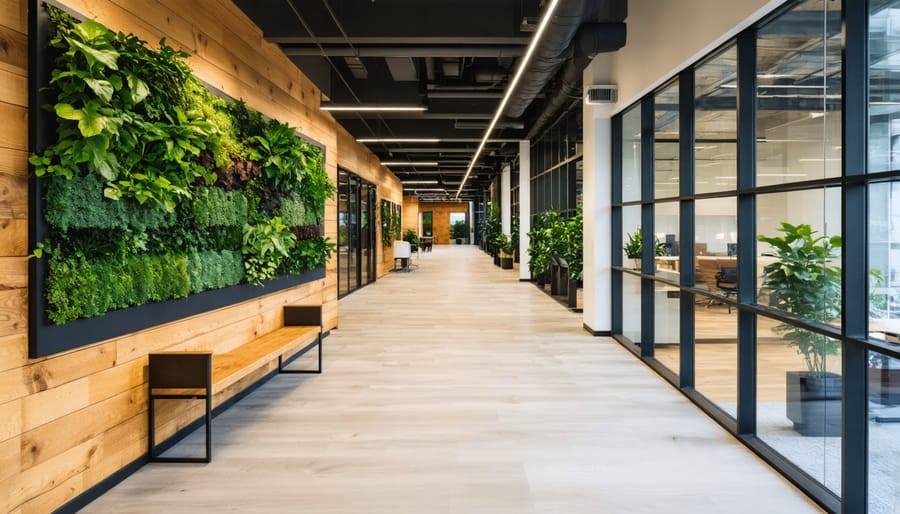
The integration of natural textures and tactile surfaces forms the cornerstone of effective biophilic design. Wood elements, with their unique grain patterns and warm touch, create an immediate connection to nature while providing durability and timeless appeal. Whether it’s reclaimed barn wood flooring or sleek maple furniture, these materials bring authenticity and character to any space.
Stone elements offer another dimension of natural beauty, from polished granite countertops to rough-hewn slate wall features. The varying textures and patterns found in natural stone not only provide visual interest but also help ground spaces with their solid, earthy presence. These materials age gracefully, developing unique patinas that tell stories of use and time.
Beyond wood and stone, consider incorporating natural fibers like jute, wool, and cotton in upholstery and textiles. These materials provide both visual and tactile variety while maintaining the natural theme. Cork, bamboo, and rattan offer sustainable alternatives that bring unique textures and environmental benefits to your design scheme.
When selecting materials, prioritize those with minimal processing to maintain their natural characteristics. This approach not only enhances the biophilic connection but also ensures authenticity in your design. Remember that natural materials often require specific maintenance routines to preserve their beauty and functionality over time.
Natural light and spacious layouts are fundamental elements of biophilic design that contribute to both wellness and accessibility. Optimizing natural light through strategically placed windows, skylights, and glass doors not only reduces energy consumption but also helps regulate circadian rhythms and boost mood.
When designing spaces, consider incorporating floor-to-ceiling windows with adjustable treatments to control light levels throughout the day. Position workstations and seating areas near windows to maximize exposure to natural light while avoiding glare on screens and surfaces. Light wells and interior courtyards can bring daylight into deeper sections of buildings where windows aren’t feasible.
Open floor plans support both biophilic principles and universal design by creating clear sight lines and enabling easy navigation for those using mobility aids. Maintain minimum clearance of 36 inches for pathways and consider wider corridors in high-traffic areas. Removable furniture and modular designs allow spaces to adapt as needs change.
To enhance the connection with nature while maintaining accessibility, incorporate transparent room dividers and use light-reflecting materials that amplify natural brightness. Consider installing automated lighting systems that adjust throughout the day to complement natural light patterns, creating a seamless transition from day to night while ensuring adequate illumination for safety and functionality.
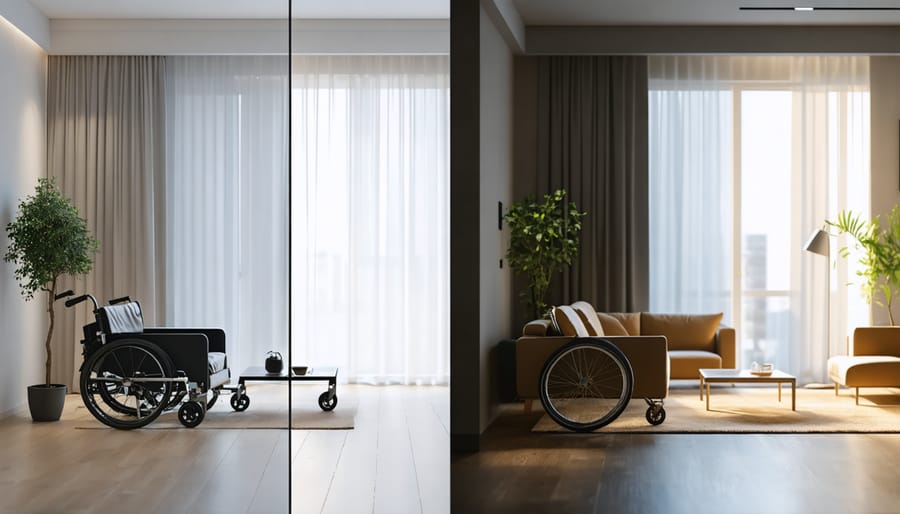
Living elements form the heart of biophilic design, but their implementation must carefully balance natural beauty with practical accessibility. Plants and water features, when thoughtfully positioned, can create inviting spaces that everyone can navigate safely and comfortably.
For indoor plantings, consider raised beds and vertical gardens that don’t obstruct pathways. Wall-mounted planters and hanging baskets add greenery without consuming valuable floor space. Select low-maintenance plants that won’t drop excessive leaves or require frequent watering, reducing slip hazards and maintenance demands.
Water features can be integrated through recessed floor designs or wall-mounted installations that provide both visual and auditory benefits without creating obstacles. Consider gentle bubble walls or small fountains that maintain consistent water flow while minimizing splash zones. These features should include proper drainage systems and non-slip surfaces in surrounding areas.
For commercial spaces, rotating plant displays can refresh the environment while maintaining clear traffic patterns. Living walls should be installed with adequate spacing from walkways and include proper lighting for visibility. In residential settings, window gardens and kitchen herb walls offer natural elements at comfortable reaching heights.
Remember that maintenance access points should be easily reachable for staff or homeowners. Regular pruning schedules help prevent overgrowth that could impede movement, while automated irrigation systems reduce the need for manual watering, making plant care more manageable for everyone.
When selecting furniture for a biophilic space, prioritize pieces that echo natural forms and materials while ensuring they meet accessibility requirements. Choose organic shapes and curves that mirror nature’s flowing lines, such as rounded tables or serpentine sofas. Materials like sustainably harvested wood, bamboo, or rattan not only bring nature indoors but also create a sensory-rich environment.
Consider implementing adaptive furniture solutions that accommodate various mobility needs while maintaining the biophilic aesthetic. Height-adjustable tables with live-edge tops or modular seating with natural upholstery patterns offer both flexibility and style.
Through effective space planning, arrange furniture to create clear pathways while maximizing views of outdoor spaces or indoor plants. Position seating near windows to strengthen the connection with nature, but ensure adequate clearance for mobility devices.
Layer textures through furniture choices – smooth wooden surfaces, soft natural fibers, and tactile materials like cork or stone – to create a multi-sensory environment that appeals to both sight and touch. Remember to maintain proper spacing between pieces and include adequate support features like arms on chairs or stable bases, ensuring both safety and comfort while preserving the natural aesthetic.
Maintaining biophilic elements requires a balanced approach to ensure both the natural elements thrive and spaces remain accessible to all users. Regular pruning of indoor plants prevents overgrowth that could obstruct pathways or create tripping hazards. For living walls, implement a quarterly maintenance schedule that includes checking irrigation systems, removing dead foliage, and ensuring proper lighting conditions.
Natural materials like wood and stone require specific care to maintain their beauty and functionality. Wooden elements should be sealed appropriately to prevent moisture damage while preserving their natural tactile qualities. Stone features need periodic cleaning with pH-neutral cleaners to prevent buildup without damaging the material’s natural properties.
Water features demand consistent maintenance to prevent stagnation and ensure proper flow. Install automated filtration systems and schedule weekly cleaning to maintain water quality. For daylight optimization, clean windows and skylights regularly to maximize natural light penetration while checking that glare control measures remain effective.
Climate control systems should be monitored to maintain optimal humidity levels for both plant health and human comfort. Consider installing humidity sensors and automated ventilation systems to balance these needs. Documentation of maintenance procedures helps ensure consistency and can be particularly valuable for commercial properties where multiple staff members may be involved in upkeep.
Remember that successful biophilic design maintenance is proactive rather than reactive, helping preserve both the aesthetic appeal and functional aspects of these natural elements.
Let’s explore three remarkable examples of biophilic design success stories that demonstrate the practical implementation and tangible benefits of incorporating nature into built environments.
The Amazon Spheres in Seattle stands as a testament to large-scale biophilic implementation in a corporate setting. These three glass domes house over 40,000 plants from around the world, creating a workspace that seamlessly blends nature with technology. Employees report 15% higher productivity levels and a 20% decrease in stress-related complaints since its opening in 2018. The space features natural materials, living walls, and water features that create a multi-sensory experience while maintaining full accessibility for all employees.
On a smaller scale, the Etsy headquarters in Brooklyn showcases how biophilic design can transform a traditional office space. The company incorporated local plants, reclaimed wood, and natural lighting throughout their nine-floor office. Each floor features different regional ecosystems, with meeting rooms named after local flora. Post-implementation surveys revealed a 25% increase in employee satisfaction and a 30% reduction in sick days.
The Khoo Teck Puat Hospital in Singapore demonstrates biophilic design’s impact in healthcare settings. The facility integrates gardens at every level, with plants covering more than twice the building’s footprint. The design includes therapeutic gardens, rooftop farms, and water features that create a healing environment. Patient recovery times have decreased by an average of 20%, and staff retention rates have improved by 15% since its opening.
A residential success story comes from the Bosco Verticale (Vertical Forest) in Milan, Italy. These residential towers host over 900 trees and 2,000 plants, creating private gardens for each apartment while contributing to the city’s biodiversity. The buildings reduce energy consumption by 15% through natural cooling and improve air quality by absorbing 30 tons of CO2 annually.
Key lessons from these case studies include:
– Prioritizing natural light and ventilation
– Using local and native plant species
– Incorporating water features thoughtfully
– Ensuring maintenance plans are sustainable
– Making biophilic elements accessible to all users
These examples demonstrate that successful biophilic design not only creates visually striking spaces but also delivers measurable benefits for occupants’ well-being and environmental sustainability.
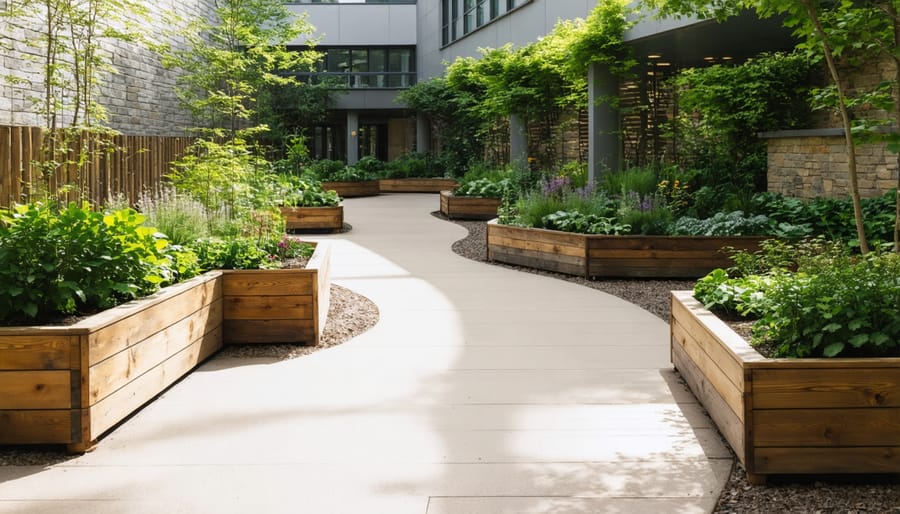
Incorporating biophilic design principles into your space is more than just a trend – it’s an investment in wellbeing and sustainability. By thoughtfully integrating natural elements, maximizing natural light, and creating connections to the outdoors, you can transform any environment into a more vibrant, healthy, and productive space. Remember that successful implementation doesn’t require a complete overhaul; start with small changes like adding plants, natural materials, or nature-inspired patterns. The benefits of reduced stress, increased productivity, and improved air quality make biophilic design a worthwhile consideration for any property. Whether you’re renovating a home or updating a commercial space, let nature be your guide in creating environments that nurture both body and mind. Take the first step today by identifying areas where you can introduce these life-enhancing principles into your space.