
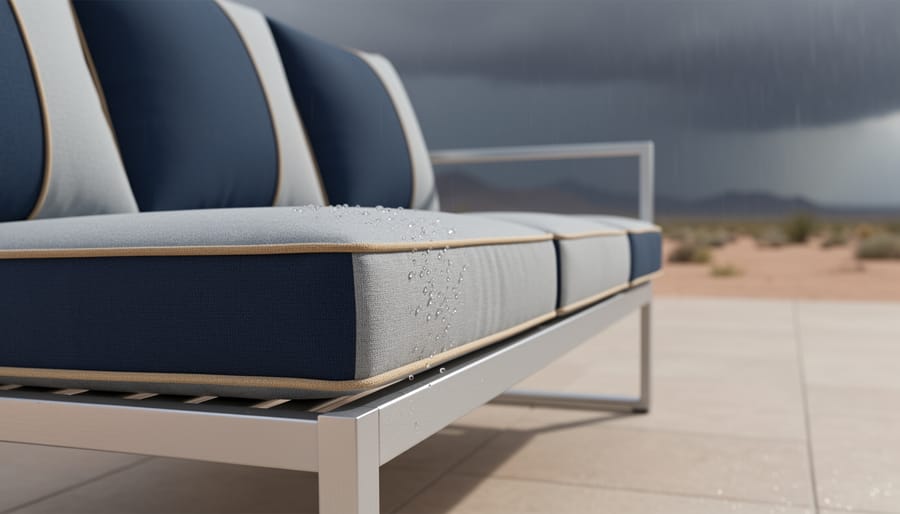
Quality outdoor furniture cushions come down to three non-negotiables: UV-resistant fabric that won’t fade or crack, quick-drying foam that resists mold and mildew, and reinforced stitching that survives years of temperature swings. In extreme climates, where scorching sun, torrential rain, or freezing winters put outdoor furnishings to the test, these features separate a smart investment from a costly mistake.
Most homeowners discover the hard way that price alone doesn’t predict performance. A $50 cushion and a $150 cushion might look identical in the store, but six months of exposure reveals which one used solution-dyed acrylic fabric versus basic polyester, and which one skimped on drainage channels in the foam core. The difference isn’t subtle. Cheap cushions fade to unrecognizable colors, trap water that breeds mildew, and split at the seams before the second season ends.
This guide walks you through the specific materials and construction details that matter, compares the leading fabric and foam types side by side, and gives you clear recommendations based on your climate zone. You’ll learn which mistakes drain your budget and which maintenance steps actually extend cushion life. Whether you’re furnishing a desert patio in Phoenix or a coastal deck in Maine, you need cushions engineered for your environment.
At Vital Turnaround, we’ve restored countless outdoor furniture pieces damaged by inadequate cushions that trapped moisture, accelerated frame rust, and required premature replacement. The right cushions protect your furniture investment while delivering years of comfort and style.
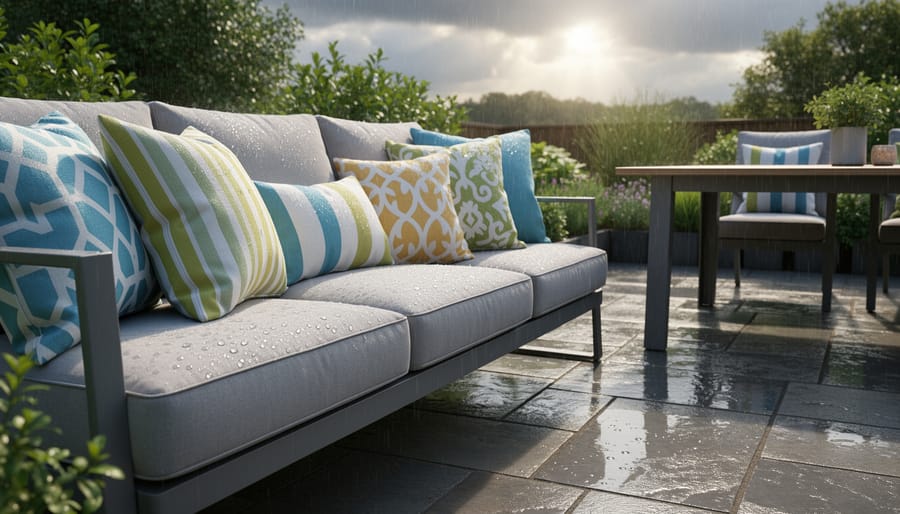
When you’re shopping for outdoor cushions that need to survive harsh weather, understanding what separates quality from mediocre becomes critical to protecting your investment. The difference between cushions that last a decade and those that fall apart in two seasons comes down to specific, measurable features.
Fabric durability starts with the weave and fiber composition. Solution-dyed acrylic fabrics, where color is added during fiber production rather than applied afterward, resist fading far better than surface-dyed alternatives. The thread count and weave density matter too, tighter weaves shed water more effectively and resist tearing from wind or debris. Look for fabrics rated at minimum 1,000 hours of UV exposure in accelerated weathering tests. In practical terms, this translates to three to five years of full sun exposure before noticeable fading begins, compared to six months for untreated fabrics.
The fill material determines both comfort and moisture management. Quick-dry foam with an open-cell structure allows water to pass through rather than pooling inside the cushion. Standard polyurethane foam absorbs water like a sponge, staying damp for days and creating perfect conditions for mold growth. Quality quick-dry foam weighs roughly the same whether dry or after a rainstorm because water drains through in minutes rather than hours. Some manufacturers add antimicrobial treatments to the foam itself, though this matters less if drainage is effective.
UV protection goes beyond just the outer fabric. Quality cushions use UV-inhibiting treatments on threads, zippers, and even foam cores. Without this, you’ll notice stitching degrading first, threads become brittle and snap, creating openings for water and losing structural integrity. A cushion can look perfect on the surface while the seams are failing underneath. Check whether UV protection is rated for the fabric alone or for all components.
Water resistance works hand-in-hand with drainage features. Truly waterproof fabric without drainage just creates a water balloon effect, moisture gets in through seams or zippers and has nowhere to go. Better cushions use water-resistant fabrics paired with mesh gusset panels or drainage grommets that let trapped moisture escape. The bottom fabric should dry as quickly as the top to prevent moisture wicking upward into the fill.
Mold and mildew resistance depends on keeping things dry, but also on fabric treatments. Look for cushions treated with EPA-registered antimicrobial solutions, particularly if you live in humid climates. These treatments inhibit fungal growth even during brief periods of dampness. Without them, you’ll see black spots appearing within a single humid season, and once mold establishes itself in cushion fill, it’s nearly impossible to remove completely.
Color fastness varies dramatically between manufacturers. Cheap dyes bleed when wet, stain clothing, and fade to unrecognizable shades within months. Solution-dyed fabrics maintain color because the pigment runs through the entire fiber, not just the surface. You can test this somewhat by rubbing a damp white cloth firmly across the fabric, quality materials won’t transfer color.
Construction quality reveals itself in the details. Double-stitched seams with UV-resistant polyester thread last years longer than single-stitched cotton thread. Zippers should be corrosion-proof, look for YKK marine-grade zippers or similar, not standard metal that rusts within one season. Cushion ties need reinforced attachment points; cheap cushions have ties that rip away from the fabric after minimal wind stress. Box-edge construction with welting creates more durable corners than knife-edge styles that compress and lose shape.
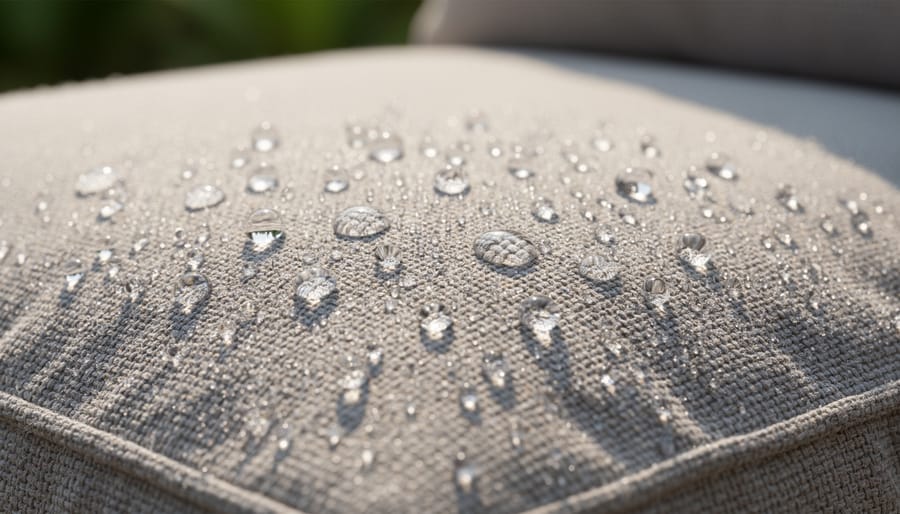
Choosing the right outdoor cushion material is critical in extreme climates, where standard fabrics and fills break down rapidly. Each material type offers distinct advantages and trade-offs depending on your specific weather challenges.
Fabric Options: Understanding Your Choices
Solution-dyed acrylic represents the gold standard for extreme weather performance. The color is added during fiber production, not applied afterward, which means the fabric resists fading even under relentless UV exposure. It breathes well, sheds water efficiently, and resists mold growth. In desert environments where temperatures regularly exceed 110°F, solution-dyed acrylic won’t become brittle or crack. The main drawback is cost, typically 30-40% more than outdoor polyester, and it requires proper drainage to avoid water pooling.
Sunbrella and similar premium brands use solution-dyed acrylic as their foundation, adding proprietary treatments for enhanced performance. These fabrics excel in coastal areas where salt spray and high humidity accelerate deterioration. They’re backed by warranties ranging from five to ten years, though real-world longevity often exceeds that. The texture stays soft even after years of exposure, unlike cheaper alternatives that become stiff and rough.
Marine-grade vinyl offers unmatched water resistance and easy cleanup, making it ideal for poolside furniture or areas with frequent rain. It’s virtually impermeable to moisture, preventing mold and mildew at the source. However, vinyl absorbs and retains heat, becoming uncomfortably hot in direct sun. In freezing conditions, it can crack if the cushions aren’t stored properly. It’s also less breathable, which some find uncomfortable during extended sitting.
Outdoor polyester provides a budget-friendly entry point without completely sacrificing performance. Modern versions include UV inhibitors and water-resistant coatings, though these treatments degrade faster than solution-dyed options. Expect three to four years of solid performance in moderate climates, less in extreme conditions. The fabric tends to fade noticeably after two seasons of intense sun exposure and may develop mildew in persistently humid environments.
| Material Type | Best Climate Match | Durability Rating | Maintenance Level | Price Range |
|---|---|---|---|---|
| Solution-Dyed Acrylic | All climates, especially high UV | Excellent (7-10+ years) | Low | $$$ |
| Marine-Grade Vinyl | Coastal, high moisture | Very Good (5-8 years) | Very Low | $$-$$$ |
| Outdoor Polyester | Moderate climates | Fair (3-5 years) | Moderate | $ |
| Sunbrella Brand | Extreme all-weather | Excellent (8-12 years) | Low | $$$$ |
Fill Materials: The Hidden Performance Factor
Quick-dry foam revolutionized outdoor cushions by incorporating open channels that allow water to drain through rather than being absorbed. It maintains shape and support even after heavy rain, drying within hours instead of days. This fill performs exceptionally in humid climates and areas with frequent precipitation. The foam resists compression, so cushions don’t flatten out after a single season. Expect to pay 25-35% more than standard foam, but the investment pays off in areas where moisture is constant.
Open-cell foam without quick-dry technology absorbs water like a sponge, taking days to fully dry and creating perfect conditions for mold growth. Unless you’re committed to storing cushions after every rain event, avoid this fill type in any climate with regular precipitation.
Polyester fiberfill offers lightweight comfort and affordability but compresses quickly under use. In freezing climates, moisture trapped in the fill can freeze and damage the internal structure. It works adequately in dry, moderate climates where cushions receive daily use and regular fluffing, but struggles in extreme conditions.
Down alternative mimics the softness of traditional down but adds water resistance. It’s best suited for covered patios in mild climates rather than fully exposed furniture in harsh weather. The fill clumps when wet and takes considerable time to regain its loft.
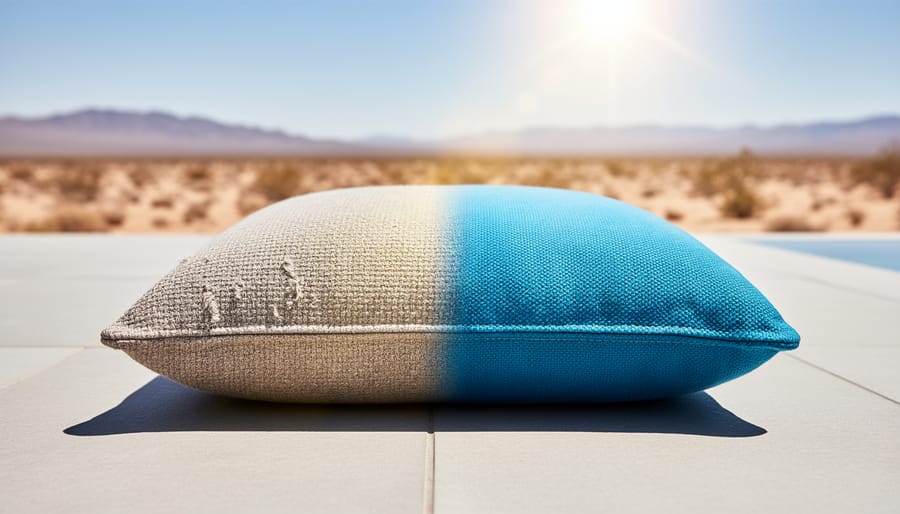
Your climate zone dictates which cushion features matter most and which you can skip. A cushion built for Arizona’s baking sun will fail miserably in Seattle’s damp winters, and vice versa. Here’s how to match your purchase to your environment.
In desert and high UV environments, prioritize fade resistance above everything else. Look for solution-dyed acrylics with UV ratings of 1,000+ hours, ventilated fill materials that won’t trap heat, and light colors that reflect rather than absorb solar radiation. Dense weaves prevent UV penetration better than loose fabrics. If you’re outfitting a desert-proof patio skip dark colors entirely, they’ll scorch bare skin in summer and fade to muddy browns within two seasons.
Coastal and high humidity areas demand completely different priorities. Mold and mildew resistance trumps everything, which means marine-grade vinyls or heavily treated acrylics with antimicrobial finishes. Quick-dry open-cell foam is non-negotiable here; standard foam will stay damp for days and breed mildew. Rust-proof zippers (ideally nylon, never metal) prevent corrosion from salt air. Elevated drainage channels in the cushion base keep water from pooling underneath.
Freezing and snow-prone regions require cushions that can handle moisture in all its forms, snow, ice, freeze-thaw cycles. Waterproof (not just water-resistant) covers prevent ice crystals from forming inside the fill. Reinforced stitching withstands expansion and contraction as materials freeze and thaw. Choose dark colors; they’ll melt snow faster and mask the dirt tracked in during muddy spring thaws. Many people integrate these cushions into weather-proof enclosures to extend their usable season.
Areas with extreme temperature swings need cushions built like tanks:
The most versatile option? Solution-dyed acrylic covers over quick-dry foam with full waterproof backing. This combination handles 90% of extreme climate scenarios reasonably well, though specialists will outperform it in single-climate applications.
When it comes to extreme-climate cushions, these recommendations consistently outperform in real-world conditions. We’ve evaluated materials, construction, and long-term performance data to identify cushions that genuinely deliver.
Best Overall for All-Weather Durability
Cushions featuring Sunbrella Supreme fabric paired with quick-dry polyurethane foam represent the gold standard. This combination handles intense UV, heavy rain, and temperature extremes without compromising comfort or structure. A property manager in Phoenix reported their Sunbrella Supreme cushions maintained color and integrity after five years of unprotected desert exposure, no fading, no brittleness. Look for double-stitched seams and corrosion-resistant zippers. These typically run $80-150 per seat cushion, but the lifespan justifies the investment.
Best for UV Resistance
Solution-dyed acrylic fabrics with UV ratings above 2000 hours excel in high-sun environments. Brands like Outdura and Richloom show virtually zero color degradation after years under relentless sun. A customer replaced standard outdoor cushions that faded within eighteen months; their Outdura replacements looked nearly new after three Arizona summers. The fiber is dyed during manufacturing rather than printed on the surface, so color permeates every strand. Pair this fabric with closed-cell foam to prevent UV-induced breakdown of the cushion core.
Best for Moisture-Heavy Climates
Marine-grade vinyl cushions with open-cell foam drainage systems handle coastal humidity and frequent rain without developing mold or mildew. We’ve seen these perform exceptionally well in Pacific Northwest and Gulf Coast installations. One Seattle restaurant kept vinyl cushions on their covered patio year-round for four years with minimal maintenance, just periodic hosing and air-drying. The vinyl sheds water instantly, while the open-cell foam allows moisture to escape rather than pool internally. Choose cushions with ventilated backing and drainage grommets for maximum breathability.
Best Budget Option
High-grade outdoor polyester fabrics with quick-dry foam inserts offer solid performance at $40-70 per cushion. While they won’t last as long as premium options, quality polyester cushions deliver three to four years in extreme conditions when properly stored during the harshest months. A homeowner in Colorado reported excellent performance through two mountain winters by bringing these cushions indoors during heavy snow periods. The key is ensuring the polyester is rated for outdoor use with water-repellent treatment, not standard indoor-grade fabric.
Best Custom Options
Custom-fabricated cushions using your choice of premium materials accommodate unique furniture dimensions and specific climate needs. This works particularly well for restored vintage pieces or specialty patio sets. Before-and-after photos from a Palm Springs restoration show custom Sunbrella cushions transforming a 1970s metal patio set into a cohesive, climate-ready outdoor living space that’s lasted six years without replacement.
The most expensive outdoor cushion mistake is also the easiest to make: assuming all cushions labeled “outdoor” can handle extreme conditions. A property manager in Scottsdale learned this the hard way when she purchased attractive patio cushions from a big-box retailer, only to watch them fade to unrecognizable pastels and develop brittle, cracked fabric within six months of Arizona sun exposure. The cushions were technically rated for outdoor use, but lacked the UV stabilization and fade-resistant construction needed for desert climates. She ended up spending three times her original budget replacing them with properly rated materials.
Ignoring fill material proves equally costly. Many buyers focus solely on fabric appearance while overlooking whether the foam inside can drain properly or resist mold growth. One coastal homeowner discovered his beautiful marine-vinyl cushions concealed standard polyurethane foam that acted like a sponge during Florida’s daily afternoon storms. Within three months, the cushions became breeding grounds for mildew despite the water-resistant exterior. The oversight required complete cushion replacement plus professional furniture cleaning to remove embedded mold spores.
Measurement errors create another common pitfall. Ordering cushions that are too small allows water to pool on exposed furniture surfaces, accelerating wood rot or metal corrosion. Oversized cushions bunch and trap moisture between folds, creating perfect conditions for mold. One restaurant owner lost an entire outdoor seating collection to weather damage because ill-fitting cushions exposed teak frames to standing water during mountain winters.
The storage trap catches many buyers who invest in quality cushions but lack a plan for protecting them during extreme weather events. Even the best cushions need shelter during Category 2 hurricanes or extended below-freezing periods. Without proper storage solutions, owners face a choice between bringing dozens of bulky cushions indoors or risking damage that negates their quality investment. For valuable outdoor furniture pieces, consulting professionals who offer luxury restoration services can help determine when repair makes more sense than replacement.
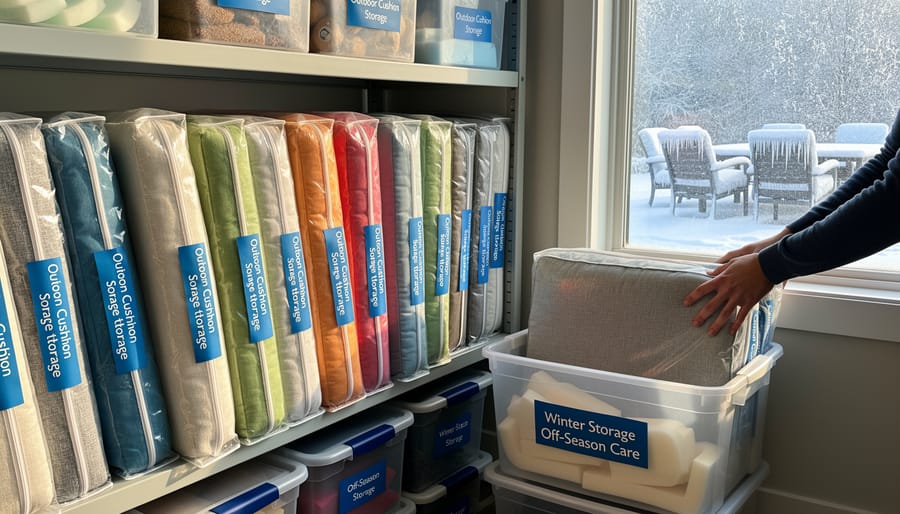
Quality cushions still need proactive maintenance to reach their full lifespan in extreme climates. Start with a consistent cleaning schedule: brush off debris weekly and wash cushions monthly with mild soap and water. In high-dust or pollen environments, increase frequency to every two weeks. Always rinse thoroughly and allow cushions to air-dry completely before placing them back on furniture.
Storage makes the difference between five years and fifteen. When severe weather approaches, prolonged freezing, dust storms, or hurricane-force winds, bring cushions indoors. For off-season storage, choose a cool, dry location with air circulation. Never seal cushions in plastic bags; moisture trapped inside breeds mold. Instead, use breathable storage bags or leave them uncovered in a climate-controlled space.
Apply fabric protector spray annually to refresh water and stain resistance, especially after deep cleaning. In high-UV zones, reapply every six months. For coastal areas, hose down cushions after salt-spray events to prevent fabric degradation.
Watch for warning signs that indicate repair needs: fading beyond what fabric protector can address, seams separating, zippers failing, or foam losing resilience. Small tears caught early prevent bigger failures. Before replacing damaged cushions entirely, consider professional intervention. Restoration mastery can often salvage quality cushions at a fraction of replacement cost, particularly when the underlying foam and structure remain sound. This same expertise extends to complete outdoor furniture systems, from cushion repair to wrought iron care ensuring your entire outdoor investment stays protected.
Well-made outdoor cushions with solution-dyed acrylic fabric and quick-dry foam should last 5 to 7 years in extreme conditions with proper maintenance. Budget options might give you 2 to 3 years, while premium marine-grade cushions can exceed 10 years if you store them during the harshest weather.
Yes, but only if they’re specifically rated for your climate extremes. Cushions marketed as “all-weather” with waterproof covers, drainage vents, and mold-resistant fill can handle year-round exposure in most climates. However, even the best cushions last longer if you bring them in during severe storms or winter freeze-thaw cycles.
Water-resistant cushions repel light rain and moisture but will eventually absorb water during prolonged exposure. Waterproof cushions have sealed seams and impermeable fabrics that block water entirely, making them essential for coastal or high-rainfall areas where cushions might sit wet for days.
In extreme climates, absolutely. A $200 premium cushion that lasts seven years costs less per year than replacing $60 budget cushions every two seasons. Quality cushions also maintain their appearance and comfort far longer, avoiding the faded, lumpy look that cheap options develop within months.
Many cushion problems are fixable. Faded fabric can be re-dyed, torn seams restitched, and compressed fill replaced. Professional furniture restoration services can often revive cushions for a fraction of replacement cost, especially if the core structure remains sound.
Replace cushions when the fabric is severely dry-rotted, the foam has disintegrated beyond simple refill, or widespread mold has penetrated deep into the fill. Consider restoration if damage is limited to surface fading, minor tears, zipper failures, or flattened fill, problems similar to those addressed in pet-proof fabrics restoration work.
These questions reflect what customers ask most when they’re trying to make smart cushion investments. The biggest misconception we see is treating outdoor cushions like a throwaway purchase, buying the cheapest option and expecting it to perform. In reality, understanding your climate’s specific challenges and matching cushion features to those demands saves money and frustration in the long run.
When shopping for outdoor cushions built to survive extreme climates, prioritize three non-negotiables: fabric composition, fill technology, and construction details.
Start with the fabric label. Solution-dyed acrylic with a minimum 1,000-hour fade resistance rating protects against UV damage in high-sun environments. For coastal or humid zones, check for mildew-resistant treatments and water-repellent coatings, not just water-resistant, but actively shedding moisture.
Examine the fill next. Quick-dry foam with an open-cell structure prevents water retention that leads to mold, while maintaining shape recovery after compression. Squeeze the cushion hard; quality fill rebounds within seconds, not minutes.
Construction quality reveals longevity. Double-stitched seams with UV-resistant thread resist unraveling under temperature stress. Zippers should be marine-grade with welded teeth, not plastic. Ties need reinforced stitching at attachment points, the most common failure spot.
Finally, consider the warranty. Manufacturers confident in their product offer three to five years of coverage. Anything less suggests corners were cut. A two-year warranty on cushions facing desert sun or mountain snow won’t protect your investment when failure happens in year three.
Choosing quality outdoor furniture cushions for extreme climates isn’t just about immediate comfort. It’s about protecting your investment for years to come. When you select cushions designed specifically for your climate zone, whether that means maximum UV protection for desert conditions, superior drainage for coastal humidity, or freeze-resistant materials for winter extremes, you avoid the frustration and expense of frequent replacements.
The difference between a cushion that lasts two seasons and one that performs beautifully for seven or more years often comes down to informed decision-making at the point of purchase. Understanding fabric technologies, fill materials, and construction quality empowers you to choose wisely rather than guess and hope for the best.
If you’re unsure which features matter most for your situation, or if your existing cushions have started showing wear, professional guidance makes all the difference. At Vital Turnaround, we specialize in furniture restoration and can assess whether your cushions need replacement or if restoration could extend their life significantly. Our expertise in furniture care means we understand what works in real-world conditions, not just showroom displays. Reach out today to discuss custom solutions that match your climate challenges and keep your outdoor spaces comfortable year after year.