
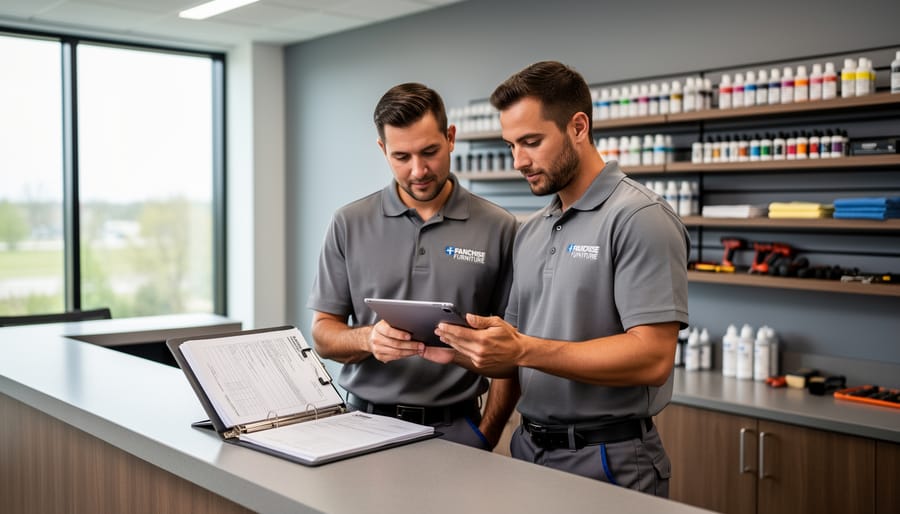
The fastest way to set up a CRM across a furniture repair franchise is to pick one system for every location, define a short list of required fields for each job, and train your teams in stages instead of all at once. Plan on a few weeks for a pilot at one or two locations, then a steady rollout to the rest. The difficulty isn’t the software. It’s getting a technician who’d rather be restoring a scratched oak table to log the visit, attach the before photo, and note the follow-up.
That’s why this guide focuses on habits as much as tools. A CRM (customer relationship management system) is simply a shared record of every customer, quote, appointment, and repair, so any location can pick up where another left off. If you want the bigger picture first, see how a CRM transforms a furniture repair business day to day.
Franchise owners and aspiring franchisees tend to ask the same things: What do we need before we start? How do we protect customer data? What’s the right order for training? And how do we know it’s working? We’ll take them one at a time, starting with what to gather.
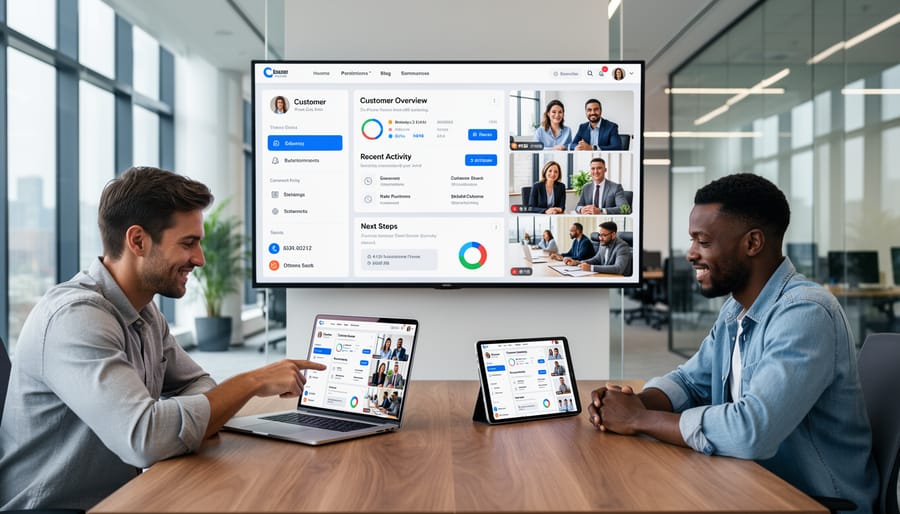
Running a furniture repair franchise means running several small businesses that must feel like one. A homeowner with a scratched heirloom dresser in one city expects the same prompt reply, clear quote, and careful service as a property manager in another. A shared CRM (customer relationship management system) makes that possible, because every location records leads, quotes, and jobs in the same place and the same way.
The speed of your response matters more than most owners expect. Residential inquiries often come in while someone is still staring at the damage. Commercial managers need a restoration quote before a lobby reopens. Insurance adjusters are waiting on documentation. When messages live in personal inboxes and notebooks, some of them slip. In a shared system, every inquiry has a name, a status, and a next step attached to it.
Visibility is the other big win. Franchise owners can see which quotes are waiting on a reply, and head office can spot patterns across locations without chasing anyone for updates. That is the heart of smart customer management: less guesswork and more consistent follow-through.
Picture a franchise team that kept customer details on sticky notes, text threads, and a shared spreadsheet nobody trusted. A property manager’s lobby restoration quote sat unanswered for a week because it was buried in one technician’s messages. After the team moved everything into a single customer record, that same manager’s history, photos, and past invoices were visible to anyone who picked up the phone. Follow-ups became routine, and within a few months the team was winning repeat commercial work simply by being the company that always called back.
Customers notice the difference. As one property manager put it, “I used to chase them for updates. Now I get a reply the same day, and they already know what they did for us last time.”
Once the value is clear, the next question is practical: what do you need in place before training begins?
Not every CRM suits furniture repair, so it helps to match features to how your teams actually work. Start with a short list of must-haves and ignore the rest.
Job and quote tracking. A repair job moves from inquiry to estimate, quote, approval, repair, and invoice. Pick a system that shows each stage at a glance, so a cracked dining table never gets lost between the estimate and the follow-up call.
Photo attachments. Technicians should be able to upload before-and-after images straight from a phone and attach them to the job record. Those photos support quotes, customer galleries, and any insurance paperwork.
Insurance-claim notes. Look for a notes field or tag that records claim numbers, adjuster names, and approval dates. Claim jobs have extra steps, and a clear record keeps them moving.
Automated follow-up reminders. Set reminders for unanswered quotes and completed jobs. A gentle nudge a few days after a quote often decides whether the work is won.
Multi-location permissions. Each franchise should see its own customers while head office sees the bigger picture. Roles should control who can view, edit, or export information.
Simple reporting. Choose a few clear reports, such as open quotes, response times, and jobs by source. If a report takes a manual to understand, your team won’t use it.
Finally, test the mobile app on a real job before you commit.

Customer trust is the real asset in a furniture repair franchise, and your CRM holds a lot of it. Names, addresses, insurance claim notes and commercial contracts all live in one place, so a few simple habits protect everyone before you go live.
Start with access levels. A technician needs to see job details and upload photos, but they rarely need to see every location’s pricing or a head office report. Give each role only the access it needs. Office staff, owners and technicians should each have their own login, and every person should use a strong password that is not reused elsewhere.
Sharing logins may feel like a quick fix on a busy day, but it removes any record of who changed what. It also puts private information at risk if a team member leaves.
Insurance adjusters and commercial property managers expect their details to stay private. Keep claim numbers, policy notes and contract terms in restricted fields, and limit who can view them. A clean start matters too. Duplicate contacts, missing phone numbers or unclear job histories lead to missed follow-ups and awkward conversations. Take time to tidy the data and confirm who owns each task.
It’s also a good moment to remember why this care pays off. Customers return to businesses they trust, and that’s part of why quality repair makes financial sense for the clients you serve. If roles are unclear or data is incomplete, wait. A short delay is far easier than repairing a broken first impression.

Start office training with the first moment a customer reaches out. Every inquiry, whether it’s a phone call about a cracked dining table or a web form from a property manager, gets entered the same way: name, contact details, lead source (where the customer heard about you), and a short note about the piece. Then walk staff through scheduling the estimate straight from that record, so nothing lives on a sticky note.
Next, practice building quotes from your standard templates. Have each person send a practice quote and attach the right photos, then set an automated follow-up reminder for two or three days later. Keep the routine short and repeatable. A franchise that treats every inquiry like a potential client magnet needs staff who respond quickly and consistently, and reminders make that easy.
Finally, teach owners to read the pipeline report, which is simply a view of every lead sorted by stage, from new inquiry to booked job. Reviewing it weekly takes ten minutes.
One owner we’ll call Dana started doing exactly that. She noticed several quotes sitting at the “sent” stage for more than a week, mostly commercial lobby and office seating jobs. Her office manager made friendly check-in calls that same afternoon, and a few of those quotes turned into booked work. Nothing new was needed, just a clear view of what had stalled.
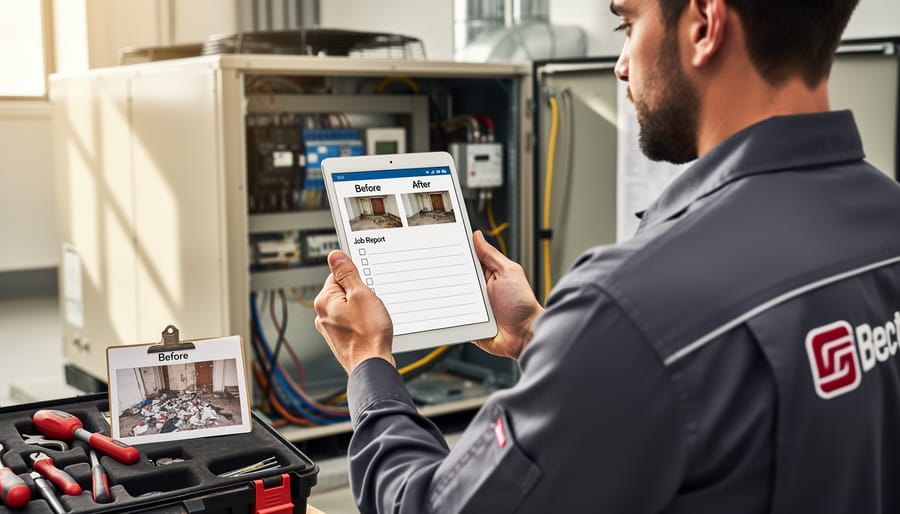
Technicians don’t need a long classroom session. They need a short routine they can finish in the driveway or the customer’s living room. Start by walking them through the mobile app on their own phones, using a real job like a scratched leather sofa or a loose chair joint.
Teach the routine in three quick moves:
1. Arrive and update status. One tap changes the job to “On Site,” so the office knows the customer is being served.
2. Take before photos, then log notes. Capture the damage from a few angles, then type or dictate what you see: the finish type, the repair plan, and anything the customer mentioned.
3. Finish with after photos and close out. Add the completed shots, mark the job “Complete,” and note any follow-up care instructions.
The whole thing should take a few minutes. Show technicians that the same photos do double duty. Tidy before-and-after pairs become the galleries customers love browsing, and they give insurance adjusters clear, time-stamped proof of the original damage and the finished repair. That means fewer questions and faster claim approvals.
Keep photos consistent: same lighting, same angles, no clutter in the frame. Pair up new technicians with an experienced one for their first two or three jobs, and celebrate the best photo sets in your team chat. A little recognition keeps good habits going.
You’ll know your CRM training is working when the system matches what’s happening on the shop floor. A few simple checks, run every week for the first month, will tell you quickly.
Check these four things:
1. Record completeness. Open ten recent customer records at random. Each should have contact details, a lead source (where the inquiry came from, such as a referral or an insurance adjuster), job notes, and a clear status.
2. Follow-up speed. Set a target, such as responding to every quote within 48 hours, and review the CRM’s reminder log to see how often it’s met.
3. Photo coverage. Every completed job should carry before-and-after photos. If a cracked dining table was repaired last Tuesday, its images should already be attached.
4. Report accuracy. Compare the pipeline report (the list of leads and quotes by stage) with what office staff and technicians say is really in progress. If a quote shows as “pending” but the customer booked last week, the team still needs practice updating statuses.
Gaps are normal early on. Treat them as coaching opportunities, not mistakes.
What to do next:
– Hold short refresher sessions. Fifteen minutes a month on one skill, like logging insurance-claim notes, keeps habits fresh.
– Share what’s working. Invite one location to show how it handles commercial lobby quotes, then let the whole franchise borrow the routine.
– Keep refining. Adjust templates and reminders as your teams tell you what slows them down. Owners who treat the CRM as one part of broader business function mastery tend to see steadier follow-up and more repeat work over time.
Franchise owners and aspiring franchisees tend to ask the same handful of questions before committing to a shared system. Here are straight answers, based on how furniture repair teams typically work.
Most teams can learn the basics in a few short sessions spread over one to two weeks, with office staff needing a bit longer than technicians. Starting with a small pilot location keeps the learning curve gentle.
Yes, because they are the ones who see the job firsthand. Logging notes and uploading before-and-after photos takes only a few minutes and protects both the customer and the franchise, especially on insurance claim work.
It can. Use job types, tags, and separate pipelines so a cracked dining table, a hotel lobby restoration, and a claim-related repair each follow the right steps without cluttering one another.
Resistance usually fades once people see the benefit, so show how fewer missed follow-ups and clearer job records make their day easier. Pair them with a confident peer from another location and keep the first goals small and achievable.
Refresher training is easier to keep up than most owners expect. A quick monthly check-in works well early on, then a longer session each quarter or whenever you add a new feature or new team members. Pair those sessions with a short best-practice share, so locations can swap what is working and keep your customer experience consistent from one franchise to the next.
A shared CRM only pays off when the people using it feel confident, and that’s where clear, friendly training makes the difference. When every location logs leads, quotes, photos, and follow-ups the same way, a customer in one city gets the same prompt, careful service as a customer in another. The homeowner with a cracked dining table, the property manager planning a lobby restoration, and the adjuster who needs tidy documentation all benefit from that consistency.
You don’t have to roll everything out at once. Pick one location or a small group of technicians, run the training steps, and check your results against the simple measures covered earlier: complete records, timely follow-ups, and photos on every job. Fix what’s clunky, then expand with confidence.
If you’re considering joining the industry, you can also explore how Vital Turnaround Furniture Works supports its teams with proven systems, from daily routines to customer follow-up, so each franchisee starts with a strong foundation.