
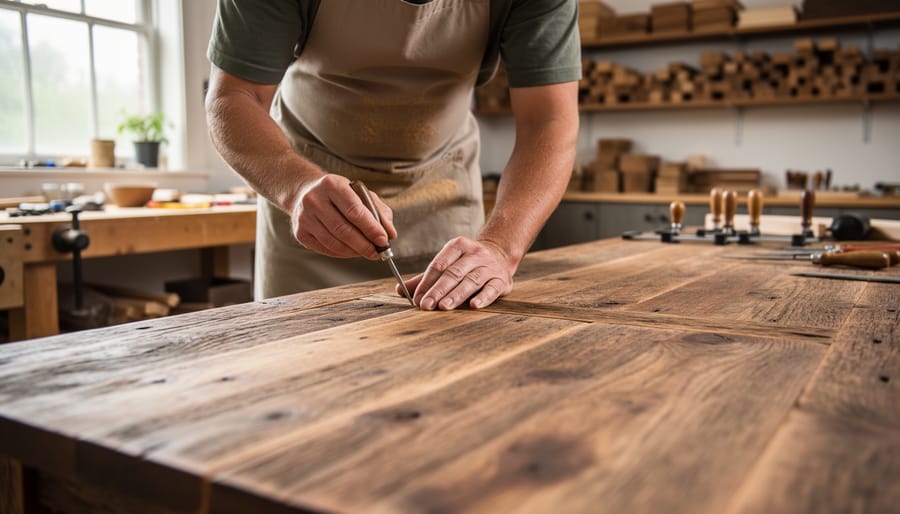
A manufacturer is genuinely eco-friendly when it can prove it: responsibly sourced or reclaimed materials, low-emission finishes, transparent supply chains, and furniture built to last decades rather than seasons. Anything less is a nice-sounding label. That’s the short version, and it’s the lens that separates real sustainable makers from the ones that simply paint a leaf on the packaging.
Greenwashing is easy to fall for because the vocabulary is so appealing. “Natural,” “green,” and “planet-friendly” have no fixed meaning, while third-party certifications for wood sourcing and indoor air quality do. The categories worth knowing are makers working in reclaimed or FSC-certified timber, small workshops using solid hardwood and water-based finishes, and larger brands with published sourcing and take-back programs. Each can be done well. Each can also be done poorly.
Here’s the part many buyers overlook. Even the best-made piece is only as green as its lifespan. A solid oak dining table that gets refinished and re-glued keeps decades of use out of the landfill, and that’s why repair and restoration sit at the heart of sustainable furniture ownership. Homeowners often tell us they assumed a scratched, wobbly, or water-marked piece was finished. Most of the time, it just needs the right hands.
This guide shows you how to vet manufacturers, spot empty claims, and care for what you buy so it stays beautiful for the long haul.
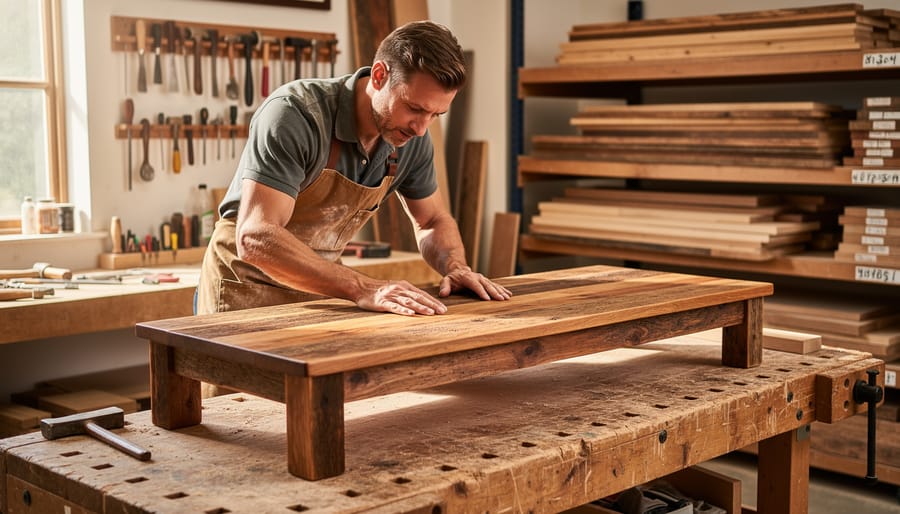
Material choice is where a furniture maker’s eco claims either hold up or fall apart. Start with wood. Responsibly harvested hardwoods like oak, maple, and walnut come from forests managed so trees are replanted, and they’re dense enough to last for generations. Reclaimed and salvaged lumber goes a step further by giving old beams, barn boards, and factory timber a second life, which means no new tree is cut at all.
Bamboo is another strong option. It regrows in a few years rather than decades, though it’s worth asking how it was processed and glued. Recycled steel and aluminum keep metal out of the waste stream and hold up well in frames and legs. For upholstery, natural fabrics such as cotton, linen, and wool tend to age gracefully and avoid some of the synthetic blends that shed microplastics. You can read more about eco-friendly materials if you want a deeper look at each option.
Here’s the part many shoppers miss: the material also decides how repairable a piece will be. Solid hardwood can be sanded, refinished, and re-glued again and again. Thin veneers over particleboard, by contrast, rarely survive a second round of damage. Choosing durable, repair-friendly materials is the quiet way a good maker keeps furniture out of the landfill.

Every new piece of furniture can quietly release gases from its finishes and glues. These are called VOCs, short for volatile organic compounds, and they’re the source of that strong “new furniture smell.” In small amounts they’re harmless to most people, but in a closed-up room they can irritate eyes and lungs, and they linger longer than you’d expect.
Low-VOC (low-emission) finishes and adhesives release far fewer of these gases. That means fresher indoor air, especially in bedrooms, nurseries, and home offices where you spend long stretches of time. When you’re comparing manufacturers, ask which finishes and glues they use on their pieces. A maker who can answer clearly is usually a maker who has thought it through.
The same principle applies after you buy. If a favorite piece needs a refresh, zero VOC restoration lets you renew it without trading away your home’s air quality.
Marketing language is where greenwashing hides. Words like “eco-conscious,” “planet-friendly,” and “natural” sound reassuring, but none of them has a fixed meaning. A maker can print them on a tag without proving a thing. The good news is that real sustainability commitments leave a paper trail, and you only need a few smart questions to find it.
Start with specifics. A genuinely eco-friendly manufacturer can tell you exactly what a piece is made of, where the wood came from, and what finish was used. If the answer is a cheerful but vague “responsibly sourced,” ask: sourced from where, and verified by whom? Honest makers are usually happy to explain. Evasive replies tell you something too.
Here’s a practical checklist to carry with you:
– Ask for the wood’s origin. Look for named species and a documented source, not just “sustainable timber.”
– Request third-party certification. Independent verification carries far more weight than a company’s own badge.
– Check the finish and glue details. Terms like “low-emission” should come with actual product information.
– Look for a repair or warranty policy. A maker who stands behind long-term durability is thinking beyond the sale.
– Ask about spare parts and refinishing guidance. Repairable design is one of the clearest signs of real commitment.
– Be wary of a single green feature. One recycled component doesn’t make a whole piece sustainable.
Also notice what’s missing. Earth-toned packaging, leaf logos, and green color schemes cost almost nothing to produce. Documentation does.
You don’t need to treat every brand with suspicion. Plenty of makers are doing honest work, and they tend to welcome tough questions. Think of this checklist as a way to find them with confidence, so your money supports claims that hold up under a little curiosity.
Reclaimed and salvaged wood workshops build furniture from timber that already had a first life: old barn beams, factory floors, retired shipping crates, fallen urban trees. Instead of harvesting new lumber, they keep existing material out of the waste stream, which is a big part of their environmental appeal.
What sets these makers apart is how much of the work happens before a single cut. Good workshops inspect each board for hidden nails, rot, and insect damage, then dry and stabilize it so it behaves well indoors.
The character is hard to fake. You’ll see tight growth rings from slow-grown old trees, saw marks, nail holes, and a patina that only decades of use can create. Every piece is a little different.
Older timber does need thoughtful care, though. It can be drier and more brittle than new wood, so joints may loosen over time. Gentle cleaning, steady indoor humidity, and repairs that respect the original surface will keep it going for generations.
Third-party certification means an independent organization, not the manufacturer itself, checks that wood or materials meet a published standard. For lumber, auditors typically trace the wood from the forest through each stage of processing, which is why you’ll often see terms like “chain of custody” on paperwork. Other programs look at finishes, adhesives, or factory practices.
What a certification can tell you is useful: the wood came from a managed source, and someone outside the company verified it. That’s more reliable than a vague “eco-friendly” label.
What it can’t tell you is just as important. A certificate usually covers specific materials or facilities, not the whole piece. A table might use certified hardwood but a standard glue or finish. Certification also says little about how long the furniture will last or whether it can be repaired.
Ask which parts are covered, check the certifier’s own database if you can, and look for sturdy joinery alongside the paperwork.
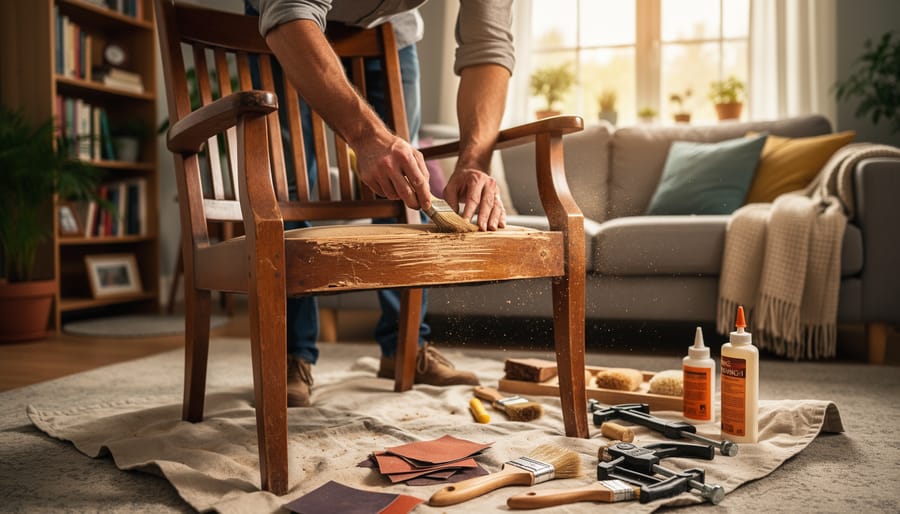
Most furniture doesn’t end up in a landfill because it wore out. It ends up there because one fixable problem made it feel disposable. A few common repairs can change that.
Loose joints are the classic example. A wobbly chair or table usually just needs the old glue cleaned out and fresh adhesive clamped in place. Done properly, the joint often ends up stronger than it was, and the piece stays in service for decades.
Worn surfaces, scratches, and water rings look worse than they are. Many sit only in the finish, so refinishing can bring back the wood’s character without replacing a single board. That matters most for solid wood from a sustainable maker, where the material is worth keeping.
Cabinetry gets the same treatment. Sagging hinges, pulled-out drawer slides, and loose face frames can be re-secured so doors close cleanly and drawers glide again.
Each of these fixes costs far less than a replacement and keeps a sturdy piece out of the waste stream. If you’re not sure which repair your furniture needs, professional furniture repair & restoration can give you a straight answer on what’s worth saving. You can also explore our eco-repair solutions for ways to repair with the planet in mind.
Picture a familiar scene. A homeowner inherits a solid oak dresser that has traveled through three moves. The drawers stick, a water ring clouds the top, and a corner joint wobbles. Replacing it with something new looks easy, but the original is better built than most of what’s on the showroom floor, and it carries real memories.
That’s the moment many people decide to restore instead. A professional looks at the piece, tightens the loose joint, lifts the water ring, and refinishes the top so the grain shows again. The drawers glide, the finish glows, and the dresser goes back to work for another few decades. Nothing heads to the landfill, and the cost is usually well below that of a comparable new piece.
People in this position often say the same thing afterward: the furniture feels like theirs again, only better. Your own result may differ with age, wood type, and the damage involved, but the pattern holds. Quality pieces are worth saving.
[Customer testimonial placeholder]
[Before-and-after image gallery placeholder]

Furniture made with natural finishes and solid wood is easy to look after, but it does ask for a little consistency. Think of it like caring for a good pair of leather boots: small, regular habits beat occasional heroic efforts.
Start by protecting the piece from its environment. Wood expands and contracts with humidity, so keep furniture away from heating vents, radiators, and damp walls. Direct sunlight fades finishes and dries out timber, so rotate accessories, use sheer curtains, or shift the piece a few feet if a sunny window is doing damage.
Here’s a simple routine that works for solid wood and natural-finish furniture:
Skip harsh sprays and silicone polishes, which can leave residue that makes later refinishing harder.
Pay attention during those seasonal checks. A slightly loose chair joint, a small white water ring, or a lifting edge of veneer is usually a quick, affordable fix when caught early. Left alone, the same issue can spread into a bigger repair. If something looks off and a gentle clean doesn’t help, that’s the moment a professional opinion is worth it.
Is it greener to repair furniture or buy new from an eco-friendly maker?
In most cases, repair wins. A new piece, even a responsibly built one, still requires materials, manufacturing, and shipping. If your current furniture is solidly constructed, fixing a loose joint or refinishing a worn top keeps it in use at a fraction of the footprint. Buying new makes sense when a piece is structurally beyond saving or no longer fits your space.
How do I know if a piece is worth restoring?
Look at the bones. Solid wood frames, tight joinery, and sturdy drawers usually respond well to restoration. Surface problems like scratches, water rings, faded finishes, and wobbly legs are typically very fixable. Heavy rot, widespread insect damage, or particleboard that has swollen from moisture is harder to save. When you’re unsure, a professional assessment can save you from replacing something that only needs a little attention.
Can furniture from sustainable manufacturers be repaired?
Often, yes, and that’s one of the best reasons to choose well-built pieces. Solid hardwoods and natural finishes tend to accept repairs and refinishing gracefully. Mixed-material or heavily laminated items can be trickier, which is why durability and repairable design matter when you’re shopping.
Is refinishing safe for indoor air quality?
It can be. Professionals can use low-emission products and proper ventilation, so you don’t have to trade a fresh finish for a stuffy house. Ask about the products being used before work begins.
What if I’m not ready to commit to a big project?
Start small. Tighten loose hardware, wipe down surfaces with gentle cleaners, and shield pieces from direct sunlight. Small habits add up, and so do small purchases. If you’d like more ideas, these eco-conscious consumer swaps are an easy place to begin.
Does repairing really cost less than replacing?
Frequently. Quality replacement furniture, especially from sustainable makers, carries a premium. Restoring a well-built piece usually costs noticeably less while preserving its character.
Choosing a sustainable furniture maker is a smart start, and now you know what to look for: responsibly sourced materials, low-emission finishes, solid construction, and honest answers when you ask hard questions. But the best purchase still isn’t the end of the story. How you care for a piece matters just as much as who built it.
Well-made furniture can last for decades when small problems get attention early. A loose joint, a worn finish, or a stubborn water ring is rarely a reason to start over. Repair and restoration keep quality pieces in your home, out of the landfill, and usually well below the cost of replacing them.
So buy thoughtfully, maintain gently, and repair before you replace. If you have a piece you’re not ready to part with, we’re happy to take a look and give you an honest assessment. No pressure, just a clear picture of what’s possible.