
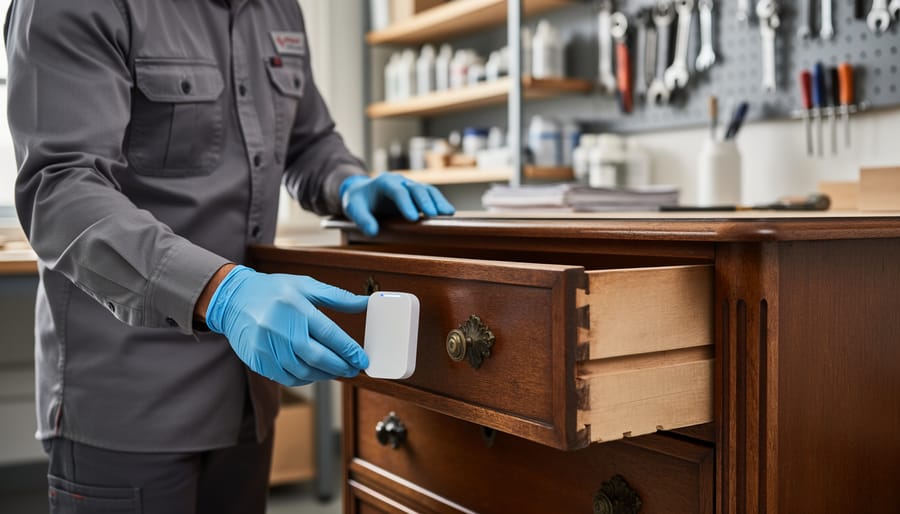
5G internet of things, often shortened to 5G IoT, is a way for everyday objects, sensors, and tools to share information over a fast, low-delay mobile network instead of relying on Wi-Fi or a wired connection. In furniture restoration, that means a moisture sensor tucked into a water-damaged dresser can report readings while the piece dries, a climate monitor in a workshop can flag humidity swings that threaten fresh finish, and a tablet can upload before-and-after photos from a client’s home in seconds.
Does it apply to you? Probably in small, practical ways, and you don’t need to be a tech expert to use it. Most of it comes down to a compatible device, a coverage area, and a clear understanding of what gets recorded and who can see it.
Homeowners, property managers, adjusters, and prospective franchisees all tend to ask the same things: what does it actually do, what do I need to get started, and what happens to the data? This guide answers each one in plain language, ties the technology to real stages of a restoration job, and points you toward where to find support.
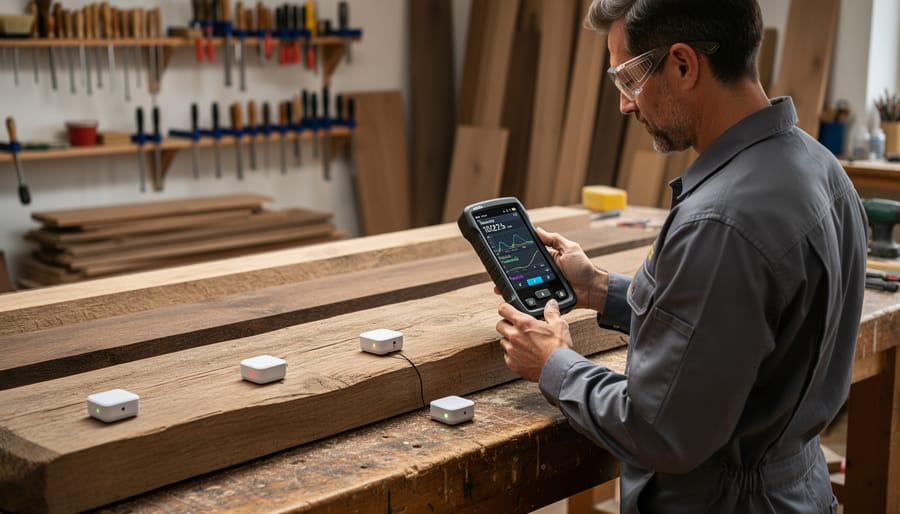
When a restorer is checking a piece remotely, a few seconds of delay can matter. A moisture reading that arrives late is a reading that can’t be acted on, and a photo that stalls on upload leaves everyone guessing about what’s happening to the wood. Faster, steadier connections close that gap, so readings and images reach the restorer almost the moment they’re captured.
This holds whether the piece sits on a workshop bench or in a client’s living room. In the shop, a dependable link means humidity and temperature data keep flowing without gaps. On site, it means a technician can snap photos of a tabletop’s finish and have them reviewed right away, rather than waiting until the connection recovers.
Many smart repair tech tools rely on that kind of consistent signal to do their job well. When the connection holds, the restorer sees problems early and can adjust before small changes become costly ones.
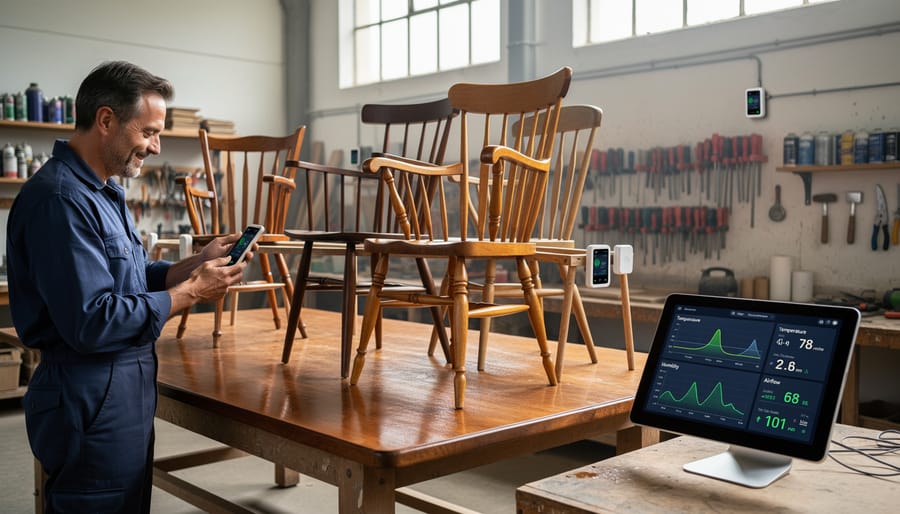
Wood is never really still. It takes in moisture when the air is damp and releases it when the air is dry, swelling and shrinking as it goes. Restorers call this wood movement, and the water inside the board is its moisture content. When humidity swings too fast, solid wood can cup or split, veneer can lift from its base, and old hide-glue joints on antiques can loosen.
Connected sensors help by watching the room and the wood itself, sending readings to a phone so changes are caught early. The link between wood moisture and humidity is steady, so a stable room usually means a stable board. If a reading drifts, a restorer can adjust the space before damage appears.
| Restoration stage | Connected tool or sensor | What it measures | Client benefit |
|---|---|---|---|
| Assessment | Pin-free moisture meter | Moisture content in the wood | Clear picture of the piece’s starting condition |
| Drying and curing | Room humidity sensor | Humidity and temperature | Lower risk of warping and cracking |
| Storage | Tracked climate logger | Conditions while awaiting repair | Pieces stay stable between steps |
| Documentation | Time-stamped photo capture | Visual progress | Easy-to-share before-and-after records |
For delicate veneer and antiques, slow, gentle changes are the goal, and steady readings make that much easier to achieve.

When a piece moves from the workshop to a client’s home, trust depends on clear records. Time-stamped photos and condition logs give everyone the same story. A homeowner can see exactly where a repair started, how drying and curing progressed, and what the piece looks like now, without having to take anyone’s word for it.
For insurance adjusters and property managers, that kind of record is gold. Claims teams are often advised to date stamp all photos, and connected devices make that automatic. Each image and each humidity or temperature reading arrives with a built-in time, so the sequence of events is easy to verify.
Many restorers already pair these records with digital tools that organize photos, notes, and sensor readings in one place. The result is a tidy file you can share with a client or attach to a claim.
When the work is done, a before-and-after gallery is a natural way to show the finished results. Side-by-side images make the transformation obvious at a glance, and they sit alongside the condition log as proof of careful, well-monitored work.
Most people who benefit from 5G-connected IoT never touch the equipment themselves. Homeowners usually gain through their restoration provider, who monitors the piece, logs conditions, and shares updates. If you’re curious about restoring high-tech pieces or a cherished antique, you can simply ask what monitoring your provider offers.
Commercial property managers and insurance adjusters benefit in a similar way. For them, the value is dependable condition records and quicker answers, not hands-on device management.
The group that does need to set things up is franchisees and shops building their own workspace. Here’s a simple readiness checklist:
Don’t let the last two items worry you. Reading a dashboard is much like checking a weather app: you look for a number, compare it with a comfortable range, and act if something drifts. A few minutes of practice is usually enough.
Coverage is worth confirming early, since 5G availability varies by area. Your mobile carrier can tell you what’s offered at your address, and many setups simply switch to a standard connection when 5G isn’t available. With a little preparation, shops of almost any size can get started.
Getting started takes four simple steps, and most of the work happens before a single sensor is placed.
First, confirm coverage. Ask your mobile carrier whether 5G reaches your home, shop, or job site, since a weak signal means patchy readings.
Second, agree on what is monitored. Settle which readings matter (humidity, temperature, photos), who can see them, and how long records are kept. Get that permission in writing before any device goes into a living room or showroom.
Third, secure the network. Change default passwords, keep device software updated, and use a separate network for connected devices if your router allows it.
Fourth, set a check-in routine. A quick daily glance at the dashboard during drying and curing catches small changes before they become cracks or warping.
Once these habits are in place, the technology fades into the background, and the focus returns to the piece itself.
Start with the people closest to your project. Your restoration provider or franchise support team can explain which devices are in use, what they measure, and how to read the updates they send you. If a reading looks unusual, ask them first. They know your piece and your space.
Device manufacturers are the next stop. Most publish setup guides and run help lines that cover pairing, software updates, battery changes, and troubleshooting. Keep the model name or number handy when you call, because it speeds things up considerably.
Questions about whether 5G reaches your home, shop, or job site belong with your mobile carrier. Coverage can vary from one street to the next, and the carrier can tell you what signal to expect and whether a different plan or equipment would help.
For broader questions about data and privacy, general consumer protection and privacy resources are a good place to learn what to expect from any connected device. Reading your provider’s written policies alongside them gives you a clear picture.
Insurance adjusters can simply ask the restorer for documented condition logs, such as time-stamped photos and humidity or moisture readings. These give a dependable record of a piece’s state over time, which is one reason many people are drawn to smart restoration in the first place.
Most readers have the same handful of practical concerns before they trust connected tools around furniture they care about. These are the ones that come up most often, answered plainly.
Usually not. The sensors are typically placed in the restorer’s workshop or on-site by the provider, so your home internet isn’t what carries the readings. If a device will sit in your home or business, ask the provider what connection it needs.
Most monitoring devices simply sit nearby and measure air conditions such as temperature and humidity, so they never touch the piece. Where a probe does touch the wood, a careful restorer chooses a placement that avoids marring the finish or veneer.
It can vary by provider and by how much monitoring a project calls for. Ask upfront whether connected tools or documentation are included in your estimate or priced separately.
Yes, particularly for larger jobs where steady condition records help property managers and adjusters follow progress. Smaller repairs may not need much monitoring at all.
Older pieces can be monitored too, because the devices track the surrounding conditions rather than demanding anything of the furniture itself. That said, connected tools support a restorer’s judgment rather than replace it. A skilled eye and careful hands still decide how a piece is repaired and finished.
If you’re unsure what a provider uses, simply ask which conditions they monitor, how they record them, and whether you’ll receive those records with your before-and-after photos. A good restorer will welcome the question.
5G-connected sensors and smart tools don’t replace craftsmanship. They support it. Steady readings on wood moisture and workshop humidity help prevent warping and cracking, and time-stamped photos and condition logs give homeowners, property managers, and insurance adjusters a clear record of what happened to a piece and when. The result is fewer surprises and more confidence from the first assessment to the final finish.
If you’re considering a repair or restoration, it’s perfectly reasonable to ask your provider how they monitor conditions, what data they collect, who can see it, and what documentation you’ll receive. A good restorer will welcome those questions and answer them plainly.
And if you’re curious about a particular piece, a commercial project, or what it takes to open your own restoration shop, reach out whenever you’re ready. We’re happy to talk it through with no pressure and no jargon, just honest answers about caring for the furniture that matters to you.