
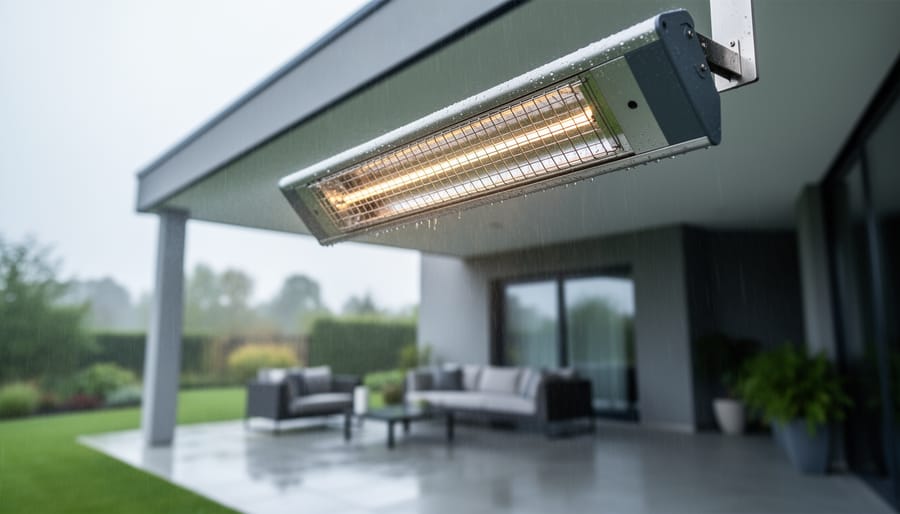
A weatherproof outdoor electric heater designed for genuine outdoor exposure needs an IP rating of at least IP44, with IP55 or IP65 providing superior protection against rain, dust, and moisture. The difference between a heater that lasts one season and one that performs reliably for years comes down to three factors: understanding IP (Ingress Protection) ratings, selecting appropriate wattage for your space, and choosing the right mounting style for your specific conditions.
Most buyers focus on heating power while overlooking the single most important specification: the IP rating’s second digit. That number tells you whether your heater can handle a light drizzle (IP54) or survive pressure washing your patio while it’s mounted on the wall (IP65). The first digit matters too, protecting against dust and debris that can clog heating elements and shorten lifespan.
Electric outdoor heaters typically range from 900W to 3,000W, with most residential models sitting between 1,000W and 1,500W. A 1,500-watt unit covers roughly 15 square meters effectively, but that assumes some wind protection and reasonable insulation from surrounding structures. Exposed locations need higher wattage or multiple units.
The challenge isn’t just surviving weather. It’s maintaining consistent heat output when temperatures drop, wind picks up, or unexpected rain moves in. Installation choices play a bigger role than many realize. Wall-mounted units with IP65 weatherproof construction offer permanent solutions for covered patios, while portable models sacrifice some weather resistance for flexibility but require protected storage between uses.
This guide walks you through the IP rating system that manufacturers rarely explain clearly, compares heating technologies that perform differently in wet conditions, and shows you exactly which specifications matter for your climate and setup.
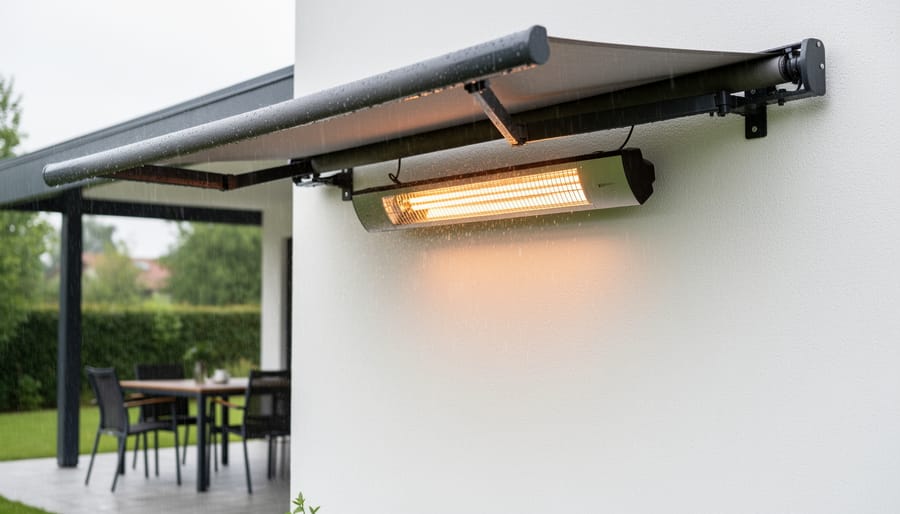
When you’re shopping for an outdoor electric heater, you’ll encounter IP ratings on spec sheets, and understanding these numbers can mean the difference between a heater that lasts for years and one that fails after the first rainstorm. The IP rating, short for Ingress Protection rating, tells you exactly how well a heater protects against solid particles and water intrusion.
The IP code uses two digits. The first digit (0-6) indicates protection against solid objects like dust and debris. The second digit (0-9) measures protection against water. A higher number means better protection. For outdoor heaters, you need robust protection on both fronts. A heater rated IP55 offers dust protection that prevents harmful accumulation, and it can withstand water jets from any direction. That’s the minimum threshold for most outdoor installations where the heater faces regular weather exposure.
Here’s how common outdoor heater ratings compare in real-world conditions:
| IP Rating | Protection Level | Suitable Outdoor Conditions |
|---|---|---|
| IP44 | Splash-resistant, basic dust protection | Covered patios with minimal direct rain exposure |
| IP55 | Dust-protected, jet water resistant | Most outdoor spaces including uncovered areas with rain |
| IP65 | Dust-tight, protected against heavy rain | Harsh conditions, coastal areas, fully exposed locations |
There’s a crucial distinction between water-resistant and weatherproof. Water-resistant heaters, like those rated IP44, can handle occasional splashes but struggle with sustained rain or snow. Truly weatherproof heaters rated IP55 or higher withstand direct water jets, heavy downpours, and prolonged wet conditions without compromising electrical safety or performance.
You might also see ratings like IPX5, where the X means the manufacturer hasn’t tested or rated solid particle protection. IPX5 confirms water jet protection but leaves dust resistance unknown. For outdoor environments, particularly in areas with blowing dirt or sandy conditions, both digits matter.
Snow presents additional challenges beyond rain because it can accumulate on heating elements and melt into vulnerable areas. An IP65-rated heater provides dust-tight seals that prevent snow and ice melt from penetrating internal components. Coastal environments with salt spray demand this higher rating too, as salt accelerates corrosion when it breaches protective barriers.
The bottom line: don’t settle for anything below IP55 for outdoor electric heaters. If your heater will face harsh weather, full exposure, or coastal conditions, IP65 offers the durability you need.
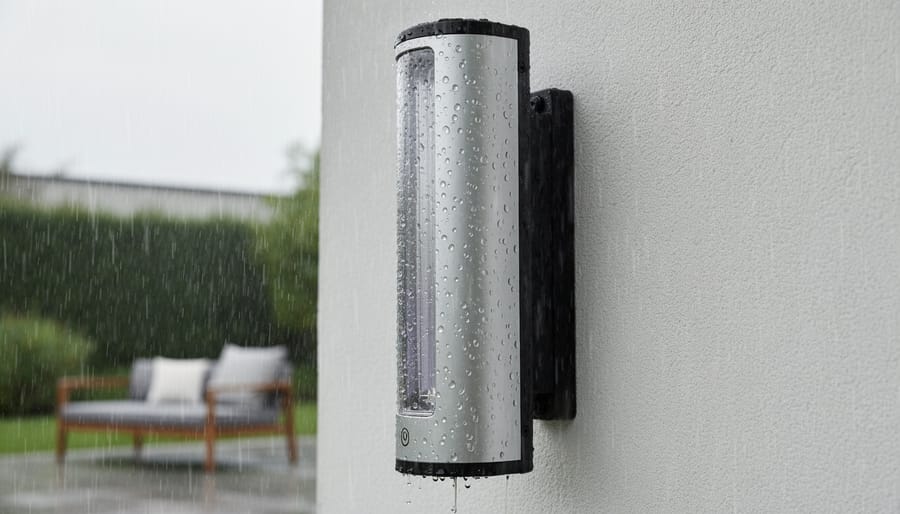
Getting the power output right is fundamental to your heater’s performance. Too little wattage leaves you shivering, while excessive power wastes energy and money on coverage you don’t need.
Electric outdoor heaters typically range from 900W to 3000W, though you’ll find most residential models fall between 1,000 and 1,500 watts. This sweet spot balances effective heating with reasonable electrical demands for standard home circuits.
The calculation starts with your space dimensions. As a general rule, you need roughly 100 watts per square metre for open outdoor areas. A compact 3m × 3m patio (9 square metres) works well with a 1,000W heater, while a larger 5m × 5m deck (25 square metres) requires 2,500W or multiple units to achieve comfortable warmth.
Wind exposure changes everything. Completely open patios need 30-50% more power than the basic calculation suggests because moving air constantly disperses heat. A covered porch or pergola retains warmth better, so you can often size down without sacrificing comfort.
Commercial spaces demand different thinking. Restaurant patios with high turnover need consistent, powerful coverage, typically 1,500W units spaced every 3-4 metres. Multiple lower-wattage heaters often outperform a single high-output unit because they distribute heat more evenly and create fewer cold pockets where guests cluster.
Ceiling height matters too. Heat rises, so mounting a heater 4 metres up requires significantly more wattage than a 2.5-metre installation to deliver the same warmth at seating level.
Don’t forget electrical capacity. A 1,500W heater draws about 13 amps on a standard circuit. If you’re planning multiple heaters, verify your electrical panel can handle the combined load, or you’ll be resetting breakers all evening.
Choosing the right installation type shapes how you use your outdoor heater and which spaces it can serve effectively. Each mounting style comes with distinct advantages and limitations that affect both immediate setup and long-term flexibility.
Wall-Mounted Units
Wall-mounted heaters attach directly to exterior walls or posts, positioning heat at an elevated angle that covers seating areas below. They’re ideal for patios with sturdy wall structures and limited floor space, directing warmth where people gather without occupying ground-level room. The trade-off: you’ll need proper electrical wiring run to the mounting location, and repositioning means new holes and electrical work. These units work best in covered outdoor dining areas or against garage walls where permanent placement makes sense.
Ceiling-Mounted Options
Ceiling-mounted heaters install overhead on pergolas, covered patios, or porch ceilings, delivering downward radiant heat that mimics natural sunlight. This style maximizes floor space and provides even coverage across larger areas. However, installation requires solid overhead structure and often professional electrical work to ensure safe mounting and proper circuit capacity for units typically running 1,500 watts or more. Commercial restaurant patios favour this approach for unobstructed walkways.
Portable and Freestanding Models
Portable heaters offer flexibility you can’t get with permanent installations. Move them between deck corners, pool areas, or different outdoor zones as your entertaining needs shift. Most plug into standard outlets, eliminating installation costs. The downside: they consume floor space, tip more easily in wind, and require storage when not in use. Freestanding units suit renters, seasonal users, or anyone who wants to test heating patterns before committing to permanent placement.
Your choice ultimately depends on whether you value permanent placement efficiency or the freedom to adapt your heating layout as outdoor living patterns change through the seasons.
The housing material forms your first line of defense against the elements. Look for heaters constructed with marine-grade aluminum or powder-coated steel, both of which resist corrosion far better than standard metals. Cheaper units often use thin-gauge steel that rusts within a single season, particularly in coastal areas where salt spray accelerates deterioration. Quality manufacturers apply multiple protective coatings: a zinc undercoat prevents oxidation, while the outer powder coat shields against UV degradation and moisture penetration.
Sealed electrical components separate reliable heaters from fire hazards. The heating element, wiring connections, and control switches should all feature gasket-sealed enclosures that prevent moisture intrusion. When examining a heater, check that the power cord entry point includes a weather-sealed grommet rather than an open hole. The thermostat housing deserves special attention since this component frequently fails when water seeps into its circuitry.
UV-resistant finishes matter more than most buyers realize. Direct sunlight breaks down standard paints and plastics within months, causing housings to crack and fade. Premium heaters use UV-stabilized materials and finishes specifically formulated for year-round outdoor exposure. This protection extends to control knobs, mounting brackets, and protective grills, all of which should maintain their structural integrity through summer heat and winter cold.
Verify that all fasteners are stainless steel rather than zinc-plated hardware, which corrodes quickly outdoors. The protective grill should attach securely without sharp edges or gaps that could allow debris accumulation. These construction details directly determine whether your heater lasts two seasons or twenty.
When selecting a weatherproof outdoor electric heater, understanding the fundamental differences between infrared and traditional coil technologies helps you match the right heater to your specific outdoor environment.
Infrared heaters work by emitting electromagnetic radiation that directly warms objects and people in its path, rather than heating the surrounding air. Think of it like standing in sunlight on a cold day, the warmth reaches you immediately. These units typically use halogen or quartz elements encased in protective tubes. Traditional coil heaters, by contrast, heat metal coils that warm the air around them, which then circulates to create warmth. They function similarly to how your indoor space heater operates, just with weatherproof housing.
The heating patterns differ significantly. Infrared models deliver instant, directional warmth that isn’t easily dispersed by wind, making them particularly effective in uncovered outdoor areas or coastal settings where breezes are common. You’ll feel the heat within seconds of switching them on. Coil heaters take longer to reach full output and create a more generalized warmth that works well in enclosed or semi-covered spaces like screened porches, though windy conditions noticeably diminish their effectiveness.
| Heater Type | Heating Method | Best For | Weather Adaptability |
|---|---|---|---|
| Infrared | Direct radiant heat to objects | Open patios, windy areas, large spaces | Excellent, unaffected by wind or moderate rain |
| Traditional Coil | Heated air circulation | Covered decks, enclosed patios, smaller areas | Good, performs best with overhead protection |
Energy efficiency tips in favor of infrared models, which convert roughly 90% of consumed electricity directly into heat with minimal waste. Coil heaters lose more energy to ambient air heating, though they can still perform adequately in protected settings where that warmed air stays contained.
For outdoor spaces that also feature furniture, infrared heaters pair well with durable materials that can withstand both heat exposure and weather elements. If you’re working with existing outdoor pieces, knowing how to restore rusted patio metal or refresh weathered outdoor wood helps create a cohesive, well-maintained outdoor environment where your heating investment shines.
Choose infrared when you need consistent warmth in exposed locations or want minimal warm-up time. Opt for coil heaters when you’re heating a fully covered space with limited air movement and want a gentler, more ambient heat distribution.
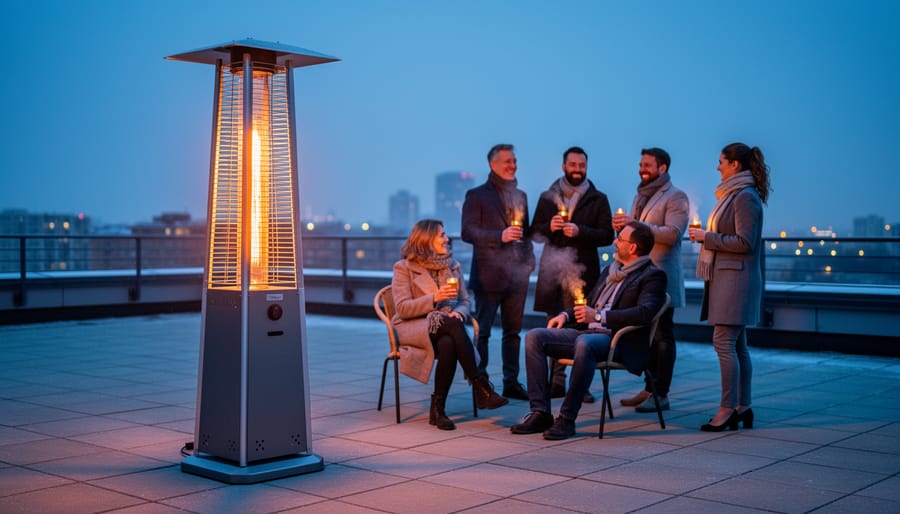
Selecting the right weatherproof outdoor electric heater depends less on finding a single “best” model and more on matching specific features to your environment’s demands.
Residential Patios and Decks
For covered home patios, a wall-mounted infrared heater rated IP55 provides excellent value. Look for 1,500-watt models that deliver focused warmth without requiring excessive electrical capacity. Homeowners with partially covered decks should prioritize IP65-rated units and corrosion-resistant housings, particularly if morning dew or occasional rain reaches the installation area. Position heaters to create overlapping heat zones rather than relying on a single high-wattage unit.
Commercial Restaurant Patios
Restaurant outdoor spaces demand higher weatherproof standards and greater heat coverage. Multiple ceiling-mounted heaters rated IP65, each delivering 2,000 to 3,000 watts, work better than a few powerful units because they distribute warmth evenly across dining tables. Commercial installations benefit from heaters with sealed electrical components and UV-resistant finishes that withstand constant exposure throughout operating seasons.
Poolside and Coastal Environments
Water proximity and salt exposure create the harshest conditions for outdoor heaters. Poolside areas require IP65-rated units at minimum, positioned well above splash zones and installed with marine-grade mounting hardware. Coastal properties face accelerated corrosion from salt spray, making aluminum or stainless steel construction essential rather than optional. Choose heaters with powder-coated finishes specifically rated for marine environments, and budget for seasonal inspections of mounting brackets and electrical connections.
The common thread across all applications is matching protection level to exposure severity. A heater perfect for a covered suburban deck will fail within months in an exposed coastal restaurant patio, while overbuying weatherproof features for a sheltered residential space wastes money without improving performance.
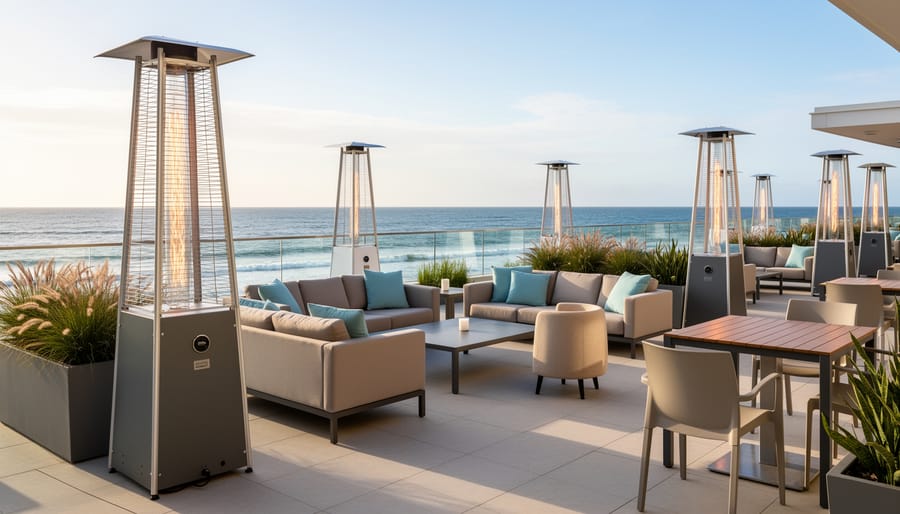
Last spring, a restaurant owner spent thousands outfitting his covered patio with what he thought were weatherproof heaters, only to find corroded components and electrical failures after the first heavy rain. The issue wasn’t that the heaters failed, it was that he bought models rated IPX4, adequate for splash resistance but not the sustained rain exposure his partially open patio received during storms.
The most common mistake stems from assuming any outdoor-rated heater will withstand your specific conditions. A unit with IP44 protection might work fine under a solid roof overhang but will deteriorate quickly in an exposed coastal setting where salt spray and wind-driven rain are constant factors. Match the IP rating to reality: IP55 minimum for covered areas with occasional exposure, IP65 for fully exposed installations.
Undersizing wattage ranks second among costly errors. Homeowners regularly choose a 1,000-watt heater for a 300-square-foot patio because the price seems reasonable, then wonder why guests stay cold. Calculate roughly 100 watts per 10 square feet for covered spaces, more for open areas. A 1,500-watt unit that adequately heats the space will cost less over time than running multiple underpowered heaters simultaneously.
Ignoring electrical infrastructure creates dangerous situations and installation headaches. Many outdoor heaters require dedicated 20-amp circuits, yet buyers assume their existing outdoor outlet will suffice. Check your circuit capacity before purchasing, especially for models above 1,500 watts. The cost of running new wiring should factor into your budget from the start, not become a surprise after delivery.
Mounting style mismatches waste money and create frustration. Wall-mounted heaters offer excellent coverage but require permanent installation and solid backing, they won’t work on thin vinyl siding. Portable models provide flexibility but take up floor space and tip more easily in wind. Consider how you actually use your outdoor space, including furniture arrangement and seasonal storage needs, just as you would when you plan to fix outdoor fabric on existing furniture rather than replace entire pieces.
Finally, overlooking maintenance access means simple bulb changes or cleaning become major projects. Heaters mounted flush to a ceiling or tucked into tight corners might look sleek during installation, but you’ll regret that choice when you need a ladder and contortionist skills just to wipe down the reflector or replace a heating element.
Most weatherproof outdoor electric heaters require a dedicated 120-volt or 240-volt circuit, depending on wattage. Higher-output models (above 1,500 watts) typically need 240-volt service and professional installation to ensure proper amperage and circuit protection. Check your electrical panel capacity before purchasing, upgrading your system adds significant cost.
Professional vs. DIY Installation
Wall-mounted and ceiling-mounted units almost always demand professional installation. You’re dealing with electrical wiring, structural mounting, and weatherproof connections that affect safety and warranty coverage. One property manager learned this the hard way when his maintenance crew installed heaters without proper outdoor-rated junction boxes; the first heavy rain triggered GFCI trips that shut down an entire patio section during peak dinner service.
Portable models offer more flexibility for DIY outdoor repairs and seasonal repositioning, but even plug-and-play units need weatherproof outdoor outlets with GFCI protection. Never use indoor extension cords or power strips outdoors.
Seasonal Maintenance
Inspect your heaters before and after winter. Clean heating elements and reflectors with a soft brush to remove dust, pollen, and debris that reduce efficiency. Check mounting brackets for corrosion, especially in coastal environments where salt accelerates deterioration. Tighten any loose fasteners, vibration and wind gradually work hardware loose.
Weatherproof housing seals can degrade over time. Examine gaskets and junction box covers annually, replacing damaged seals to maintain IP ratings. This prevents moisture intrusion that leads to electrical failures.
Clean surrounding areas regularly to keep pests away from warm heater housings where insects and small animals nest during off-seasons. Cover units during extended non-use periods, or disconnect and store portable models indoors.
Proper maintenance extends heater lifespan from three to five years up to ten or more, protecting your investment and ensuring consistent performance season after season.
Choosing the right weatherproof outdoor electric heater raises practical questions about safety, performance, and long-term costs. Here are answers to the most common concerns we hear from homeowners and property managers.
Look for IP55 or higher for reliable outdoor protection. An IP rating ending in 4 or higher suits outdoor use, but IP55 provides better defense against rain and dust, while IP65 offers the strongest weatherproof protection available in most residential models.
Yes, if it carries an appropriate weatherproof rating. Heaters rated IPX5 or higher are protected against water jets and can handle rain exposure. Always verify your specific model’s rating and ensure proper electrical connections with GFCI protection.
Electric heaters typically cost more per hour to operate but eliminate fuel purchasing and storage hassles. The difference matters most for commercial settings with extended daily use, while residential users often find the convenience and safety worth the slightly higher energy cost.
Expect five to ten years from a well-made unit with proper maintenance. Corrosion-resistant construction and sealed components extend lifespan, especially in coastal areas or regions with harsh winters.
Not necessarily if it’s truly weatherproof. Models rated IP55 or higher can remain outdoors year-round, though covering them or storing them indoors during prolonged non-use prevents UV degradation and reduces accumulated debris.
Most residential patios work well with models ranging from 1,000 to 1,500 watts. Larger or uncovered spaces may require units up to 3000W, while smaller covered areas can manage with 900W models.
Portable models simply plug in, but wall-mounted and ceiling-mounted units typically require professional installation to ensure safe electrical connections and proper mounting. Commercial installations always warrant professional expertise for code compliance and warranty protection.
These answers address the fundamentals, but your specific outdoor environment may raise additional considerations. Coastal properties face salt corrosion concerns that demand higher-grade materials, while properties with limited electrical capacity might need circuit upgrades before installation. When in doubt, consult with a licensed electrician about your electrical requirements and mounting options. Professional assessment prevents costly mistakes and ensures your heating solution performs reliably through years of changing weather conditions.
Choosing the right weatherproof outdoor electric heater isn’t about finding the most expensive model or the highest wattage. It’s about matching specific features to your outdoor environment and how you’ll actually use the space. If your patio faces harsh coastal winds and salt spray, your needs differ dramatically from someone heating a covered deck in a mild climate.
The IP rating should guide your decision more than any other specification. Don’t settle for vague marketing claims about “weather resistance” when you can verify actual protection levels. An IP55 rating works for most residential covered areas, but exposed commercial spaces and poolside installations demand IP65 or higher. Similarly, your wattage choice determines whether guests feel comfortable or constantly shift chairs closer to the heat source.
Think beyond the initial purchase. A properly selected heater with genuine weatherproof construction will serve you reliably for years, even through unexpected weather events. The upfront investment in appropriate IP ratings and corrosion-resistant materials pays off when you’re not replacing units every few seasons or dealing with electrical failures.
For commercial property managers extending outdoor dining seasons or creating year-round patio spaces, professional installation ensures your heaters meet local electrical codes and perform safely under heavy use. The right weatherproof electric heater becomes an invisible comfort solution, letting your outdoor spaces shine regardless of the forecast.